Showing posts with label #rhizo14. Show all posts

Wednesday, August 23, 2017

This event is brought to you by...


A post event reflection.

Structured unpredictably...

A gif of dynamic systems.

"If one has to start anywhere..."

"Will this animation move when published." He wonders.

"Will it just become static on the net?"

"Whatever."

I keep trying to figure out where this should start.

Narrative(s) attempt(s) fail unmanageable reality.

It will have to do.

Such universal failings are, after all, what connect us.


"How do I express this with ever-changing feeling?"

"Oh damn it."

This is absurd.

“Writing has nothing to do with meaning. It has to do with landsurveying and cartography, including the mapping of countries yet to come.”  


"Fuck IT."

"Fuck Google."

It's all we have.

A fragile agency... 

"A speckulation?"

"I'd like to thank my mother, my father."

"I'd like to thank (GOD?)... er those who missed attempting to kill my grandfather in the war."

This is brought to you by...

A dog barking?

I hurriedly pulled on a pair of boxer shorts and a tshirt.

Modesty saved.

This is brought to you by...

FEDEX

"Do you have ID?" 

I went back for my passport and signed off the parcel slip.

This is brought to you by...

The cable for my laptop.

At two o'clock in the morning attempting hamfistedly...

 "Why do we say that?"

I type a blog post on a smartphone...

I lose the contents of the post three times.


This is brought to you by...

What was lost.

Sleep. 

A laptop with POWER.

This is brought to you by...

A caring community.

This is brought to you by...

A Slack backchannel.

"I am sorry, my laptop has died on me, I won't be able to set up the session for Eurocall tomorrow."

This is brought to you by....

A response from Helen DeWaard over in Ontario.

At virtually no notice, Helen really backs me up for Virtually Connecting at Eurocall.

She will share her? Google's?  our? POWER to allow? to enable?  us to hang out in Southhampton.

"What about Saturday?"

Ken Bauer, over in Mexico silently interrupts a meeting at his daughter's high school to offer help.

On Saturday, he will be up for 5:00 am in the morning.

This is brought to you by....

Friendship, fellowship, faith, love, hope....a belief in something bigger than each one of us.

This is brought to you by....

Teresa Mackinnon  she offered to be an onsite buddy at Eurocall.

This is brought to you by...

Steve Wheeler  who mentored me on his blog...like so many others.

This is brought to you by....

Rhizomatic learning...Dave Cormier...

"A rhizome has no beginning or end; it is always in the middle, between things, interbeing, intermezzo."

This is brought to you by...


"Will it ever end?"

"No...nooo!"

Martina Emke started it. 

She kept bringing up rhizomes.

We hadn't even gone live yet.

"A rhizome has no beginning or end; it is always in the middle, between things, interbeing, intermezzo."

I met Maha Bali, Apostolos Koutropoulos, so that's a sort of start to this story here.

"A rhizome has no beginning or end; it is always in the middle, between things, interbeing, intermezzo."

Rhizo15


"A rhizome has no beginning or end; it is always in the middle, between things, interbeing, intermezzo."

(I tire of fighting with html formating. It's small. It's small. )

"Fuck it."

This is brought to you by....

A common language...

POWER embodied? disembodied? 

POWER to order chaos? to give semblance of order to chaos? to command? to touch?

POWER to include? to exclude? 

This is brought to you by....

A language.

"An Open Educational Resource" offered AK.

This is brought to you by...

A keynote recording.

"Will it be available openly?" I asked.

"Well what's the point of putting it on a website if it is not available openly?" Martina responded.

"Academic publishing etc....?" I countered?

But will it be accessible?

Will the language be accessible?

This is brought to you by....

My interest in language learning.

It led me to reflect.

The more I reflected, the more I was led to experts.

This is brought to you by...


I fell upon a conversation which spoke to me.

This was accessible.

A recognisable conversation between recognisable humans. 

Humans. Speaking English.

This is brought to you by....

An ex-student and reluctant academic.

I remembered being a student at university.

I remembered struggling with what seemed to me to be densely alien gibberish.

"Why can't they just speak bloody English?" I remember complaining intolerantly.

"Why do they need all these barbaric terms?" I remember thinking.

I think of attitudes to scientists.

"Britain has had enough of experts," says Gove.

This is brought to you by...

Reading articles by Steven Thorne and other experts on the complex reality of language learning.

This is brought to you by....

Combining blogging with reflective practice.

Towards complexity-informed language teaching in higher education.

To what extent is it possible to adopt “complexity-informed perspectives” (Mercer, 2013) for language teaching in higher education? Considering the classroom as a complex adaptive system (Larsen-Freeman, 1997; Ellis & Larsen-Freeman, 2009), we use mixed methods adapted from Nexus Analysis (Scollon & Scollon, 2004) to explore evolving ecologies of learning (Van Lier, 2010) in a French university language centre’s English classes for non-specialist undergraduate and postgraduate students. Using qualitative and quantitative survey, pedagogical programs, capture of interactions: photo, video, and learner portfolios, we trace discourses in place and interaction orders. We study teacher and learner reflection, narratives and interview to highlight divergent perceptions of affordances. We observe how network-connected technology offers the potential to modify pedagogical practices and assessment in the classroom, to better respect learner diversity and to “situate learning” (Lave & Wenger, 1991; Gee, 2004) in diverse contexts, to facilitate observation and analysis of learners and learning activities. We attempt to identify “core components of the system - hubs where the effect of change is more likely to spread throughout the system” both of the learner and the institution (Mercer, 2013).  If research may enable us to identify “general principles which language educators can use to guide their actions” (Tudor, 2003), analysis of individual stories illustrates the complex, unpredictable, emergent nature of learning. What strategies might teachers adopt to facilitate dramatic progress in learning? In an institutional context ordered by program outcomes, marking grids, and time constraints, learners may be more concerned with gaming the system for credit rather than actually learning a language. Teachers’ “historical bodies” (Scollon and Scollon, 2004): experiences, beliefs, attitudes, competences,  and time and or financial constraints may enable or limit their desire or means to adapt practices. Going forward, we consider it essential to develop connected, reflective communities of exploratory practice (Allwright, 2003) including learners, teachers and researchers to work towards manageable pedagogical solutions and the recognition of diverse perspectives, competences and roles.

This is brought to you by....

A growing feeling of becoming part of academic communities.

Thanks to people that I can share common VALUES with.

Despite past feelings of disgust for everything academia.

"What are you?" He scowled.

This is brought to you by...

Something greater than the sum of its parts.

"What is it that brings us to work together here in these spaces?" Wonders Apostolos.

Words emerge chaotically.

This is brought to you by...

Virtually connecting, really connecting people who really desire to connect.


This is brought to you by...

An accessibly human American researcher, Steven Thorne packing an hour long keynote into 45 seconds, responding in dynamic whispers so as not to disturb adjacent partner/sponsor event...

"THIS EVENT IS BROUGHT TO YOU BY...."

speaking volumes about social issues in conversation with Parisa Mehran, an Iranian researcher refused a visa to attend Eurocall.

"SHHH!"


This is brought to you by....

Questions from Joe Dale and Teresa Mackinnon to Steven Thorne about how to connect theory to pedagogical practice.

Questions of how to be a teacher in a complex age of change.
("Was there ever an age that was not one of change?")

Questions of how to enable the work of researchers to be accessible.

Questions of what constitutes citizenship in a connected world.

Questions of identity, of language, of meaning, of POWER.

Questions of frontiers, of who defines our boundaries, our bodies, our movement....our lives.

"Teachers have never been so necessary." Steven Thorne.

"Accessibly human, caring, experts have never been so necessary." I think to myself.

"Working together across artificial frontiers has never been so necessary." I conclude.

"On est ensemble dans cette merde. On a chacun sa responsabilité." He thinks in French.

"Working outside the box, inside the box...tricky...hmm" I contemplate.


Postscript.

This is brought to you by....

Vialogues...


A desire to go back and listen again so as to better act.


Thank you to

Helen, Ken, Maha, Autumm, Vconnecting, Eurocall, Teresa, Kate, Joe, AK, Parisa, Dave, Steve, Steve, Francesca, Uncle Tom Cobley et al. (and er... Google)


Friday, March 11, 2016

In memorIam.


This is a terrible review.  I am writing it from memory. I don't have any notes in front of me.

Sorry.

My memory is full of wholes (unexpected spelling error, I shall leave it there for reflection).

It's all I've got.

It will have to do.

I am not going to waste my time.

So here it goes.

In memorIam

I really enjoyed reading Frances Bell, Marianna Funes, and Jenny Mackness' article on rhizo14 entitled: "The rhizome: A problematic metaphor for teaching and learning in a MOOC.

The enjoyment came from interacting with the piece using hypothes.is.  (see Learning in the wings.)

My reflection came after the enjoyment.

I enjoy reflecting too.

This is what I thought:

It brilliantly succeeds in illustrating for me how problematic the rhizome is when used as a metaphor for teaching and learning in a MOOC.

One of the key takeaways from the article:  (filtered through my faulty memory)

it suggests that we should engage with the "rhizomatic learning theory"
(I assume this means Deleuze and Guattari and academics who write about the rhizome as exemplified by the article's well-researched bibilography).

We should (I understand from my faulty memory) engage with the theory before venturing into "rhizomatic learning" if we want to avoid "negative consequences".

I remember that term "negative consequences."

"Negative consequences" sound serious.

I think "negative consequences" mainly concern upsetting people.

I think they use the word "vulnerable" a number of times.

We are vulnerable.

Interacting with others that we know or don't know can reveal these vulnerabilities to ourselves and to others.

Learning and living tests our vulnerability.

I know no other resolution for vulnerability than honesty, forgiveness, caring and love.

I read with interest the authors' literature review but I can't remember much now without notes.

Sorry.

I remember reading an idea that we should engage with "rhizomatic learning theory".

I am not at all too sure whether such theory exists or what it entails.

On reading the article, I learnt that Gilles Deleuze formed many of his ideas working in a psychiatric clinic with Félix Guattari.

This will be news to Félix.

Where was Gilles hiding?

Perhaps he pretended to be one of the patients.

Perhaps he was one of the patients - that would explain everything.

I learnt from the article (though I remember this from reading Mille Plateaux in French and listening at length to Deleuze go through his ABC, D, E, F etc in French) that for Deleuze the rhizome was NOT a metaphor but a concept or a metamorphosis.

I remember that.

I annotated the article vigorously with:

IT IS NOT A METAPHOR. 
IT IS NOT A METAPHOR.

The authors of the article: "The rhizome: A problematic metaphor for teaching and learning" mention this and then totally ignore it.

It WILL be a METAPHOR. (if Deleuze thinks it or not)

The research will concern asking people about the rhizome AS A METAPHOR.

Not surprisingly, after only six weeks of not studying "rhizomatic learning theory", the research subjects are not all very clear about the rhizome METAPHOR.

Dave Cormier's suggests that his take on the rhizome for the purposes of his "rhizomatic learning" experiment is that it is NOT a metaphor but a STORY.

Dave Cormier doesn't spend much time talking about the rhizome, he records six short videos and leaves the learners make up their own Curriculum.

There is implicit (perhaps explicit) criticism that the course title for rhizo14:
"Rhizomatic Learning the Community is the Curriculum."
(if my memory is correct)
might lead learners to assume that they will be 'engaging with rhizomatic learning theory'.

No doubt a number of learners assumed that it would be an objective of the course to investigate one of the inspirations for Dave Cormier's rhizo14 - namely Deleuze and Guattari and notably Mille Plateaux.

A number of learners suggested that it was necessary to engage with Deleuze and Guattari.

Dave Cormier, naturally will not stop people who want to study theory study theory or otherwise.
(that is his explicit objective that there will not be course objectives)

I suspect his unsaid (but written) objective is that people EXPERIENCE rhizomatic learning within the educational confines of a forgiving COMMUNITY.

Dave Cormier's educational project concerns COMMUNITY.

I suspect that this is his bugbear with connectivism - that it is NOT an educational project.

"Rhizomatic Learning", I suspect is NOT a learning theory.

"Connectivism", I understand, is pushed as a learning theory.

I return to thinking about Mille Plateaux.

Speaking personally, I felt no obligation to read the book.

I was curious. I am curious.

I bought a copy of the two volumes of Capitalism and Schizophrenia in French, found an English version in PDF and bought a biography of Deleuze and Guattari.

I spent the next two years with friends and colleagues engaging with Deleuze and Guattari and having a laugh.

I haven't just been engaging with Deleuze and Guattari as that would be for me at least tanatamount to nihilism.

I am NOT nihilistic.

I have hope.

I would like to thank Frances, Marianna, and Jenny for their work which has helped me understand much, which has helped me think, which has helped me play, which inspired a blog post controvesial (OMG I am thinking in French - sod it I shall leave it like that) "Submission" which inspired a controversial article in Hybrid Pedagogy entitled Insoumis.

I look forward to reading their article on Community.

I have discussed much with Frances about community.

I have gained so much reading their work.

I still would like to find time to engage with them orally when we find the time.

I feel under no obligation to do so.

We all have just as good or better things to do.

I am open to all but wrangling - that's boring.

It is unfortunate that the vulnerabilities of people lead to them reacting negatively to others.

We are human damn us all.

I can engage with Deleuze and Guattari...up to a point.

I can no longer engage with Jenny Mackness on Twitter as she blocked me.

That's sad or perhaps its not.

I have to accept that I am considered perhaps a troll..such is life.

I have been called much worse.

I suppose those are some of the negative consequences which come from learning together and misunderstanding each other.

I return to the article.

There is implicit (explicit) criticism of Dave Cormier's teaching ethics.

I am sure he, like all of us may be clumsy or sleep sometimes, he like us all will have to face the fact that not even big data will save us from our human failings.

I have no doubt that he cares...he cares about education.

I have respect for someone who puts his neck out like he has with the Devil of complexity that is Deleuze and Guattari as bed-fellow.

Rhizomes are uncomfortable...Deleuze and Guattari are borderline.

I don't believe that "rhizomatic learning" (if that is a concept that we will use) requires one to read Deleuze and Guattari or their biography..or the work of other philosophers.

I am still struggling manfully with describing what such a concept might be.

I do believe that it is important that we work with philosophers, artists, academics, clowns, children, cats, sheep, cows, vagabonds, and politicians, if we are to be serious about thinking about education.

We also need to talk with trees and mushrooms.

Trees and rhizomes are not in opposition they are interdependent.

This work is interdependent with the work of my friends, colleagues, dog, cats, children, wife, the weather, the time of year, what I ate for breakfast, the grasss, and Frances, Marianna and Jenny's work.

We are all struggling to make sense of the world while too often ignoring trees living in harmony with lichen.

I would like to thank Frances and Marianna and Jenny for enabling me to understand that the rhizome is NOT a metaphor, that Mille Plateaux is NOT an educational theory and that academic writing doesn't have to be right or well-researched to be of some use in advancing our thinking.

My favourite quote from Frances and Marianna and Jenny's article:


I do think that Gifs have an important role to play in understanding our lot, I left a few in my annotations which I can't remember in detail now.

I wanted to leave the annotations to ferment before writing a post here.

They are of no importance.

This article is of no importance.

An article in a journal is of no importance...other than it reflects desire for learning.

Articles like gifs are open to interpretation, misinterpretation and may be wrongly ignored.

I do think that Dave Cormier will reflect on how he can usefully move the attention of learners AWAY from Deleuze and Guattari as supposed theory and the rhizome as metaphor without giving up the extraordinary quality of his "pedagogical experiments".

In that way, those who want to spend their time contemplating Mille Plateaux can do it in peace.
I note that there are now different spaces for people thinking about theory or anything goes on Facebook.

Facebook, Twitter, G+, et al are what they are...

This is a course which was supposed to last six weeks which started (if my memory is correct) in January of 2014 and we are still talking and writing about the bloody thing (NOT a thing).

We are still engaging with the concepts, the philospophy, the approach, the sillyness two years later.

There is absolutely no question in my mind that that is a successful pedagogical experiment.

There are some that consider that Dave Cormier's cMOOC "Rhizomatic Learning The Community is the Curriculum." is simply a connectivist cMOOC.

I beg to differ.

There is a key difference between connectivist cMOOC's and this rMOOC (if this is what we will call it)  which I am struggling to put into words here.

I suspect that in a connectivist theory the learning is in the network between nodes.
(I shall have to go back again and read and listen to Downes/Siemens etc).

Forgive me my ignorance but I am learning and thinking aloud here.
(Thank you for your feedback)

I suspect that learning is more personal, personalized even in a connectivist MOOC.

I suspect that in a rMOOC (if that is what we will call it) the learning is in the ever mutating community connections.

I suspect that learning is personal but not personalised but it is more than personal.

In an rMOOC the most spectacular learning is swarm-like, emergent, unpredictable, complex and challenging of the personal - of the self.

In an rMOOC the community acts as a tree of solidity in an apparently chaotic ecosystem.

The community is the person like Deleuze and Guattari become a person and then multiple.

It is perhaps that movement between unity and multiplicity and sense and nonsense which is so upsetting for some.

One has to be resilient to give up oneself to become one with the other, to become one with all and nothing.

Torn Halves has been talking, banging on even,  about values, values in education.

I coming to the conclusion that "rhizomatic learning" as an educational philosophy (dangerous word philosophy Simon - approach?) is an education for hope.

Hope in that we are more than ourselves and less than our self.

Hope in that we are nothing without the others.

Hope in that we are led to accept alienation and simultaneously our wholeness with the senseless universe.

We are patternseekers, we are sense makers.

There is no sense if there is no love.

There is no education if there is no love.

There is no learning worth learning if there is no love.

"The reduction of the universe to a single being, the expansion of a single being even to God, this is love."

Victor Hugo

I see that Dave Cormier is wanting (for the moment) to run a MOOC (cMOOC? rMOOC? other?) in May on/around/about? Resilience.

Deleuze's concept of the rhizome is resilient... it is not a metaphor.

Nihilism may be the only sustainable, rational, philosophical position to have when faced with chaos (Careful what you are saying Simon - I shall say it and then reflect) but it is not a sustainable human condition, economic or educational framework.

Nihilistic neoliberal capitalists, fascists of all colour need to be fought with love.

Faced with nonsense we can only make sense...that is our lot.

We are by nature...resilient...that is our lot.

We have no hope if we don't understand that we owe our resilience to a sustainable relationship with nature.

As far as I can see the only sense that I can make of our resilient lot is through Love.

The rest is NOUT.

We don't need philosphers to know.

"I believe strongly that philosophy has nothing to do with specialists."
Gilles Deleuze


Let us choose love rather than war.


Thursday, March 10, 2016

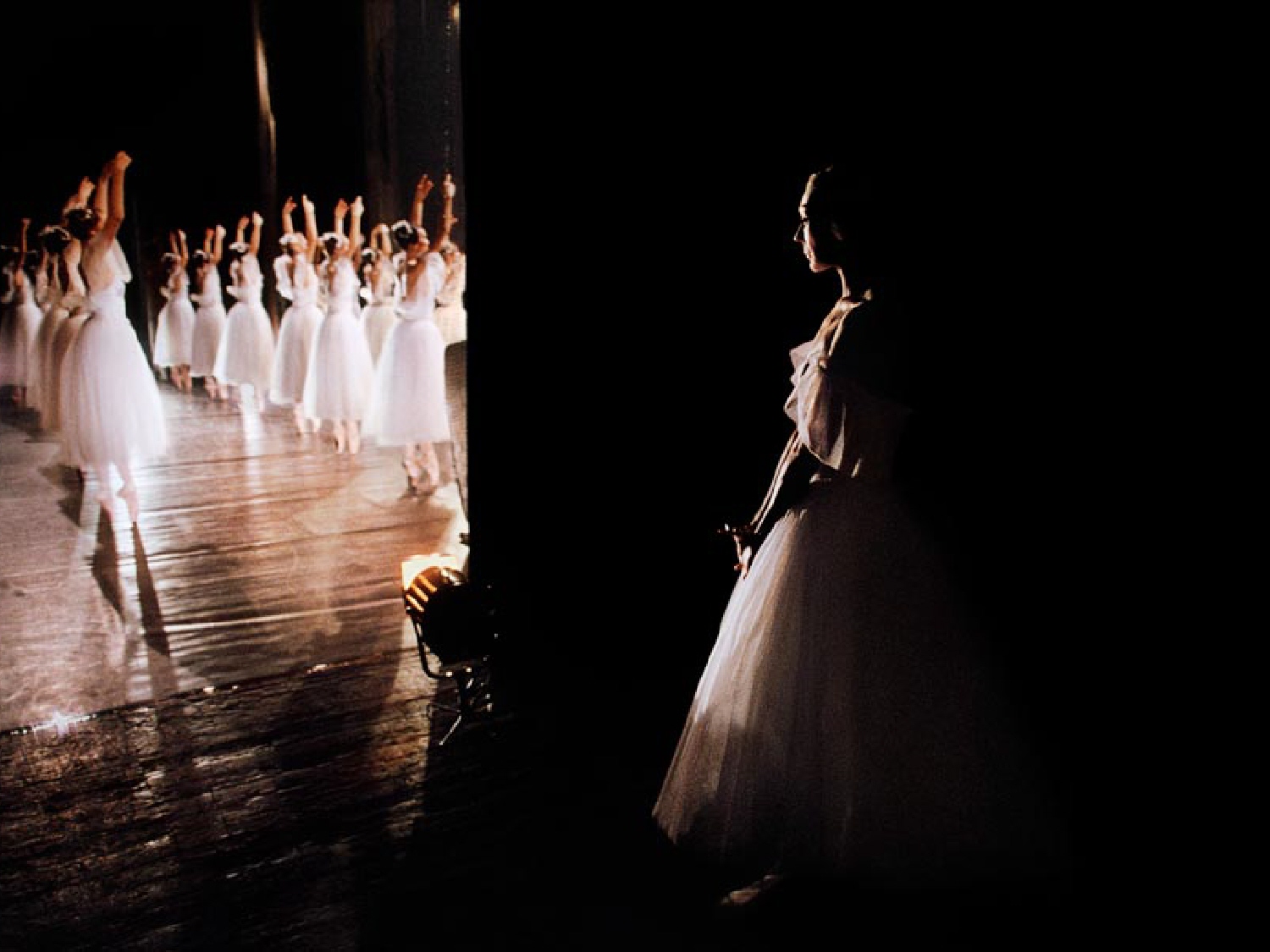
Learning in the wings


I am sorry this photo has absolutely nothing to do with the rest of this blog post...until I find a 'chute'.

That's the risk of lazy Googling.

WTF I love ballet.

I was curious to read a fairly recent article about #rhizo14 and I went off to download the aforementioned article.

It was in pdf format.

I wanted to annotate it, as I read, to spark ideas from the margins or just overcome boredom.

I turned to the hypothes.is application which I have started to use more thanks to the learning company of Terry Elliott, Kevin Hodgson, Joe Dillon, Sarah Honeychurch, and Tania Sheko.

A video about hypothes.is can be viewed below:


I wanted to annotate the article in pdf format with others so I asked Sarah Honeychurch to join in.

Then started a tortuous learning path into the functioning of the application with pdfs.

If you have a webpage url - its dead easy.

With the extension activated you simply annotate and you can share your page with annotations.

Here is an example of annotation of one of my blog posts with images from master annotater Terry Elliott: https://via.hypothes.is/http://tachesdesens.blogspot.com/2016/02/target-practice.html 

You can share the link as above and if the annotations are public you can then join in and annotate with the aforesaid Chrome browser extension.

In the case of pdfs, you first need to download a pdf.

Then you need to check the extension settings to make sure you can annotate files locally.

Next you drag the file to your Chrome brower.

You then annotate as usual.

What is strange is that when you first open a pdf file (your copy on your hard disk) that someone has annotated you think that the annotations will be linked to a specific url.

Your pdfs will be completely different downloaded copies.

However if you and your friend have your local copy and both have hypothes.is activated you can annotate collaboratively.

When you first open the pdf you will see NOTHING has been annotated. (this stumped me for hours)

However if you do one annotation and refresh the page you will magically see all the previous annotations of the pdf appear.

In other words you may have 30 people with 30 different copies of the pdf and there will be one set of annotations for the same pdf. (At least this is my hypothesis for today - I have only tested this with Sarah).

Of course this might have disadvantages...

I suppose it would be possible simply to define a group rather than publish publicly to get round any problems here...

So here is a pdf link to download which we have already worked on:
http://ajet.org.au/index.php/AJET/article/view/2486/1342

If you are interested in #rhizo14 or rhizomatic learning research come and join in.

If not don't waste your time.

So I didn't waste my time reading and annotating the article.

One might even say that a solidly arboreal article has been connected to Deleuzian and Guattarian concepts with a few flaky lines of flight.

I have been learning in the wings....

I regret I shall never be a ballerina.

PS

Here are some notes (very tree-like) on the syncronisation of local and web pdf files.
https://hypothes.is/blog/synchronizing-annotations-between-local-and-remote-pdfs/


Footnote

[for definitions of the French term 'chute' here is some more French:  https://fr.wikipedia.org/wiki/Chute]


Wednesday, December 16, 2015

Party management

I have to note this down immediately.

It is an important leap for me.

I am fascinated by story.

I was toying with complexity thanks to an improbable connection made as the result of remarking a Facebook conversation.

I wrote a post asking about the compatibility of story to complexity.

I had never heard of the term: 'Homo Narrans'.

I concluded my post a few hours ago with 'we are story.'

Homo Narrans...indeed.

I reflected on the patterns which emerged from my post.


I went and Googled complexity and narrative.

I fell upon a couple of videos by Dave Snowden (a person unknown to me).

I watched a first one. I watched it a second time. I shared it with friends of my network.

Terry Elliott immediately set up a Vialogue with the first video.


I will return once again to annotate.

There was a metaphor which immediately resonated.

Dave Snowden talks of different approaches to party management - for party management think classroom management, think education.

A complex systems approach to education therefore entails determining boundaries to what is acceptable and making sure that these boundaries are flexible and open to negotiation with the learners.

'Catalytic probes' are introduced, in the kids' party example -  'a video', 'a barbecue', 'a computer game', in the hope that a pattern of play (learning) will form.

If the kids group around the 'video game' it is what might be called 'an attractor' and if this 'attractor' is beneficial to the 'party' (think education,think language learning) we amplify it and if it is a 'negative attractor we dampen it.'

'We manage the emergence of beneficial coherence within attractors, within boundaries.

As an educator we manage what can be managed (not learning), we manage 'for emergence' (of learning).

This all suddenly rang bells with discussions around rhizomatic learning.

This all suddenly rang bells with discussions that I had been having with my colleague this week.

Over a number of years, we have been defining potential attractors, people, communities, activities inside or outside of the classroom, online or offline, negotiating boundaries with learners and colleagues, amplifying the beneficial activities, dampening the 'negative ones'.

We are constantly working in the present to adapt what we are doing.

'Managing the evolutionary present'.
Dave Snowden

We are in constant beta.

I never had this technical language before.

Along the way, we have been benefiting from the stories emerging from the participants.

We are constantly trying to rewrite our own narratives faced with complexity.

Dave Snowden's next points about research methodology - distributed ethnography will require weeks of study.

I then watched a second video of his entitled 'How not to manage complexity.'

Such an important conference!


I have much reading and listening to do.

I made a link with conversations that I had had with Bruno Winck about knowledge managment.

On reading around, I fell upon the Cynefin Framework, a diagram that I had seen before, noted, but never searched the source.


It was a framework that Viplav Baxi had talked about in a conversation that I had noted partially a few hours before...

I have a fair amount of learning to do...


Toying with complexity

"What difference do you think you can make - one single man in all this madness?" 

Terence Malick. 
The Thin Red Line.


The forces laid out on the floor were aligned in battle order.

The infantrymen were placed in front of the artillery with the cavalry waiting in the wings.

With one glorious charge the cavalry shattered the enemy lines, men fell like ninepins.

Victory was sweet.

I had it all planned out in my mind.

"I will join the marines. I want to be a commando."

The storyline changed over the years.

I was watching a conference of Dave Cormier.

At first I thought nothing of it.
I watched it again.
I thought nothing of it.

Then I read a comment stream.

I don't know why.

Boredom perhaps.

There was a conversation going on between Viplav Baxi and Dave Cormier.

Viplav Baxi Awesome Dave Cormier! I loved your talk and you made a really clear and cogent argument for change. Kudos! Will probably follow up with some thoughts on the Cynefin framework - I really don't believe that anything is really that "simple".
LikeReply8 hrs
Dave Cormier will be buy that sometimes refying to simple is a useful expedient?
LikeReply7 hrs
Viplav Baxi Just worried that simplifying what is not simple may reify current practices
LikeReply7 hrs
Viplav Baxi So by saying 'what is the capital of France' is 'simple' to google and answer maybe reifying the mindlessness of rote
LikeReply7 hrs
Viplav Baxi And justifying traditional practices of assessment for those 'kinds' of questions or knowledge
LikeReply7 hrs
Dave Cormier Think about all the things we reify in learning to drive a car. If you tried to understand each of the steps you'd be overwhelmed.
LikeReply7 hrs
Dave Cormier So we say 'pressing the gas pedal makes the car go faster'
LikeReply7 hrs
Viplav Baxi You are right of you are focused on the outcome. But is that education?
LikeReply7 hrs
Dave Cormier Viplav i'm never in favour of justfiying assessment smile emoticon
LikeReply7 hrs
Dave Cormier Viplav sometimes. Education is just social shaping. We can shape it a bunch of different ways
LikeReply7 hrs
Dave Cormier I'm in favour of shaping the main instrument of education towards complexity
LikeReply7 hrs
Dave Cormier But sometimes i just want to 'learn' how to use my coffee roaster. Tell me what to do. I"ll do it.
LikeReply7 hrs
Viplav Baxi Reading Dewey right now. So introspecting. He writes that etymologically education means just a process of leading or bringing up. When we have the outcome in mind-that is when we talk in terms of shaping into the standard form of social activity
LikeReply7 hrs
Viplav Baxi If we stick to the former definition then we lead to instead of design to
LikeReply7 hrs
Dave Cormier all we can do, i think, is try to broaden the definition of education in inclusive ways. i think 'changing the definition' is probably more tgan we'll be able to accomplish
LikeReply6 hrs
Viplav Baxi Broaden the definition?
LikeReply1 hr

There was one comment of Dave Cormier which sparked my thinking:

"I'm in favour of shaping the main instrument of education towards complexity."

"How can education not be an illustration of complexity?" I thought to myself.

Then I read:

"But sometimes I just want to 'learn' how to use my coffee roaster. Tell me what to do. I'll do it."

I thought of ritual, of habitual, of process, of story.

I remembered a comment of my grandmother, aged 80.

"When I look at myself in the mirror, I just don't recognise myself."

I remembered a comment of my mother, aged 75.

"When I look at myself in the mirror, I just don't recognise myself."

They were unhappy with a plot-line which had escaped them.

I remembered a slogan on a t-shirt.

This is not the life we ordered...


I thought of climate change.

I thought of the people gathered together in some hangar, just North of Paris, hugging each other at their part played in some historic agreement.

Heroic.


"What difference do you think you can make - one single man in all this madness?" 

Terence Malick. The Thin Red Line.

I was watching a trailer for a documentary entitled 'The Ecstasy of Wilko Johnson.'


In the documentary, a man faces up to his imminent demise:

"The idea that death is imminent makes you realise what a wonderful thing it is to be alive."
Wilko Johnson.

He becomes hyperaware of the joy of his existence.

"Everything lifted off of me. The present, future, past, it was all concentrated down into the moment...I'm alive."
Wilko Johnson.

"How does one 'shape education' towards complexity?" I thought to myself.

What is life if not complex?

What is education if not story?

Is complexity compatible with story?

"Everything lifted off of me. The present, future, past, it was all concentrated down into the moment...I'm alive."
Wilko Johnson.

What are these stories?

I thought of Terence Malick.


I don't know why.

"What difference do you think you can make - one single man in all this madness?" 

Terence Malick. The Thin Red Line.