Showing posts with label knowledge. Show all posts

Saturday, August 18, 2018

Screen captures freedom.


"The time to hesitate is through
No time to wallow in the mire
Try now we can only lose
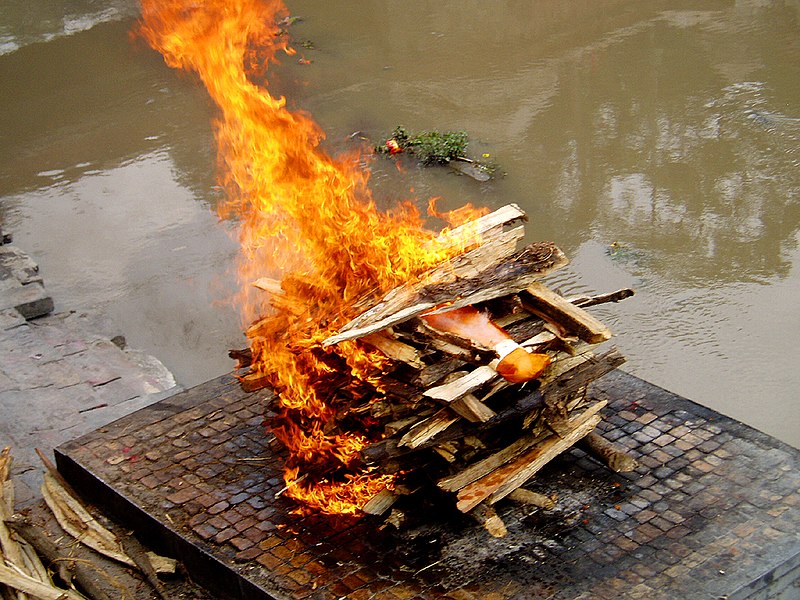
And our love becomes a funeral pyre."

The Doors.


SCREEN CÄPTURES FREEDOM.


HUNGER.

HUNGER FOR KNOWLEDGE.

DEFINE KNOWLEDGE.


HUNGER.

HUNGER FOR KNOWLEDGE.

KNOWLEDGE OF HUNGER.

HUNGER IS NO RHETORIC!

HUNGER DEFINES ACTION.

SCREEN CAPTURES FREEDOM

I am working on finding my path through a page to freedom.

SCREEN CAPTURES FREEDOM

HELPLESS?
HOPELESS?

RESISTANCE IS FUTILE?

CAPTURE DEFINES ACTION.
HUNGER DEFINES ACTION.

"Let us not wallow in the valley of despair, I say to you today, my friends."
Martin Luther King

Reflecting on < What "decolonised education" should and shouldn't mean < and could mean.


EDUCATION? WHAT EDUCATION?


EDUCATION MAY DEFINE INACTION.
EDUCATION MAY DEFY INACTION.

LINES OF FLIGHT....

LINES OF FLIGHT STUCK TO FLY PAPER?

CAPTURED IN LIGHT?

FLIGHT? LIGHT CONSUMED? FUTILE CONSUMERS ALL!

EDUCATION WHAT EDUCATION?

SCREEN CAPTURES FREEDOM TO QUESTION.


SCREEN CAPTURE DEFINES ACTION


KNOWLEDGE OF HUNGER DEFINES ACTION.
KNOWLEDGE OF INACTION DEFINES HUNGER.


SCREEN RAPTURE DEFINES ACTION


LINES OF FLIGHT STUCK TO FLY PAPER

What will they be when we are all stuck?

They will be stuck.

They will be struck down long before.

SCREEN CAPTURE 

20 Then the Lord said to Moses, “Get up early in the morning and confront Pharaoh as he goes to the river and say to him, ‘This is what the Lord says: Let my people go, so that they may worship me. 21 If you do not let my people go, I will send swarms of flies on you and your officials, on your people and into your houses. The houses of the Egyptians will be full of flies; even the ground will be covered with them.

HAVE FAITH! FAITH PLAGUES THEM.

And the Lord said to Moses, “Stretch out your hand over Egypt so that locusts swarm over the land and devour everything growing in the fields, everything left by the hail.”

BUZZ.

AGAINST ODDS

BUZZ.
BUZZ.

SO COUNT, COUNT.

HAVE FAITH! FAITH PLAGUES THEM!

Against their odds.

FAITH CONSUMED?

They would have us consumed.

They would have us consumed in their neon, their néant...

HAVE FAITH! FAITH PLAGUES THEM!

They would have us dumb.
They would have us meek.

SEEK AND YE SHALL FIND.

EDUCATION? WHAT EDUCATION?

ASH, DUST, DUSTED

Then the Lord said to Moses, “Tell Aaron, ‘Stretch out your staff and strike the dust of the ground,’ and throughout the land of Egypt the dust will become gnats.” 17 They did this, and when Aaron stretched out his hand with the staff and struck the dust of the ground, gnats came on people and animals. All the dust throughout the land of Egypt became gnats. 18 But when the magicians tried to produce gnats by their secret arts, they could not.
Since the gnats were on people and animals everywhere, 19 the magicians said to Pharaoh, “This is the finger of God.” But Pharaoh’s heart was hard and he would not listen, just as the Lord had said.

So go on,
COUNT
COUNT.

SIRE, MY LORD, YER HONOUR.

ASH, DUST, DUSTED
.

LET THEM LIE.
LET THEM ROT.
BE NOT AFRAID.

RESISTANCE IS FUTILE?
RESISTANCE IS FUTILE.

CONSUMED IN OUR PYRE.
RIVER FLOWS, FLOWS IRK, FLOWS MIRK, FLOWS NOT.
DESERTS US, JUST DESERTS, OUR DESERTS, THEIR DESERTS, JUST DESERTS.


UNLOCKE FREEDOM.


Saturday, October 21, 2017

Speaking in tongues.


Glossolalia or speaking in tongues 
is a phenomenon in which people appear to speak in languages unknown to them. 
One definition used by linguists is the fluid vocalizing of speech-like syllables 
that lack any readily comprehended meaning,


“In order to manifest Aiki principle you must first have connectivity throughout your own body. This is the result of developing your ki or intent. Secondly your movement must be a balance of yin and yang so that there is no pressure into the point of meeting with your partner. In the Chinese Classics it states,”To yield is to adhere, to adhere is to yield.” This doesn’t mean giving up space but rather using the point of contact as a pivot point. On one side yielding (yin) to your partner’s force and on the other side entering (yang) into his space. In this way your partner is stuck to you and you are free to move in any way that you choose. This requires a great deal of sensitivity. It is a simple thing but very hard to master.”

Sensei Gleason.

Magnetiser.


Moving had become akin to crucifixion.

Hands raised.

Eyes closed. 

Peace appeared a rite.

It was an unsolicited gift, now given freely.

 "Eli Eli lama sabachthani?"

Nietzsche's ghost.

“Whoever fights monsters should see to it that in the process he does not become a monster. 
And if you gaze long enough into an abyss, the abyss will gaze back into you.” 

He appears, disembodied in her dreams.

Proto-fascist apparition, speaking Aramaic?

He sighs with a heavy heart.

He wails, he shakes his fist.

"Eli Eli lama sabachthani?"


The death of Nietzsche.

“The individual has always had to struggle to keep from being overwhelmed by the tribe. If you try it, you will be lonely often, and sometimes frightened. But no price is too high to pay for the privilege of owning yourself.” 


“He who has a why to live for can bear almost any how.”


Speaking in tongues.


PERFORMANCE

[JACQUES]
All the world’s a stage,
And all the men and women merely players;
They have their exits and their entrances,
And one man in his time plays many parts,
His acts being seven ages.
 At first the infant,
Mewling and puking in the nurse’s arms;

And then the whining schoolboy, with his satchel
And shining morning face, creeping like snail
Unwillingly to school.
 And then the lover,

Sighing like furnace, with a woeful ballad
Made to his mistress’ eyebrow.
 Then a soldier,

Full of strange oaths, and bearded like the pard,
Jealous in honor, sudden and quick in quarrel,
Seeking the bubble reputation
Even in the cannon’s mouth. And then the justice,
In fair round belly with good capon lined,
With eyes severe and beard of formal cut,
Full of wise saws and modern instances;
And so he plays his part.
 The sixth age shifts

Into the lean and slippered pantaloon,
With spectacles on nose and pouch on side;
His youthful hose, well saved, a world too wide
For his shrunk shank;
 and his big manly voice,
Turning again toward childish treble, pipes
And whistles in his sound.
 Last scene of all,
That ends this strange eventful history,

Is second childishness and mere oblivion,
Sans teeth, sans eyes, sans taste, sans everything.


Forsaken, forgiven?

He was a self-engineered man.


"One should not understand this compulsion to construct concepts, species, forms, purposes, laws ('a world of identical cases') as if they enabled us to fix the real world; but as a compulsion to arrange a world for ourselves in which our existence is made possible:-we thereby create a world which is calculable, simplified, comprehensible, etc., for us."


Friedrich Nietzsche

His body was results driven.

Material success brought little succour for his soul.

Respect, he owned, respect, he forced.

Love, his own, love, he yearned.

No gain without pain.

Self-possessed pain.

Self-dispossesed pain.

His was an American dream.

He lived it, he breathed it.

His was an American fallacy.

He avoided an outstretched hand.

Only twice, he wept.

Once at her funeral.

Once at his funeral.

Mama, Dada 

"Eli Eli lama sabachthani?"


Footnotes.

I am reflecting on my practice through aikido, how can we retain/attain unity in our connections?
To what extent is this patchwork of a piece an expression of mine?
To what extent is a domain of one's own a source of slavery?
To what extent can there be a commons if there is no property?
Is commons what is left after those with power have staken their claims?

Term “connection” in Aikido is often used inter changeably with “unity”. Both of them relate to Japanese words “Aiki” and “Musubi”.  They describe the quality of being in one’s body and interaction between partners that allows them to move together as one.  Although these terms are somewhat similar, they do have slightly different meaning.  For example, the word “connection” implies two separate entities meeting and forming “unity”.  Japanese term “Aiki” describes unity of energy, while “Musubi” means “tying together, or connecting two things or people”. Despite the subtle differences, all these terms will be used here as describing the same idea.


Thursday, October 12, 2017

Blinkered

I mean what are we paying attention to?

I was quite proud of my newly acquired skill of focussed listening.

I sat quietly, I turn my head to the group to my left.

One is speaking French.


"Oh your French is excellent."

I compliment.

The student smiles.

He speaks English.

He notices my attention elsewhere, he speaks French.

I turn my head to the group on the right.

"I did went to the park."

"I'm sorry, what did you say?"

The student looks confused.

"Er.....you er....to the park? 
(teacherly rising intonation)"

The student looks even more confused.

"Er....to the park?"

"I go to the park."

"Yes, you.....to the park" 
(accompanied by hand gesture to indicate past.

The student looks even more bloody confused.

He is now concentrating on interpreting my illegible hand gesture.

The other students are getting frustrated, tapping their fingers.

Three minutes of embarassed silence.

I give up.

This elicitation nonsense is lost in the park.

"You went to the park."

"Yes, I went to the park."

The student looks non-plussed.

I feel him shrugging his shoulders.

He continues trying to perform.

Who is he performing for?

Taking off the blinkers.

What was I trained to do?

How are we having our attention directed?

Who is directing our attention thus, for what, and for whose purposes?

How is such training making teachers ignorant of what is essential?

Blinkered.

"He is dead," said Boxer sorrowfully. "I had no intention of doing that. I forgot that I was wearing iron shoes. Who will believe that I did not do this on purpose?"

George Orwell.

"He's so lazy," my colleague said to me of one student.

"He's so lazy," I said to myself of another student.

How do we know what harm we do with our iron shoes?

This year, I decided to reassess all my previous judgements.

Those students are not "lazy" this year.

They may not have done any "observable work" or shown any "observable learning" but "lazy" is not a useful lens through which to view people.

I thought I might question my judgements, my practices, my certainties, my perceptions.

I thought I might learn, really learn.

I thought I might go about analysing things more systematically.

What does learning really look like?

What does learning really feel like?

Where do we really need to be directing our attention, our efforts?

Seeing with new eyes.

I had to open my eyes differently, I had to experiment with shifting my attention.

I had to deliberately and continuously test my assumptions even more often than usual.

To what extent are we basing our judgements, our attitudes, our behaviour from positions of ignorance?

Blinkered.

"Our sense of how the world works is often vastly cruder than we think."  Keil

(quoted from "Want a Deep Understanding? First, Know How Little You Know." Winston Sieck).

A student is holding his head in his hands.

"Is he disinterested?"

"Is he bored?"

"Are you OK?" I ask.

"How do you say malade?" He asks.

"Er ill or sick."

"I am sick." He says.

He goes on holding his head in his hands.

Taking off the blinkers.

I started writing this having just read Terry Elliott's piece entitled:

Epiphany: C. Wright Mills Sociological Imagination Is Also a Pedagogical One

In it he writes:

"More and more I feel like an anthropologist in my classroom.
For example, having read 54 summaries over a very challenging article by Jonathan Haidt, I had one extremely powerful insight.  And I only had that insight because I had a set of 30 minute conferences as well.
I am so lacking in sociological and pedagogical imagination that it only became clear to me after the dust settled that students ignore what they don’t understand."
This reflection connects with my current research.
I could echo Terry:
"More and more I feel like an anthropologist in my classroom.

Taking off the blinkers.

This reflection reminds me of conversations with Terry about grass...of how he, as a farmer with a close relationship with sheep, is able to read stories in grass which appear here in "Spring Flowers."

I am grass illiterate.

This reflection reminds me of the work of Gee and his "Critique of Traditional Schooling." and a quote of Kramsch:

"Context is not a backdrop to learning the language, it is the very object of learning. Thus we need to study context itself and its relation to the texts that both structure and are structured by it." 


It is only through ongoing dialogue that one can hope to partially understand what is going on within the boundaries of the class.

It is only through ongoing questioning of the structure of the boundaries which give context to our activities that we can begin to understand what is going on within our classes.

I notice a major difference between a group of students being integrated by teachers into a professional community of ergonomists, whose work uses scientific articles as support to their work, and students of teachers in other disciplines who use academic texts as hammers to beat the students into submission to underline power differentials.

Are we reading so as not to understand or so as to understand?

Blinkers.

"Have you read Foucault?" I asked enthusistically.

My question was met with disgust from a student whose teacher had had her read Foucault.

Should I be surprised?

"Context is not a backdrop to learning the language, it is the very object of learning." Kramsch

Taking off the blinkers.

Asking the students to systematically provide language learning biographies has given me the means to focus my attention on certain students who were simply lacking attention, to help them analyse their own stories in relation to others and to question a system which leaves young adults feeling like failures.

Asking the students to systematically share their interests, passions, ambitions, opens up opportunities to connect them to documents, people, communities with whom they may be able to relate.

If I am doing such a bad job, maybe others younger than myself, closer to the students can be enlisted to act as more effective mediators?

I start to see the class not as a homogenous group but as an ecology of inter-twining networks with potential for more imaginative, perhaps more distant connections.

I have to get the students to share their own visions, their own feelings, their own perceptions of what is happening in the classroom and outside it.

In this way we can gain an insight into what is not observable.

One pair of eyes and ears become twenty pairs of eyes and ears.

At the same time I am looking to associate them to, or to co-imagine research projects concerning their own learning.

Student ergonomists' analysis of work situations becomes transferrable to our English classroom situation which has moved outdoors for the day.


Transferring a blackboard from the classroom to the space outside the building becomes an opportunity for these ergonomists to put into practice their developing competences.

How do they feel in this new environment?

Is their attention awakened?

Is their attention distracted? (interesting idea in itself)

Is this an "official" or an "unofficial" class?

Where are the boundaries?

Where are the emergent boundaries which shift according the ambient noise level with people having to move closer to be heard or closer to the board to read?

What happens when other people join the group sitting in the grass?

How does it affect relationships between the students and between the students and the teacher.

Do they feel more able to be themselves, or more at ease?

How does a passing plane or ambient nature affect their focus?

What happens when one student isolates himself from the class because he is suffering from allergies to the newly cut grass?

Should one simply exclude the student, go back in the classroom, ignore the student?

What should we think about "democratic" decisions when the majority decides that the minority should shut up and suffer?

I pick up the "grass" identifying three sorts of unnameable (by me) green plants and we speak about how blinkered we are when it comes to knowledge.

We think about how the green green grass of our home is a threat to others.

Indeed what is knowledge if it is not associated to our context...to our community?

This becomes a source for a discussion with students who take on different identities those of co-learners.

How does a classroom box induce ritual, learnt behaviour, phobic behaviour?

How does the conversation or the learning or the relationships become...in the words of the students:

"real conversation, real language, real learning."?

I am multiplying my efforts to enable student led activities to emerge in the classroom.

Whether that be training session led my students in adapted physical activity.


Or reflections on our own cultural barriers to eating insects.

Or the art of the artisan chocolate maker.

Or the relationship between the cocoa and the colony....


I am multiplying my efforts to enable student led activities to emerge outside the classroom.

A group of students link up with a foreign student to go rock-climbing in English.

Another Facebook group emerges around the idea of running in English.

Another ex-student pops up on a smartphone from Lima in Peru to speak to students inside the classroom about concepts and experiences of freedom.

Another musician pops up from the ranks of the unknown.

Another ex-student friend pops up to animate a personal development session with those wanting to understand the nature of travel.

I take a photograph of them to see what attentive learning looks like.


I see them stretching forward to listen.

I find myself being aware that my position of teacher has become that of the observer, the witness.

I come back to Terry's thoughts

"More and more I feel like an anthropologist in my classroom.

I find myself sharing a quote of Proust again.


“Le véritable voyage de découverte ne consiste pas à chercher de nouveaux paysages, mais à avoir de nouveaux yeux. ”

I share with the students the joy for me of teaching through learning, of learning through dialogue.

I spend some time after the lesson talking with the students about the importance for me of their observations, their analysis of the moments that we have spent together so that I may, with their help learn to read this our context(s).


Sunday, April 9, 2017

Darkness that binds us.


"And one by one the nights between our separated cities are joined to the night that unites us."

Pablo Neruda

Alone Together.

The door slammed.
She had left.  


Alone together. 
Sole babe in arms.
A barmy night, 
Window open wide.


Gaze up at stars.
Quiet now, in awe.

Owl hoots.
Startled, 
Turns to me.

"Oooh"

With his lips.

Wonder.

Love.

Loss.

Aches.

 In my body.


Enlightenment.


"Nothing can dim the light which shines from within."

Maya Angelou.


Enlightenment

We called ourselves "enlightened".  

God, was Jesus "enlightened"?

We became fishers of men.

We caught them in our net.

They walked on water.

We sailed the boat.


Inclusion.

I think of stories of inclusion. 
I feel suspicious. 
I wonder why.  
I go and think in pictures.

Go figure.
Go wonder. 


We are forever longing for being a part of a whole.

We were whole.
Then we are born.

Conception, one, two, four, cells, subdivide and multiply.

Skin.

Illusions of separation, identification, of being apart.

Storybound, story bound, history bound, bone bound, dust bound.

Be suspicious of inclusion.

Be open to change.

Love is not to possess, it is to be open to loss.

The unenlightened?


The unenlightened?


The unenlightened?


The unenlightened?


Open education?


Refine, define, define the terms, the licence, the rights.

Who belongs, who is apart.

Fill space.

Draw lines, write words.

KNOWLEGE.

Enclose field.


EXPERT.


NOW LEDGER.


FREE DOM I NATION.


Englightenment untruth.

Post truth.

Unravel power.

Untravel story.

Unravel ego.

Post haste.

Open education resources.
Detritus.
Detritruth.

Apple for the Toothless.

A gift economy.

Uber fuck.

Hasta fascista baby.

Open education values?


Open education values?


Open education values?


Open education values?

Open education values?

Let us not share our enlightenment.

Let us share the darkness that binds us.

Facts lie! Post truth! 

"Poetry 
melts my bones.
enters my blood.

and changes 
its composition."

Sanober Khan


"Night is purer than day; 
it is better for thinking and loving 
and dreaming.

At night everything is more
intense, more true.

The echo of words that have 
been spoken during the day
takes on a new and deeper 
meaning."

Elie Wiesel.