 "Ships that pass in the night, and speak each other in passing, Only a signal shown and a distant voice in the darkness; So on the ocean of life we pass and speak one another, Only a look and a voice, then darkness again and a silence."
Henry Wadsworth Longfellow
A little girl reaches out towards the approaching coast.
Does she sense the tears which well up in my eyes?
She will walk for a first time on the land that her father called home.
I think of the people that lie there she will never know.
I think of the people that lie there she will never know.
A little girl reaches out..
I wonder how far our humanity stretches?
Other journeys cross my mind.

I think of a four-year old child washed up on social media, on international press, on a beach in Greece.
Two children on average drown in the Mediterrenean Sea every day.
Without leaving my office chair, I OK Google searched the information.
Had I thought of children drowning in the English Channel?
How far does our humanity stretch?
As far as the keyboard and the mouse?
As far as the screen?
As far as the keyboard and the mouse?
As far as the screen?
Can we do no more than shed a (virtual) tear?
Hanging out, messing around, geeking out
Hanging out, messing around, geeking out
It was a Virtually Connecting Hangout from the DML conference that got me thinking.
What does empathy really mean in a digitally connected world?
Can technology enable us to develop empathy more quickly?
Listening takes time.
The Friday before, I had spent over an hour in the company of Terry Elliott in a Kentucky.
I was speaking at lunch time, Terry had gotten up to chat at rooster time (early).
I was speaking at lunch time, Terry had gotten up to chat at rooster time (early).
We had organised a hangout, and spoke of many things, some of which I wouldn't share here.
It has taken over two years of blogging, playing, writing poetry, speaking together for me to talk of things with him that I wouldn't share here. I consider him, a good friend. He is one among a few real friends that I have made online.
It has taken over two years of blogging, playing, writing poetry, speaking together for me to talk of things with him that I wouldn't share here. I consider him, a good friend. He is one among a few real friends that I have made online.
It helps us find our place in the world when we find people that we can trust, no matter where they are.
Between humans, sometimes listening is enough.
Sometimes listening is all that we can do.
.
No short-cuts for empathy.
So, I was watching a VConnecting hangout.
Howard Rheingold turned up wearing a hat.
Sometimes, someone's hat is enough to make you feel happy.
Mia Zamora mentioned the idea that it would be great to have an "empathy hat" so that we could understand other people's stories.
I am not sure that either listening or understanding are always enough.
There is something that Maha Bali said during the VConnecting session that had me nodding:
Howard Rheingold turned up wearing a hat.
Sometimes, someone's hat is enough to make you feel happy.
Mia Zamora mentioned the idea that it would be great to have an "empathy hat" so that we could understand other people's stories.
I am not sure that either listening or understanding are always enough.
There is something that Maha Bali said during the VConnecting session that had me nodding:
There are no short-cuts to establishing dialogue with others so as to develop empathy, friendship.
There is no question that working as a connected educator via blogging and social media has enabled me to gain a broader range of understanding of diverse contexts, diverse world views, diverse life stories. From this respect technology may indeed help us to widen circles of empathy.
Technology has helped me focus on individual stories through narrative research as a means to identify trends, as a means to broadly modify pedagogical action.
Nothing replaces the time taken sitting next to a person in dialogue.
Using technology in the classroom has enabled me to concentrate my energy on individual dialogue.
Emotional intelligence.
It is one thing to speak together in a private offline space, it is quite another to do so online.
Who do our data trails, which enable more pertinent "recommendations", belong to?
Is spending time "really getting to know" our students to "personalise" our interactions only postive?
How much do educators need to know about their students?
Who should we trust?
How much should we or our students share of our lives online?
Developing our "emotional intelligence" is all very well but whose intelligence is being developed?
I find an article entitled:
The Dark Side of Emotional Intelligence.
http://www.theatlantic.com/health/archive/2014/01/the-dark-side-of-emotional-intelligence/282720/
How much data are we aware of giving up?
Using technology in the classroom has enabled me to concentrate my energy on individual dialogue.
Emotional intelligence.
It is one thing to speak together in a private offline space, it is quite another to do so online.
Who do our data trails, which enable more pertinent "recommendations", belong to?
Let's call it "formative assessment" and watch while the panopticon laughs at how we did it to ourselves. #2016DML https://t.co/eyyWA91oAd— Robin DeRosa (@actualham) October 6, 2016
Is spending time "really getting to know" our students to "personalise" our interactions only postive?
How much do educators need to know about their students?
Who should we trust?
How much should we or our students share of our lives online?
Developing our "emotional intelligence" is all very well but whose intelligence is being developed?
I find an article entitled:
The Dark Side of Emotional Intelligence.
http://www.theatlantic.com/health/archive/2014/01/the-dark-side-of-emotional-intelligence/282720/
How much data are we aware of giving up?
Love networks powerfully.
It is love (and hate) that networks powerfully.
I suppose I always return strategically to the gospels for inspiration
Powerful parables work.
Jesus Christ didn't need empathy bracelets or like buttons to change his world.
No written media and his impact would surely have remained anecdotal.
We must bear witness to our times.
No written media and his impact would surely have remained anecdotal.
We must bear witness to our times.
Silence speaks volumes.
There was something that Chris said during the hangout that had me nodding:
There are things that we don't want other people to know, there are things that we choose not to say.
There are times when we imagine that a website may bring us anonymity to share what we would find difficult to say to others...
There are times when we imagine that a website may bring us anonymity to share what we would find difficult to say to others...
— chris g (@hypervisible) October 6, 2016
I Google the word "verlan a French term for a secret backwards language used to speak privately.
While
this internet may appear to give us greater reach - informational,
relational, commercial, it demands that we question whose reach is most
enhanced.
Facebook reveals news feed experiment to control emotions.
https://www.theguardian.com/technology/2014/jun/29/facebook-users-emotions-news-feeds
Whose language are we speaking?
"Laisse beton."
Visions of Citizenship
"Many verlan words refer either to sex or drugs, related to the original purpose of keeping communication secret from institutions of social control".
I think of how English, of how the internet, is a means of social control.
I think of how English, of how the internet, is a means of social control.
Facebook reveals news feed experiment to control emotions.
https://www.theguardian.com/technology/2014/jun/29/facebook-users-emotions-news-feeds
Whose language are we speaking?
"Laisse beton."
Visions of Citizenship
I struggle rudely with the term "digital citizen".
What the fuck does being a "digital citizen" mean?
Do we have "digital democracy"?
Do we have a "digital constitution"?
Do we have "digital democracy"?
Do we have a "digital constitution"?
Not all "digital citizens" are created equal.
Are we a "digital citizen" if we are engaged in the manufacture of digital devices?
“Scratch Any Innovation, You’ll Find Human Labor” by @scottros https://t.co/XQAFDOV9Kp— Simon Ensor (@sensor63) October 5, 2016
Are we a "digital citizen" if we live in a country where access to the wider internet is restricted?
How countries like China and Russia are able to control the internet https://t.co/6lxK1uB1oX via @qz #digped— Simon Ensor (@sensor63) October 6, 2016
Here I am, a "digitally engaged citizen", I scroll, I click, I type, I make bold.
I share a video of a little girl in tears.
I share a video of a little girl in tears.
What the fuck do I do else?
I look at the statistics for a Google Search:
[girl charlotte city council tears 650,000 results]
It doesn't stop another bloody killing.
What is the internet really doing to increase empathy?
Beware America's shocking loss of empathy.
Hate networks powerfully...
Troll di laa, troll di dee
This is fucking poetry.
I feel helplessly angry.
It doesn't help.
I think of Howard Rheingold's feelings of cynicism towards the web being a means to develop civic, civil argumentation, and social progress.
Walk the talk...
I struggle to find a needle of hope in a haystack of populist kitty crap.
I look at the statistics for a Google Search:
[girl charlotte city council tears 650,000 results]
It doesn't stop another bloody killing.
What is the internet really doing to increase empathy?
Beware America's shocking loss of empathy.
Hate networks powerfully...
Troll di laa, troll di dee
This is fucking poetry.
I feel helplessly angry.
It doesn't help.
I think of Howard Rheingold's feelings of cynicism towards the web being a means to develop civic, civil argumentation, and social progress.
Walk the talk...
I struggle to find a needle of hope in a haystack of populist kitty crap.
I think of how social media facilitates assembly, demonstration, action.
Yes, finding empathy with others online can enable us to act locally.
Enough is enough: How Polish Women's Black Protest Defeated Abortion Ban.
http://www.huffingtonpost.com/tewodros-melesse/enough-is-enough-how-poli_b_12385382.html
I am so fortunate with my internet connected Polish friends.
I immediately feel an increased identification with distant people.
This is progress.
I got to visit Auschwitz with my students.
It reeks of the death of empathy.
How far does our inhumanity stretch?
Yes, finding empathy with others online can enable us to act locally.
Enough is enough: How Polish Women's Black Protest Defeated Abortion Ban.
http://www.huffingtonpost.com/tewodros-melesse/enough-is-enough-how-poli_b_12385382.html
I am so fortunate with my internet connected Polish friends.
I immediately feel an increased identification with distant people.
This is progress.
I got to visit Auschwitz with my students.
It reeks of the death of empathy.
“We walked inside and saw these skinny people who were still living, and one of my enlisted men who walked in with me realized they were starving. We had nothing but some candy bars, which we got in a ration, and one of my men gave the candy bar to one of these people who grabbed it and ran away and gulped it down so fast that he became unconscious and probably choked on it when he tried to swallow it before someone took it away from him. These Jewish people and these Polish people were like animals. They were so degraded, there was no goodness, no kindness, nothing of that nature, there was no sharing. If they got a piece of something to eat, they grabbed it and ran away in a corner and fought off anyone who came near them.”
Samuel Glasshow, liberator of Woebbelin
http://www.holocaust-trc.org/the-holocaust-education-program-resource-guide/oh-no-it-cant-be/
http://www.holocaust-trc.org/the-holocaust-education-program-resource-guide/oh-no-it-cant-be/
Most of the time our global media glut does little more than render us desensitised.
We see pictures of dead children, under heaps of rubble, washed up on the shore.
So many people, so many corpses, so many untold stories, not enough tears.
So what the fuck?
Passage to India.
I gawp with my children at yachts on the Cannes seafront.
Which celebrity will we spot?
We don't take a selfie.
There's a couple of elderly people drinking tea on a Bermudan boat.
Surely British...Ceylon Tea, far away from Frinton-on-Sea.
A swarm of red-tshirted lackeys are polishing the brass and scrubbing the deck.
It is coming up all ship-shape.
I make a note that many of the yachts at the quay are flying a red British Ensign.

What stories do these boats tell about our globalised economy?
It is a real struggle not to feel some sort of
What does this say about me?
What did my mother tell me about the flag waving at the Last Night of the Proms?
I think a moment about Britannia ruling the seas.
That imagined British community is beginning to make me feel sea-sick.
Whose passage paid for that Bermudan yacht?
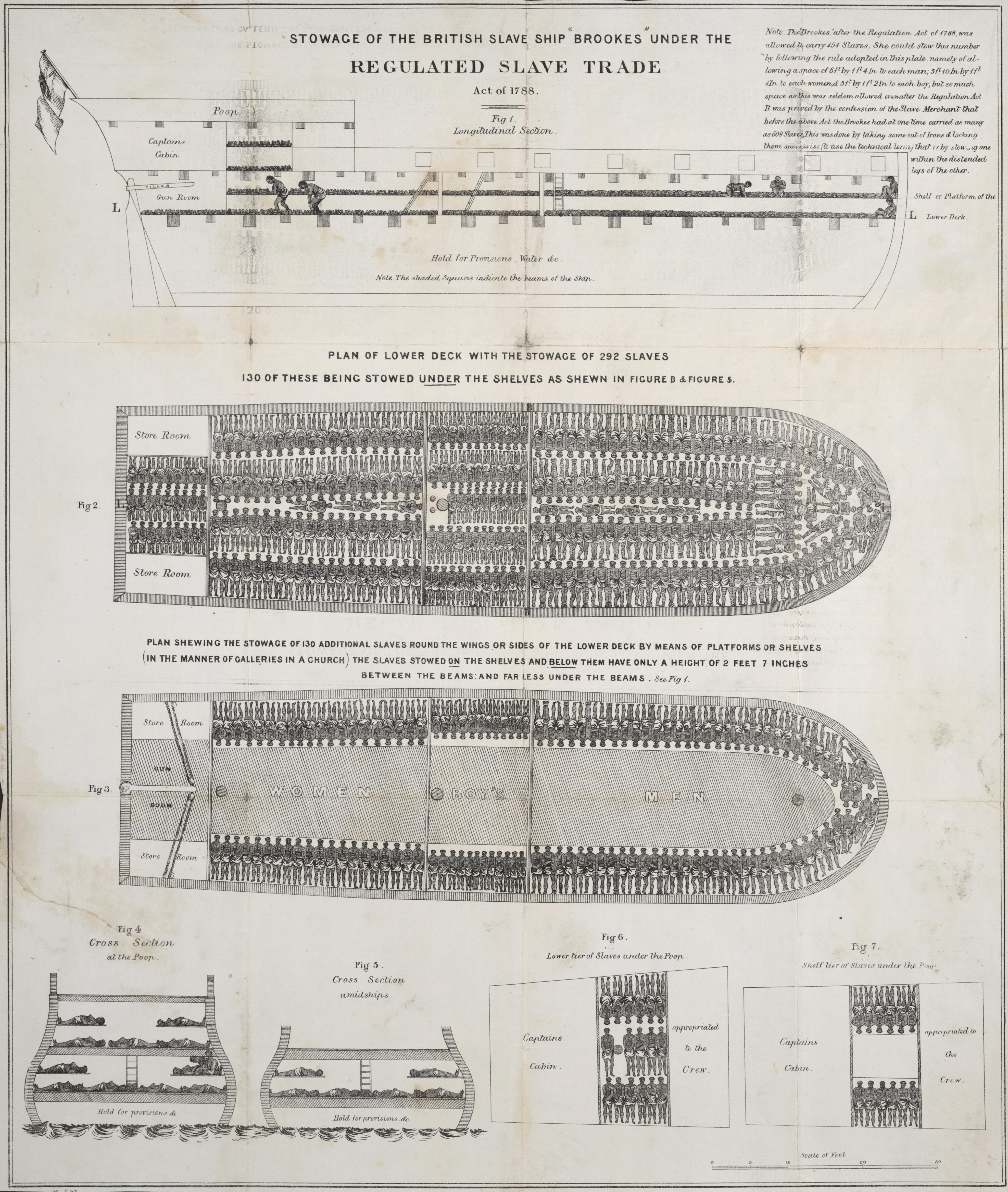
I think a moment about the USA ruling the waves.
“The middle-class standard of the independent self has increasingly become the default American standard for how to think, feel and act in the world…this middle class self is not just a matter of individual attitudes or beliefs; it is an understanding of what it means to be a person that is built into and promoted by the social machinery – law, politics, education, employment, media, and health care of mainstream American society. Although the independent self is widely accepted as the cultural standard, it is not the natural, normal, neutral or even the most effective way of being a person. Instead, it is a privileged and culture-specific understanding of what it means to be a person that flows seamlessly from the resources, opportunities, and experiences linked with middle-class American standing in society.”
― Susan T. Fiske, Facing Social Class: How Societal Rank Influences Interaction: How Societal Rank Influences Interaction
What does it mean to develop a "digital identity", find your "voice"?
Who are we developing it for?
Whose stories are we to tell?
Who is paying for it?
"My humanity is bound up in yours, for we can only be human together."
Desmond Tutu.


