I am getting an idea of my contours, of my connections, of my motivations, of possible directions.
Touches of Sense is one example of how I wander when left to my own devices.
I write most often as a stream of consciousness, any learning is emergent.
I take a pause to lay down markers for myself.
If it is to be a usable map then I need to integrate its lenses into more focused exploration.
I am being systematic in my analysis now.
There comes a time for nature to become a template for action.
Poetry is no less a science, it is no less a map, it is no less a means to reimagine our roles.
I post a reference to Shelley here for future reflection:
For Shelley, "poets ... are not only the authors of language and of music, of the dance, and architecture, and statuary, and painting; they are the institutors of laws, and the founders of civil society..." Social and linguistic order are not the sole products of the rational faculty, as language is "arbitrarily produced by the imagination" and reveals "the before unapprehended relations of things and perpetuates their apprehension" of a higher beauty and truth. Shelley's conclusive remark that "poets are the unacknowledged legislators of the world" suggests his awareness of "the profound ambiguity inherent in linguistic means, which he considers at once as an instrument of intellectual freedom and a vehicle for political and social subjugation".[6]
“If you're trapped in the dream of the Other, you're fucked.”― Gilles Deleuze
There were 25,000 results. I read them all. I made a synthesis. I compiled the bibliography. It would be my life. It would be my life's work. It would be my life. My life. My life. My life. My life. 26,000 results. 59,000 results.
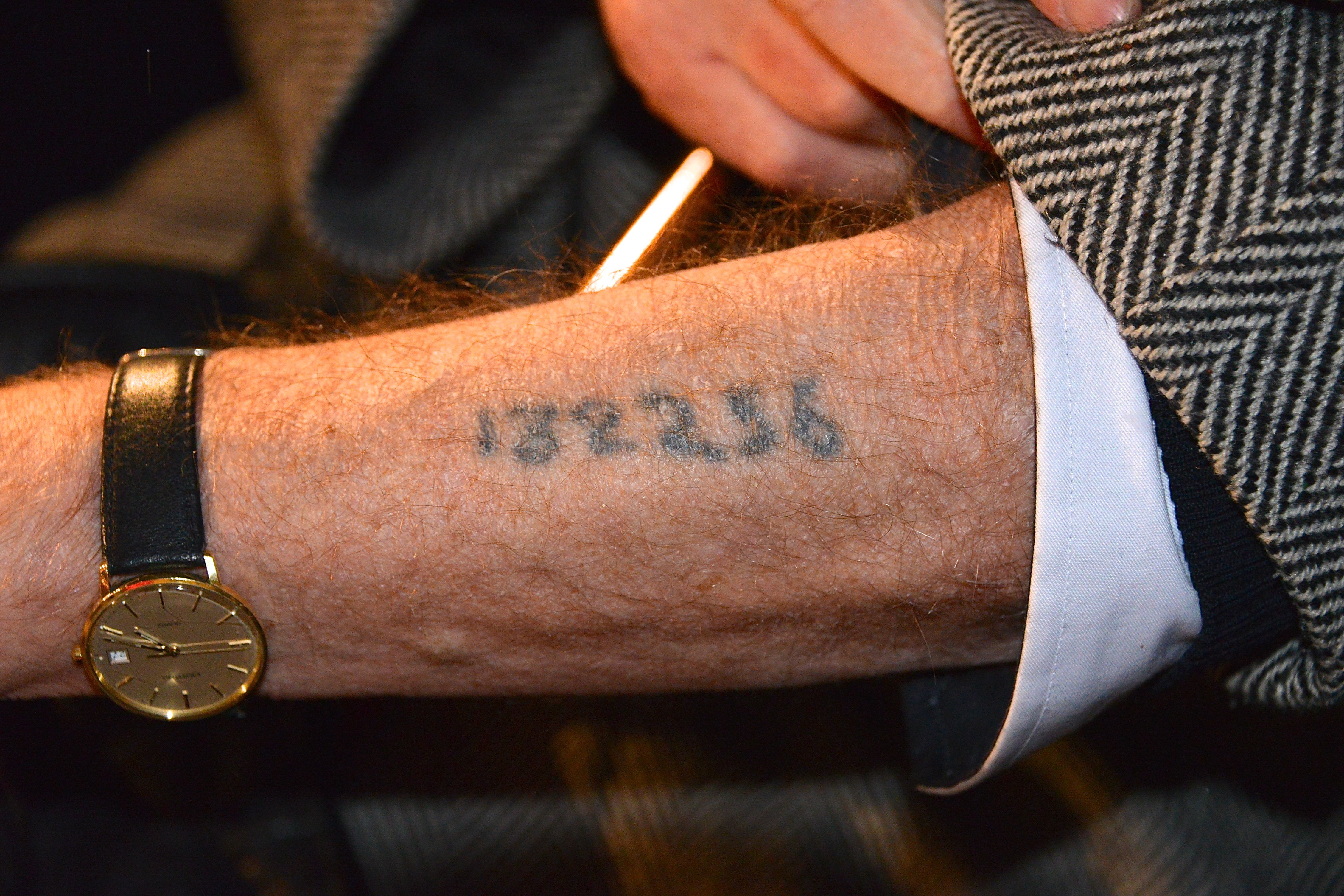
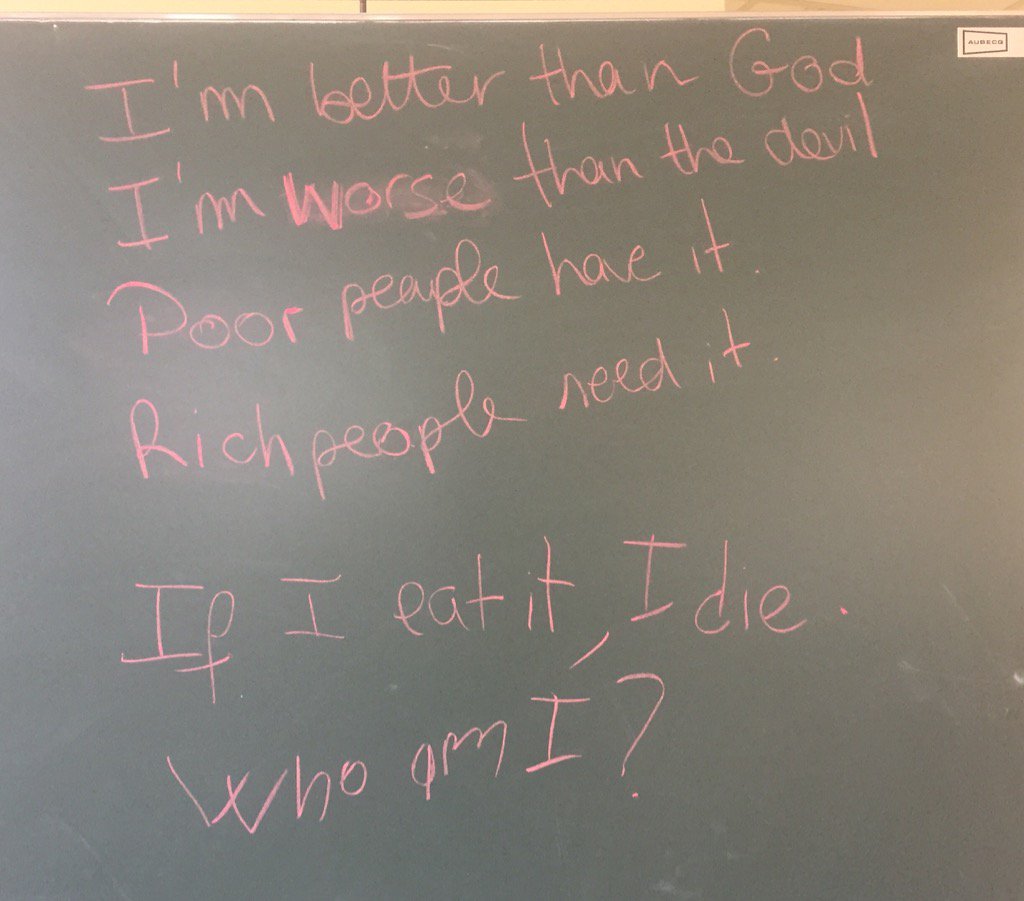
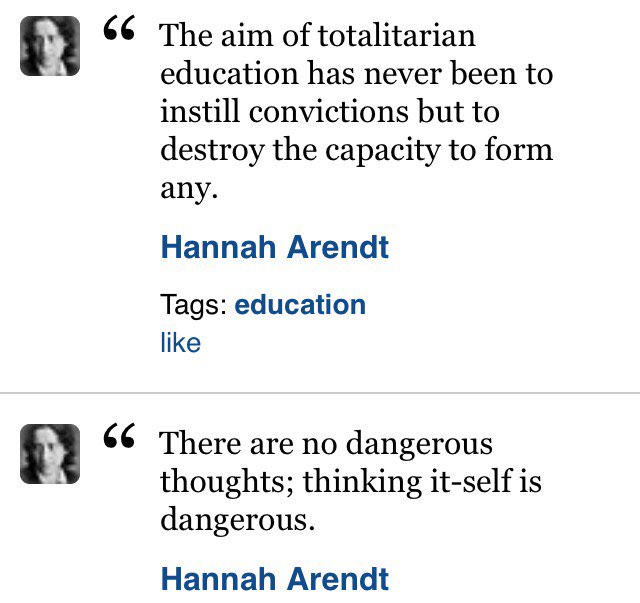
It is time for taking stock. [I instantly feel alienated by the expression "taking stock". We are forever confronted by fucking commerce. The small print on the long contract. I write my age then delete it. Numbers are for ever an annoyance.] I find myself here... I find myself inviting Deleuze, Arendt...he tales off. He rather wishes that they would go away. He notes how they, he are kept under tabs... He sees himself moving from here to preview. He reviews his path. He thinks about deleting the photo. He reasons that he will leave a blank space. He wonders how best to represent space. He finds a riddle, written by a student, on a black board. He settles for that.
“Writing has nothing to do with meaning. It has to do with landsurveying and cartography, including the mapping of countries yet to come.” ― Gilles Deleuze I find myself grouping together lines of reflection... I barely glimpse them, I barely read them. I rush on by. It is not the words that count it is the movement...
...an impulsion beyond.
At times I come back and I think: "What the fuck?" At times I know why the answer is the fucking question. “According to Beckett's or Kafka's law, there is immobility beyond movement: beyond standing up, there is sitting down, and beyond sitting down, lying down, beyond which one finally dissipates.” ― Gilles Deleuze, Francis Bacon: The Logic of Sensation What explains this impulsion? This colour? They appear little by little here, in interaction, dialogue with people, images, videos, quotes, tweets, scribbles, blog posts, clicks. They order themselves here for orderly? consideration in a determined flow. It is the haphazard which reveals meaning. Old words pop up as chorus. Those deleted rest as meaningful as those that remain. Those deleted rest as meaningful as those that remain.
Will they remain in peace? To be present. Here.
“This is how it should be done: lodge yourself on a stratum, experiment with the opportunities it offers, find an advantageous place on it, find potential movements of deterritorialization, possible lines of flight, experience them, produce flow conjunctions here and there, try out continuums of intensities segment by segment, have a small plot of new land at all times.” ― Gilles Deleuze Takingstock.
I steal my words.
How is it I know that I am worn by the suit and not the other way round?
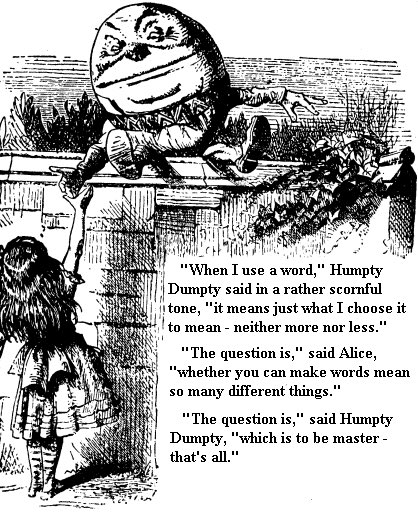
“Language is not made to be believed but to be obeyed, and to compel obedience newspapers, news, proceed by redundancy, in that they tell us what we ‘must’ think, retain, expect, etc. language is neither informational nor communicational. It is not the communication of information but something quite different: the transmission of order-words, either from one statement to another or within each statement, insofar as each statement accomplishes an act and the act is accomplished in the statement”
I had better get a quote in here from (on?) Deleuze and Guattari:
"The space of nomad thought is qualitatively different from State space. Air against earth. State space is ‘striated’, or gridded. Movement in it is confined as by gravity to a horizontal plane, and limited by the order of that plane to preset paths between fixed and identifiable points. Nomad
space is ‘smooth’, or open-ended. One can rise up at any point and move to any other. Its mode of distribution is the nomos: arraying oneself in an open space (hold the street), as opposed to the logos of entrenching oneself in a closed space (hold the fort). (Massumi, 1988, p. xiii)"
Process
The methodology of autoethnography as described by these authors gives me answers to what I was trying to drum out with my frustration with 'science-bound'.
I see no reason in participating in research which simply calques discourses to reinforce an unsustainable (education) system.
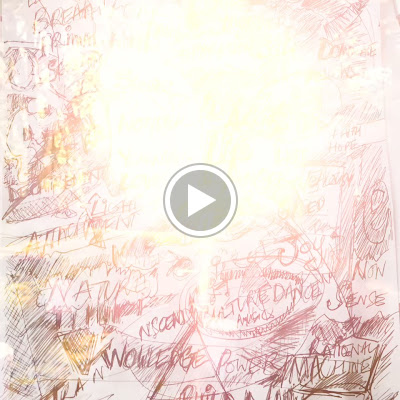
I have been trying to draw a picture of what I mean over a number of years.
Are we talking about conservation or preservation?
(not sure those are the pertinent terms - never mind I shall check later). Are we as teachers enabling learners to express what is inside them outwards or are we trying to keep a check on them to mould them to a common core?
In the case of language learning, are we teaching forms of a dead language, or fostering desire to communicate within foreign language communities as actors moving from the periphery towards a centre (their centre)?
I am digressing a little.
I had looked earlier at Keith Hamon's coding in our autoethnography file.
I had already been aware of him being interested in prepositions.
At first I took no notice. I didn't really take it in.
It is often like that, it was the same process with Kevin Hodgson's poetry remix activity 'Steal my Poem'.
It was the same process with Terry Elliot's Zeega's which I loved.
It takes time for whatever attractors to connect, to connect to create, to question, to play.
I tweeted a quotation I remembered, from a moment years ago, when this sense stuff started flooding out.
“The real voyage of discovery consists not in seeking new landscapes, but in having new eyes.” ― Marcel Proust
(I often thought before it was/had to be nonsense particulary as I was surprised at its speed and its unfortunate habit of forcing itself out in the middle of the night uncalled for. Bloody nuisance I agree!)
Damn I lost internet connection.
I tweeted to Keith and we tweeted back and forwards
I had already noted a draft post yesterday entitled 'Map in space' which may or not come to something. I had already found the image of Noman's land which would be the trigger.
I have been thinking about landscape, spaces, time, perspective.
I had found the following image on a Pinterest board of Vannessa Vaile with a quotation from one of two books I salvaged from my uncle's house following his death.
I should add that often images act as trigger, or scenes, they become alive for an instant.
Something happened, happens and I can not stop it. The image of the doll's house came back to me. It is an image of confinement, of conservation, of anxiety. It is an image which came to me when engaged in psychoanalysis. It is a key image for me. It is a key image for how I felt at school, at home, at work, and about certain academics. I am their object, a potential toy in their games.
As the picture came back, it connected to quotations of Ibsen (A Doll's house). I like quotations, they fast forward my reflection. I have been collecting them since the time IT all started flooding out. I had been thinking of how to include theatre in my writing - I love theatre. Ibsen was a good start. I have never seen an Ibsen play. I shall now.
From Ibsen I connected very quickly to an image which has stayed with me from what I now remember to be one of my favourite films ever: Bergman's Fanny and Alexander. Here is a taster (note I am coming back to add this after I had first published this post.)
That will do here.
Thank you to you for reminding me of this film. I am not a toy. I am a very busy man.
I toy with images, with spaces, with words, with sounds, and they come out here and elsewhere.
This rhizomatic learning course is working for me, because I am finding sparking nodes, who stimulate me, the space is only defined by the map which is constantly drawing itself.
Outcomes
I have little to do with this post.
It wants to be written.
I guess IT is DESIRE.
I am nothing, without connections...
I am nothing worth much if I follow their instruction manuals. It came out this way.
Methodological Footnote
The "crisis of confidence" inspired by postmodernism in the 1980s introduced new and abundant opportunities to reform social science and reconceive the objectives and forms of social science inquiry. Scholars became increasingly troubled by social science's ontological, epistemological, and axiological limitations (ELLIS & BOCHNER, 2000). In particular, scholars began illustrating how the "facts" and "truths" scientists "found" were inextricably tied to the vocabularies and paradigms the scientists used to represent them (KUHN, 1996; RORTY, 1982); they recognized the impossibility of and lack of desire for master, universal narratives (DE CERTEAU, 1984; LYOTARD, 1984); they understood new relationships between authors, audiences, and texts (BARTHES, 1977; DERRIDA, 1978; RADWAY, 1984); and they realized that stories were complex, constitutive, meaningful phenomena that taught morals and ethics, introduced unique ways of thinking and feeling, and helped people make sense of themselves and others (ADAMS, 2008; BOCHNER, 2001, 2002; Fisher, 1984). Furthermore, there was an increasing need to resist colonialist, sterile research impulses of authoritatively entering a culture, exploiting cultural members, and then recklessly leaving to write about the culture for monetary and/or professional gain, while disregarding relational ties to cultural members (CONQUERGOOD, 1991; ELLIS, 2007; RIEDMANN, 1993). [2]
Gradually, scholars across a wide spectrum of disciplines began to consider what social sciences would become if they were closer to literature than to physics, if they proffered stories rather than theories, and if they were self-consciously value-centered rather than pretending to be value free (BOCHNER, 1994). Many of these scholars turned to autoethnography because they were seeking a positive response to critiques of canonical ideas about what research is and how research should be done. In particular, they wanted to concentrate on ways of producing meaningful, accessible, and evocative research grounded in personal experience, research that would sensitize readers to issues of identity politics, to experiences shrouded in silence, and to forms of representation that deepen our capacity to empathize with people who are different from us(ELLIS & BOCHNER, 2000). Autoethnographers recognize the innumerable ways personal experience influences the research process. For instance, a researcher decides who, what, when, where, and how to research, decisions necessarily tied to institutional requirements (e.g., Institutional Review Boards), resources (e.g., funding), and personal circumstance (e.g., a researcher studying cancer because of personal experience with cancer). A researcher may also change names and places for protection (FINE, 1993), compress years of research into a single text, and construct a study in a pre-determined way (e.g., using an introduction, literature review, methods section, findings, and conclusion; TULLIS OWEN, McRAE, ADAMS & VITALE, 2009). Even though some researchers still assume that research can be done from a neutral, impersonal, and objective stance (ATKINSON, 1997; BUZARD, 2003; DELAMONT, 2009), most now recognize that such an assumption is not tenable (BOCHNER, 2002; DENZIN & LINCOLN, 2000; RORTY, 1982). Consequently, autoethnography is one of the approaches that acknowledges and accommodates subjectivity, emotionality, and the researcher's influence on research, rather than hiding from these matters or assuming they don't exist. [3]
After no doubt lengthy discussion and debate, they settled on giving me the name of my father's defunct dog: Simon.
One doesn't get to choose one's tags for quite a while, if ever.
Never mind, that's how it is.
I have never had a problem with the dog-tag.
For reasons unknown, but no doubt analysable I wasn't what they expected.
I never really fit in...it hurt.
I did the analysis over many years.
It doesn't matter now...
Now I am here to write here...for reasons unknown, but no doubt analysable. It wasn't what I expected.
I am beginning to put together pieces of puzzle.
Such work is impossible alone, one must do it connected.
I enjoy puzzles.
The ones I prefer are the ones that can be put together in ever so many ways, generally with colour, improvisation, and why not music and laughter and a strong sense of the absurd.
Note to self: If only I could include a bit of theatre. That would be marvellous! I miss that.
I don't like conforming to a model.
They can measure me later.
I am just so.
I am becoming...
How many uniforms are we given to wear?
How can we be free to become what we will?
I did their education. I felt it had to do with them.
I did my research. I feel it has to do with me.
I read their learned papers. I felt it had to do with a kit.
I never liked kits.
You spend hours sticking fiddly bits of plastic together to build their bloody Spitfire.
It is never as good as the picture on the packet, beautifully coloured, zooming through the skies, guns blazing shooting up Fokkers.
There's always some clever clogs who shows off his obsessionally finicketedly constructed plastic scale model.
I just can't be bothered, it is no doubt to my detriment, never mind.
I am not up to their standards for now.
Maybe tomorrow?
Who cares?
I shall improvise.
Maybe one day, I will be up to my standards...and they will have to change theirs!
Hurrah!!
That's the spirit. Sod the Spitfire!!
I like writing this, I love stories.
I like working stuff out, trying to figure out how it is put together.
I don't want to build bloody kits of bloody Spitfires.
They seemed harmless at the time but then little boys get to fly them real-scale and kill other little boys who only have bits of wood to represent Kalashnikovs.
I like working with others who challenge me to travel to places I would never be able to glimpse without their eyes.
I like to do stuff that I would never have been able to do alone. I have no idea where all of this is leading...but it appears to keep on. This is fun. What will appear next from this mind-field?
I love adventure.
Thank you.
Maha you and many others are helping me to make some sense of it.
What ever it is.
How strange, I was not expecting that to come out.
Never mind, it did. It's here now.
I don't mind you knowing.
Here's a quote: (Note to self: that will look seriously learned)
“The goal is to practice an artful, poetic, and empathic social science in which readers can keep in their minds and feel in their bodies the complexities of concrete moments of lived experience” Geist-Martin et al cite Ellis (2004, p. 30)



 Simon Ensor
