Showing posts with label rhizo16. Show all posts

Sunday, October 2, 2016

An indian summer.

"Do you want to stay here, or would you prefer to go outside over there?" I asked them.

"I'll follow you." I heard myself saying.


It was a beautiful afternoon of an "Indian Summer" on a grassy plateau in the Massif Central.

The people (students) sat down together in groups of various sizes and configurations and started to exchange.

A pair of them had come with food that they had prepared for the occasion, they shared their offerings with the newcomers.

I (an English teacher) moved from group to group stopping to listen and to speak with some of the people I knew (students) and with the newcomers who were from Nigeria, Columbia, Senegal, Finland, the USA, Ghana, China.

Dancing in the wild.

The newcomers, I had learnt the week before, had come from all around the world to study dance and anthropology together. I thought that the opportunity for an informal meeting of the minds would be mutually beneficial to everybody.

English would be the lingua franca for the occasion...dance might also be a useful means of communication and reflection, I thought to myself.

The people were all engaged in different conversations, some sitting, some standing, some speaking, some listening, some kneeling, some lying down.

None of the conversations were scripted, programmed or determined by myself (the teacher).

I pointed out that they might find some things in common...

As the afternoon went on the people moved changing the group compositions, changing the conversations.

Stories of resilience.

I spoke to a guy from Ghana and another from Senegal or Nigeria (I am not sure now) about their learning stories. They spoke to me of the difficulties they had had navigating classical expectations of parents or institutions to focus their attention on what some might consider a marginal activity - dance choreography and anthropology.

They spoke of the thousands of students in amphitheatres...

One spoke to me of trying to take law classes to dissimulate what he was really doing which was to follow dance anthropology classes at the university.

They had showed remarkable resilience in their desire to follow paths which they felt were essential to them.  I made a mental note of their stories for future reflection.

Emergent learning.

After a little while, the interaction in one group had mutated from conversation to a break dance battle.

On hearing the music, which was coming from someone's portable wireless speaker connected to a smartphone, all the other groups stopped conversing and stood up on the slopes to become an audience within an emergent, natural auditorium.

The dance had changed the nature of the space, the nature of the ritual.

There were whoops of delight, expressions of encouragement, cheers and clapping as the pair of dancers showed their moves.

After what seemed a good few minutes, the dancers stopped, some people grouped in pairs and started taking contact information, others were attracted by drumming coming from across the plateau, others went off to retrieve their belongings.


Massively Open Offline Class.

I moved with some of the people over to the other side of the plateau, passing a couple of girls with hijab attempting to walk across a slack line, a boy that I knew from one of my classes hanging upside down from a trapeze, a group of jugglers.

I stopped to speak with them and was greeted with a smile.

The activities had been organised as part of a festival to welcome new students to the university.

I overheard one student say to another:

"Why don't you tell your friends to tell the teacher that you had to miss class, this is much more interesting."

I looked back at concrete boxed classrooms and thought of those that they contained.

Once at the other side of the plateau, I was met with a group of African dancers in traditional dress who were acting as a magnet, attracting others to dance with them.

I recognised one or two of the dancers as those who had been with the class of students in the "English" class just before.

I spoke with the students watching the now active dancers of their meeting.

"Had that been a valuable learning experience?" I asked them.

The expression on their faces was eloquent, they all noted that it had indeed been both memorable and of interest to them.

I noted that some of them had been taking contact information from their new friends, had started organising times to meet.

They had at first oriented themselves.

They had shared declarations.

They had networked with these strangers.

Weak ties were being strengthened.

Now, they were clustering.

There had been clear focus on the spontaneous break-dance battle.

I shall remember this class as one with many connections from which to learn, an open space within which to roam. I thought of how this connected to my own experiences of (rhizomatic) learning online and offline.

Education for community

I thought of the street festival that had been organised by students I teach the weekend before.

I thought of the connections being made between them and the local community.

I thought of the wealth of the learning ecosystem within which they had been the actors.

I am fortunate working with people whose sporting, academic and professional activity takes them into so many diverse spaces.


Learner Resilience

I am wondering now about learner resilience.

Not all the students that I meet demonstrate the same determination as those African dancers.

Many need time to orient themselves.

Many have been so institutionalised that they are looking only to go through the minimal motions to get a grade.

Many classes, many spaces, many rituals, relations, reinforce such minimal transactions.


Strategies of school and deschooling.

Opening them up to imagining different relations, different activities or means to learn within the institution or outside of the institution is not straightforward - particularly when the institutional culture itself is the major obstacle.

I am now faced with two quandaries,which in effect are similar:

How do I go about facilitating the development of resilient learning networks and communites from within an institution in the most effective way?

How do I go about enabling learners to view the people around them - classmates, people in the street, in the town, on the internet as potential members of their learning networks?

How do I go about enabling learners to benefit from paths trodden and links made (online or offline)without overwhelming them with my own paths, links, conclusions, beliefs, culture?

One problem for me concerns digital literacies, the need (or not) to develop the desire/skills/competences necessary to be able to learn effectively. In order to do this, it is essential that I build alliances and find convergences with my colleagues who may not necessarily see the interest themselves in developing those digital literacies which I would consider essential for some if not all of the students that I work with. I am thinking of the work of Ken Bauer, Gardner Campbell, Alan Levine and Jim Groom here...

I shall follow my curiosity...
Another problem concerns the visual organisation of existing learning opportunities, activities offline and online.  It is essential to use learner generated 'slug trails' to point to new possibilities within those over familiar boxes.

Photos, videos, personal testimonies, stories, demonstrations, all must play their part, I have been curating those over the past few years.

I have been teaching students how to create digitally, to research critically, to curate, and share, to network offline and online with CLAVIER.

I suppose what is essential now is to make those connections with other colleagues to enable that ecosystem to really weave deeper and wider. I am seeing more and more convergences in ways of thinking, and ways of teaching.

I must invest time on key nodes.

I must map, I think of Daniel Bassill.

I suppose that is what I have been doing with my research.

(idiot - you have been mapping continuously for bloody years - he says to himself).

I am collecting the bits, now I need to find the most effective ways to enable learners to access them.

I must find time, I must find time.

I think of Daniel Bassill.

It's not that I must.

It's that I want to.

I want to.

I have for some time been working towards setting up some sort of "learning bank/make bank".

I must develop connections further. I must map.  I must map.

Priorities, priorities.

Time is precious, my resources and influence are limited, the pressure to fit students, teachers and learning into 'managed paths' and standardised outcomes, in predictable rectangular boxes, with interchangeable teacher operatives is considerable.

I have already seen promising projects killed this year through lack of support...

It is no time to be a nobody.

Fuck that.

I shall enjoy my time as this nobody.

I am heartened by the idea that for the moment at least, in France, university is seen as a public service where students are not to be endebted for years thereafter.

How long will this last?

Fuck that.

We can only do what we can do, with our feeble means...

Learning in an age of abundance?

I think for a -moment of the term: "learning in an age of abundance".

I think we need to reassess what we mean by abundance.

I think of the term 'Indian Summer'.

I make a few mental notes to address

  • the idea of learning, the idea of colonisation in "the wild" and the notion of "wilderness"
  • conflicting notions of enlightenment and transcendence. (Note to self: Les Maux Des Mots.)
  • conflict between capitalism and sustainable ecosystems.

What is it that Dave Cormier says?

Content is people?

I can never remember.

An age of abundance can surely not be reduced to people, even less to bloody information, or data.

I rather hope now that he is thinking of inviting people to reflect on learning/learner resilience now.

I rather suspect that I am ready for that now.

He probably isn't.

Whatever...

Looking back, looking around, looking forward, looking around.

I look at the presentations that I was doing earlier in the year when I was in Poland.

Suddenly, they take on renewed importance.

I shall study them again.


I shall reorient.


Well that was an  unexpected flurry of typing.


Footnote.

Special note: Terry Elliott's recent posts sparked enthusiasm to review this post and to extend it.

Fuck knows why.


Footnote to self.

Note Cynefin Framework and Dave Snowden's Party Organisation. 

How not to manage complexity.


Sunday, May 22, 2016

Body without organs...

I am not @sensor63.

@sensor63 is.

@sensor63 is disembodied.

@sensor63 is a node on an electronic map.

@sensor63 is an avatar lacking in human failing.

Oh gawd, what have I gone and said now.
(pretentious git)


Lines of flight.

What the fuck was my butt doing sticking to the ceiling? (He notes that @sensor63 would use the word "butt" but I wouldn't)

From where I was floating, I had a pretty dramatic view of where I had been lying.

I was not at all prepared for what I saw.

The body below, "my" body, was apparently lifeless.

"My" life, if that were the appropriate term was elsewhere.

To be accurate, I, my life, me, we were trying to reason how it was that I was out of my/the body down there.

I felt a little queasy, to be honest.

I felt that I was going to be violently sick. Perhaps it was airsickness?

I would have thrown up on the bed, but then it occurred to me that without my body vomit would be futile.

Nope, I wouldn't be able to vomit my guts from a lifeless corpse.

For that is what I feared.

I was...er, my, body had left me in the lurch.

I was, to put it crudely...dead.

I was overtaken with sudden panic.

"Shit, I am dead."

"I don't want to be dead."

"I don't want to be on the fucking ceiling."

"I don't want to be able to fucking fly."

Flying in my case, was non/undirectional, I was fucking stuck.

Jealousing Kafka.

At least fucking Kafka could crawl across the ceiling.


Une vidéo publiée par @sensor63 le

I felt alone (without my body), disorientated, and frankly desperate.

I don't remember now how it happened.

The man who fell to earth.

I fell to earth.

I heaved a sigh of relief.

If I were alive, well, the impulsion that had given me "wings" didn't let me be...as before.

I was clearly other, the other that I had always been vaguely aware of.

It was the other who beat me up inside to sign my own alienation.

It repressed, was I depressed, subjected, confined, undead.

Living with the fear of others...

I was evidently extremely alive.

They looked at me with startled eyes.

They listened intently.

I could do nothing to control IT.

There were moments of paranoia, charisma felt a prison.

I longed for silence, for semblance of faceless functioning.

Turn to fucking page 5 exercise 6...that was beyond me.

I would have loved to be able to do that.

I couldn't do it.

I couldn't fucking do it.

I would have done it joyfully if I could.

Let me be a obedient catatonic robot.

I didn't have any fucking answers.

Science stumped.

The psychoanalyst visibly slumped in his office rocker, stumped.

"Make it stop." I said.

That body slumped made me pause for thought.

"He hasn't got a fucking clue." I thought.

I shall just have to deal with this nonsense myself.

"A lot of fucking good these bloody clever shrinks are", I thought.

I was fortunate.

Others, more sure of their science, might have killed me, locking me up with their fucking chemical "kindness".

I accepted a temporary knock out and accepted to deal with the fall out of falling to earth other.

In praise of walls

This was all beyond me.
http://tachesdesens.blogspot.fr/2014/01/beyond-me.html

His was a willing wall.

He, or rather the wall saved me.

I had that wall.

I could now deal with the fucking ceiling.

Write it out he suggested.

So I did.
So I do.

Writing IT out.

I wrote ream after ream of text, raging against the frenzy of it all.

I didn't want to write this crap.

"I" (it) wrote this crap.

This wasn't me.

This wasn't me at all.

"Make it fucking stop."

It was ironic really.

The publisher's rejection helped.

"Thank God for that", I thought.

The market was a welcome wall.

"I'm afraid the market is very conservative," he (the market) wrote.

"Thank Christ," I thought.

"Peace at last."

That seemed to calm IT somewhat.

I could move on without the bloody machine being always present.

I turned my energy to more tangible boundaries.

Mountains make for wonderful, unforgiving, walls.

I didn't want to die for a summit.

It is ironic really.

I had always been so frustrated at my inability to maintain scribbling.

It was there waiting for cracks in the structure to make its assault.

It is still there today.

I know IT is there.

IT, I live easily with now.

I have learnt to live with IT.

I am familiar with IT.

I make no attempt to understand.

There is no point.

I am other.

Acceptance.

I have no wish or ability to pretend that I never floated my butt on the ceiling.

It wasn't a dream.
It wasn't a hallucination.
It is my reality.
It is here now in black and white.
I have said it now.

I know that what they were saying in their confusion and fear was normally ill-placed.

They will know the unfamiliar soon enough.

On the borderline.

I wasn't sick, a case to be diagnosed...borderline we are certainly.

If only more were to admit their fucking "borderlineness!"

If only more were to admit the myth of rational control.

The controllers are fucking insane.

We have an insane waltzing system.


Is this the last waltz darling?


Acceptance

IT is not easy to define, to put into boxes, to name.

Where I would rail against the lines of the boxes that were presented to me, now I explore their frames.

Where I would beat my head against their fucking dumb system, I am more forgiving.

Life and death frame our humanity.

What is the essence of "life" is immuable, inhuman, unthinking, uncaring, unknowable.

Love gives us a porous, membran(c)e of hope and humanity.

If I rail against this fleshy cage, I accept it for now.

What is @sensor63 if not a machine?

I remain bound to thought, to making sense.

I forgive @sensor63, I live with it.

I am no longer stuck to a ceiling.

I walk airly and revel in ITs nonsense.

There is sense in nonsense.

There is no sense without IT.


Footnote.

I take a few steps back and read what has been mapped mechanically.

I think, I wonder.

I am the one that wonders.

I is Simon.


Friday, April 8, 2016

My direction.

This is going in my direction.

Let us leave to one side an instant where you are reading this. (Blogger)


It clearly is not a very evenly weighted exchange.

Google and I.

I own these words...up to a point.

What are you going to do when you grow up?

I never quite knew how to answer that question.

I knew that I would go to university.

People told me that was what I would do.

I had absolutely no idea what it meant to go to university.

I didn't know how to question that.

I did what I was asked to do at university...up to point.

It didn't really fit with any idea that I had about what I would be doing.

I had a very vivid and totally naive vision of what I might be doing.

I spent a fair old time in the pub with friends.

I was at a loss what to do next.

This is 'my direction'.

I have made all sorts of choices.

They weren't all very well considered.

I didn't really have the means to consider them very well.

I didn't really have anybody who helped me consider any choices that I might or might not have.

I was sort of happy to have some choices.

I was sort of paralysed with the idea of all the choices I might have.

It was a heavy weight of responsibility to make choices about what I didn't know.

"Go ahead choose your life."  

"Don't worry you only have one (life)."  

Life for many meant job.

I didn't want a job.

I preferred to hang out with climbers.

My friend who chose to solo up a Ben Nevis rock route in winter made his last choice.

Sometimes, not often, I was almost envious.

He had died doing what gave him meaning.

This is 'my direction.'

I had a short Twitter exchange


What is "'your own direction"?

To what extent do we need to deconstruct "own direction"?

I asked a Romanian girl what her ambition was.

She replied that her dream was to be a cleaner.

I didn't dream of being a cleaner when I was her age.

I have been reading Boris Cyrulnik's autobiography.

He was sentenced to die for being Jewish at the age of six.

He didn't even know what Jewish meant.

He only knew it was bad.

Was that his "own direction"?

Are these dreams "our own"?

As a teacher in an institution how can we focus on "independence" of students when often the only reason they spend time with us is that they depend on us for a grade.


Are we really interested as teachers in learners not being dependent on us?

If no learners or students depend on us how can we be teachers?

"What do you do?"

"I'm a teacher."

"Oh yeah? But there are no students."

"So?"

I was reading a critique of Ken Robinson's book "The Element" this morning on Torn Halves' blog.

http://www.digitalcounterrevolution.co.uk/2013/ken-robinson-the-element-the-iron-cage/

That is me going perhaps foolishly in my direction.

Torn asks some good questions.

What are we to do, he asks, about what he, after Max Weber,  calls the 'Iron Cage'?

I don't know.

I worry about using the word 'own'.

I worry about using the word 'independent'.

On leaving university I thought of all the things I couldn't do in this society.

I wasn't really sure what I could do.

I remember drawing a picture of myself in a cage.

I even started writing a script for the scene.

I have it somewhere.

I was screaming out of frustration.

The cage wasn't mine...or perhaps it was?

I only drew it.

Our fictions are never innocent.

Footnote.

I found the page with the cage that I had drawn at the age of twenty one on graduating.

It is an eery page.

How on earth did I know the word "widget" or talk of "touch screens" in 1983?

I half-remembered a T.S. Elliot quote.

I had no idea what "Picketty Witch Girl" referred to.

I had to look it up on Google...
https://sjhstrangetales.wordpress.com/2014/08/26/new-on-strangeblog-the-woman-who-was-allergic-to-the-20th-century/

"And the wind shall say: these were decent Godless people, their only monument the asphalt road and a thousand lost golf-balls."


Thursday, April 7, 2016

Récits de résilience.

Je ne pourrais vous dire pourquoi cette envie m'est venue à cet instant.

C'est ainsi.


Peut-être cela vient d'une fatigue d'être trop "compris"?

Peut-être cela vient de l'ennui?

Peut-être cela vient d'une fatigue d'être celui-là?

Voilà ça doit être ça.

Je suis fatigué de celui là qui m'est trop familier.

Je ne suis plus celui-là.

J'avais presque oublié.

En tout cas, j'écris ainsi à l'instant.

Je me suis lancé un tel défis.

Mais non, ce n'est plus un défis figure-toi!

C'est curieux.

Ce n'est pas dans mes habitudes ici.

Pourtant, cette langue me baigne depuis si longtemps.

J'oublie presque qu'elle m'appartient...presque...idiot va!

Pourtant, cette langue m'a servi de moyen de sauvetage.

J'étais épave, je ne la suis plus.

Je me suis éloigné en ramant.

Ces répresentations trop familières se transforment en parole libre.

Oui, je fais du sens ainsi...aussi incorrect soit-il!

Je largue les amarres.

Pourquoi n'avoir pas oser auparavant?

Au théâtre j'avais osé bien plus.

Petit joueur va!

Je fuis les habitudes, la sécurité.

Je passe quelques heures à creuser le sillon de la résilience.

C'est un champ fertile.

Il m'a fait découvrir les récits de Boris Cyrulnik.

Il m'inspire cet homme ou d'autres m'ennuie à mort.

Je me suis tombé sur une conférence de Cyrulnik et de Kaufmann entitré:

"Comment la technologie modifie la manière dont on se pense."


Il est à revoir.

Je me suis acheté l'autobiographie de Cyrulnik: "Sauve-toi, la vie t'appelle."

Alors là, je suis captivé par son narratif.

Je pioche, à droit et à gauche.


En le lisant je me rends compte pourquoi je me suis mis à écrire en français, je me sens claustrophobe soudain dans un groupe devenu trop familier.

"Quand, dans un groupe, on partage un même récit, chacun est sécurisé par la présence de l'autre".

En effet:

"Les récits partagés, les mythes racontés, les prières récitées côte à côte sont d'excellents tranquillisants culturels."

Je me vois un instant devant une église.

"Tant qu'une institution s'appuie sur des instincts forts, elle n'admet ni ennemis ni hérétiques: elle les massacre, les brûle ou les enferme."

Pendant longtemps je me suis tu.

Je fuyais un paradis prisonnier.

"Ce serait merveilleux de vivre ensemble dans une cité pure et juste d'où le mal serait éradiqué. Nos relations seraient angéliques. Nous serions transparents puisque tous pareils, sans différences, sans étrangers, nous n'aurions rien à cacher, nous penserions comme une seule âme."

L'horreur.

"En Utopie, il n'y a qu'une seule représentation du monde, celle du Chef vénéré qui programme notre félicité, les lendemains qui chantent et mille ans de bonheur."

On peut bien se demander comment établir

"Une relation réelle, alors que notre utopie nous coupe de ce réel?"

Je me reconnais un instant à lire ce passage, cette personne que je suis devant une église.

"Malheureusement, j'ai eu très jeune le goût du doute qui donne plaisir de ne pas se soumettre à la récitation commune, mais qui prive en même temps du plaisir de se soumettre à la récitation commune."

"On est mal à l'aise quand on doit choisir entre le bonheur dans la servitude qui nous sécurise et le plaisir du cheminement personnel qui nous isole."

Je me retrouve devant l'église.


Sunday, April 3, 2016

Resilience or Resistance?

What's in a word?

I try to think back a few years...


Productivity.

Rationalisation.

Efficiency.

Privatisation.

Consumer choice.

Portfolio career.

I think of a few words that I am hearing at the moment.

Life-long learning.

Entrepreneur.

Share economy.

Credit.

Application.

Network.

Surveillance.

Mobile.

Personalisation

Flexible.

I have been hearing this word recently:

Resilience.

There is no question, I have developed resilience over the years...

I have had hard knocks.

I tried breaking.

It hurts.

It's better to bend.

You learn to reduce expectations.

I quickly read an article of Dave Cormier.

"In search of a new resilience for learning."

I shall start reflecting on what this word might mean.

What worries me is less (perhaps) what the word might mean for Dave Cormier and more how the term is used as an attractor for neoliberal discourses.


I remember something about MOOC's being massive.

Massive attracts...

I have started to collecting bits and pieces on a Pinterest Board.

I shall see where this leads me.


Resistance.

I was working on an article with a colleague last week.

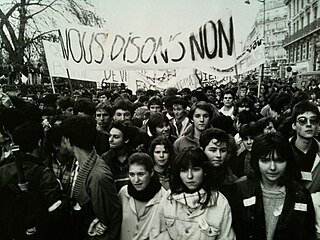
Outside there was a massive demonstration against the French government's new work laws.

There is a rejection of laws which increase the powers of employers, increases the working time of apprentices, increases the flexibility of contracts, fragilises the young.

I thought to myself, the more you are fragilised, the more you need to develop resilience.

The dramatic rise in the use of words: entrepreneur, resilience, personalisation runs parallel since the 1980's.

Big data makes me feel uncomfortable.


I took a look at the trend for resistance.

Foul Brood.


They were the "Monsters", a curious assembly.

"What are you doing Simon?"

"I'm playing with the Monsters."


Monsters All.

The gang leader, Yip, was a pink poodle who only stood.

His side-kick was Little Bear, a small, rather insignificant looking, orange eraser bear with lopsided ears.

The main body of the monster crew was made up of rubber dinosaurs of varying vintage.

Brown Brontosaurus, Bronto, was a good deal smaller than two yellow Ankylosaurus who had developed abilities of flight - hence Wings and Little Wings.

Over time, each creature had revealed individual gifts and talents however unlikely.

There is no respect for paleontological accuracy in child's play.

The only concession to probability was the monster who drove the Jeep.

Only Yip could do that.

The dinosaurs wouldn't fit into the driver's seats due to issues of anatomy.

Little Bear was just too goddam little to reach the pedals.

For whatever reasons, these inanimate creatures became heroes to months of incongruous adventure.

Their heterogenity, the very unlikelihood of a pink poodle being friends with:

  • Stegosaurus
  • Tyrannosaurus Rex
  • Horns the Triceratops 

stimulated creative thinking and made for interesting battles.

Child's play is nothing if not inclusive.

Shock of the scale.

I stood there looking up.

I was dwarfed and not a little disappointed.

The brontosaurus skeleton saured above my head and took up a large part of the Natural History Museum's ground floor gallery.

Scale mattered now.

There was no sign of any Jeep.

There was not a pink poodle to be seen.

I put away childish things.

Natural History had murdered the monsters.

I returned home to play with Action Men.

The monsters were dumped in a box.

None of the Action Men could drive the Jeep due to issues of anatomy.

Monsters All.

"You want a whip?"

"We have a whip."

"You want Marxism?"

"We have Marxism. We do a special offer. You can have Trotskyism for only 30% extra." 

"You like dinosaurs?"


"Come to Dinopark."

"Out now! Steven Spielberg's Jurassic World."


"BUY THE TSHIRT!"


Foul Brood.

"Well why the hell can't we have dinosaurs with poodles?"

"NOOO!! The Tyrannosaurus Rex will rip off the bloody poodle's head!"

"You can never trust a carnivorous dinosaur with pets."

After a good deal of soul-searching the monsters decided that they could live happily together.

The Tryannosaurus was simply misunderstood.

He might be a bit clumsy at times but you just had to avoid the slashing tales, the claws, and the vicious teeth. 

After much wrangling they decided on a name for their tribe.

They would be the "Foul Breed."

It gave them an outlaw sort of mystique.

It recalled swarms of bees.

Well, a rather sickly swarm of bees.

Even this sickness was turned to something positive.

They were a virus.

Viruses are powerful.

Outlaw viruses spread.

The Foul Brood group took on a heroic importance.

It was quite out of scale with reality.

From another perspective...

They were only toys.

Their arguments, their battles, their icons, their likes, their dislikes, their victories matttered not a jot.

“Let us do something, while we have the chance! It is not every day that we are needed. Not indeed that we personally are needed. Others would meet the case equally well, if not better. To all mankind they were addressed, those cries for help still ringing in our ears! But at this place, at this moment of time, all mankind is us, whether we like it or not. Let us make the most of it, before it is too late! Let us represent worthily for one the foul brood to which a cruel fate consigned us! What do you say? It is true that when with folded arms we weigh the pros and cons we are no less a credit to our species. The tiger bounds to the help of his congeners without the least reflexion, or else he slinks away into the depths of the thickets. But that is not the question. What are we doing here, that is the question. And we are blessed in this, that we happen to know the answer. Yes, in the immense confusion one thing alone is clear. We are waiting for Godot to come -- ” Waiting for Godot. Samuel Beckett


Friday, April 1, 2016

Be kind to monsters.

I am sorry.

It's ingrained.
It's under my skin.

It comes from my education.

We were open to the parish.

The local witch comes to tea.

We had witch biscuits and scones and jam.

A week goes by.

Monday comes.


She is found hanging from a tree.

How do you make sense of this?

Local alcoholic comes for respite from the bottle.

He will never hit his wife that one time too many.

He loves the kids so.

He love the kids so.

He loves the bottle more.

He hates himself.

He sobs.

How will they make sense of this?

Grieving family comes to bury their differences.

Troubled souls share their distress.

Dead Papa drums his thumbs on the kitchen table, the time of the evening dinner.

Mama shivers, kiddies shake, won't Papa be at peace yet?

Be silent, be still, be gone, please be gone.

How will they make sense of this?

Lost, infirm, insane, abusers, addicts, losers. rusers, terminally ill all.

We come to find counselling.

We come to mark our births.

Another page turns.

I am born.

I sat on the stairs at the age of four tapping my feet and waiting for the bloody hymn-singers to go home.

Won't they go home now?

"Holy, holy, holy, Lord God Almighty."

I felt wholly not at home.

I didn't swear when I was four.

I would have done, if I could have done.

Those bloody hymn-singers.

Won't they go home now?

How to make sense of this?

Lighted windows rush by, the time of a train journey, to school.

I feel the cold window, pain on my cheek, condensation streams down

Lives flash by.

Lives flash by.

What sense do I make of this?

I have no home.

Little homes, little people, big dreams little means, short lives, sadness and joy,

They fly past, too fast to know, slow enough to reflect some home I miss.

They will miss those little lights when they are far, I think.

"I love working with people," my father said.

"I love working with people," I say to my father now.

He is long gone.

He is dead.

He is here by my side.

We are at peace.

How do I make sense of this?

So here we are.

So here we are now.

We are here together.

What lies behind your smile, your tears, that grin, that bravado, that triumph, that despair?

I feel for you.

I feel for us.

I believe in kindness.

Throw that stone at the monster.

Will it hurt?

Will it scream?

How shall we make sense of it?

Don't you recognise yourself?

It is you, that monster.

Deny, deride, delete.

Go on. Go on. Go on now.

I drum my fingers on the kitchen table.

It shall haunt you yet.

"I was taunted and sneered at so that I would not go home to my meals, and used to stay in the streets with an hungry belly rather than return for anything to eat, what few half-meals I did have, I was taunted with the remark—'That's more than you have earned.'"
"The Autobiography of Joseph Carey Merrick

Joseph Merrick.


Love,Terror & Forgiveness.


They are wrong. He is wrong. She is wrong. I am wrong. You are wrong. It is wrong.
We are wronged.

It came from discussions, conversations,
tangled monologues, challenges, squabbles,
crossed swords,
that alienating platform 
and 
ended in
feelings of hurt
and
hard words. 

We are right.
It is written.

Striving for moral high ground we crash
Icarus wings flaming
to Stygian mire.

Nobody is listening.

Nobody knows.

Nobody cares.

We feel bad.

We think, and we think, and we think, and we think, and we think and we are lost to our thoughts.

We can not think freedom.
We feel bad.


“ if I do not love the world if I do not love life if I do not love people I cannot enter into dialogue.” 

― Paulo FreirePedagogy of the Oppressed


Does freedom lie in love?

“The secret of freedom lies in educating people, whereas the secret of tyranny is in keeping them ignorant.” 
― Maximilien de Robespierre

Does freedom lie in dialogue?


“To defend the oppressed against their oppressors, to plead the cause of the weak against the strong who exploit and crush them, this is the duty of all hearts that have not been spoiled by egoism and corruption… It is so sweet to devote oneself to one’s fellows that I do not know how there can be so many unfortunates still without support or defenders. As for me, my life’s task will be to help those who suffer and to pursue through my avenging speech those who take pleasure in the pain of others. How happy I will be if my feeble efforts are crowned with success and if, at the price of my devotion and sacrifices, my reputation is not tarnished by the crimes of the oppressors I will fight.” 

― Maximilien de Robespierre


Who are our oppressors?

Is there justice in vengeance?


“This, then, is the great humanistic and historical task of the oppressed: to liberate themselves and their oppressors as well.” 

― Paulo FreirePedagogy of the Oppressed


Does liberation lie in forgiveness?


“To punish the oppressors of humanity is clemency; to forgive them is cruelty.” 

― Maximilien de Robespierre


Oppression lies in terror.


“[T]he more radical the person is, the more fully he or she enters into reality so that, knowing it better, he or she can transform it. This individual is not afraid to confront, to listen, to see the world unveiled. This person is not afraid to meet the people or to enter into a dialogue with them. This person does not consider himself or herself the proprietor of history or of all people, or the liberator of the oppressed; but he or she does commit himself or herself, within history, to fight at their side.” 

― Paulo FreirePedagogy of the Oppressed


I steal words of others.

Others remain silent.

Am I oppressor?
Am I oppressed?

Who will name me?
Who will love?
Who will listen?
Who will forgive?


Thursday, March 17, 2016

Vanishing returns...


To say that we should lose all objectivity is a nonsense.

Without objective all hope is lost.

We play constantly with scaring ourselves with "conceal - reveal"  with ever diminishing returns.

Conceal - Reveal.

Presence - Absence.

With no point(s) by which to orientate.

We disorientate.

We lose our minds.

We sink into oblivion...or fascism.

Where there is life we may will hope.

Hope is the hump of a camel throbbing between our thighs the time of a blinding storm.

Is this to become camel/sand/man assemblage or a heroic fight against the odds?

Can the two be disassembled?

Would  Sean Penn's "Into the Wild" be Malick's fragrant "New World"  with masonihilistic bravado?


Is Inarratu's "The Revenant"  some sort of survivalist "Death Wish" - a sadocolonialism in furs?


What do such depictions of nature say of our nature...of our grasp on our reality?

Difficult questions...

Can empathy only ever be subjective?

If we are subject to nature, do we lose all objectivity?

If we abandon all grasp on objectivity do we lose all hope for compassion?

Is forgiveness to accept that we may be more than just beast?

Is our nature only read in tooth and claw?

Do lines of flight continue beyond a (our) vanishing point?

Aside.

 “there is no line separating earth and sky; there is no intermediate distance, no perspective or contour; visibility is limited; and yet there is an extraordinarily fine topology that relies not on points or objects, but rather on haecceities, on sets of relations (winds, undulations of snow or sand, the song of the sand, the creaking of the ice, the tactile qualities of both).”

Gilles Deleuze, Félix Guattari. Mille Plateaux.

[Found in Deleuze and Space. The Smooth and the Striated.]


No time lost?


I bend over to blow out the candles.

The horizon once appeared so hazy as to seem irrelevant. 

A whole dream life beckoned...

Not a moment to spare.  

No time to lose...

Rip open the present.

I breathe life into inanimate toys.

No time lost.

I studied my image in the mirror.  

I detected a glint of youth unchanged.

They were my father's eyes pearing out from mine,

A subtle surprise to be thus metamorphosed.

There I had been.

There he appeared.

No time lost.

I spoke with my sister upon my birthday.

They had erased the theatre set of our childhood.

It was nowhere to be seen.

She was sad.

I laughed as provocation to the paultry property developers.

Fuck them all!

"The bastards can do nothing to destroy our play." 

"It was never concrete."

I thought.

No doubt they saw potential for a quick return.

There was no time to lose...

Let them accumulate.

Time is ticking.

No time lost.

Their reality counted for naught.

Our reality lives on despite our loss.  

This dreamt reality is ever present.

While we breathe...

No time lost.

I know I should be doing something "productive".

I was never so disciplined as to give up to should.

Should is no escape.

No time lost.

I breathe in the time's passing.

I feel the tiredness.

I feel the blood throbbing instants in my fingers...rested on the keys.

I hear the clac, clac, and the dog that sighs.

No time lost.

I fell upon an interview posted by Torn Halves.

It featured an author, Darian Leader, of a book entitled: "What is madness?"


Indeed, what is madness?

I should be "productive".

I know that.

It's engraved in my body, this, their madness.

We shall be productive.

We shall tally our time on that blasted spreadsheet...

Were this a blasted heath?

Years, months, days, hours, minutes, seconds...tick, tick, tick, tick, tally.

I count up the candles.

No time lost.

I take a long intake of breath, I blow them out.

There it is I am accumulating.

We live to accumulate.

These will be our monuments.

We build for loss.

Were this cumulus?


No time lost.

One last breath, our ashes to the wind.

No time lost.

What I write reeks of cinders.

This is mourning meaning.

There is a joy in abandon yet...

No time lost.

I write, I pause...

I am gone.

This is loss.

There is a clock ticking.

The chest lifts folds in my sweater no more.

The dog is hidden under the sofa.

The cat is wrapped in on itself.

It sleeps.

A clock ticks.

My daughter arrives, her cheek frozen against mine in embrace.

No time lost.
No time lost.
No time lost.


Friday, March 11, 2016

In memorIam.


This is a terrible review.  I am writing it from memory. I don't have any notes in front of me.

Sorry.

My memory is full of wholes (unexpected spelling error, I shall leave it there for reflection).

It's all I've got.

It will have to do.

I am not going to waste my time.

So here it goes.

In memorIam

I really enjoyed reading Frances Bell, Marianna Funes, and Jenny Mackness' article on rhizo14 entitled: "The rhizome: A problematic metaphor for teaching and learning in a MOOC.

The enjoyment came from interacting with the piece using hypothes.is.  (see Learning in the wings.)

My reflection came after the enjoyment.

I enjoy reflecting too.

This is what I thought:

It brilliantly succeeds in illustrating for me how problematic the rhizome is when used as a metaphor for teaching and learning in a MOOC.

One of the key takeaways from the article:  (filtered through my faulty memory)

it suggests that we should engage with the "rhizomatic learning theory"
(I assume this means Deleuze and Guattari and academics who write about the rhizome as exemplified by the article's well-researched bibilography).

We should (I understand from my faulty memory) engage with the theory before venturing into "rhizomatic learning" if we want to avoid "negative consequences".

I remember that term "negative consequences."

"Negative consequences" sound serious.

I think "negative consequences" mainly concern upsetting people.

I think they use the word "vulnerable" a number of times.

We are vulnerable.

Interacting with others that we know or don't know can reveal these vulnerabilities to ourselves and to others.

Learning and living tests our vulnerability.

I know no other resolution for vulnerability than honesty, forgiveness, caring and love.

I read with interest the authors' literature review but I can't remember much now without notes.

Sorry.

I remember reading an idea that we should engage with "rhizomatic learning theory".

I am not at all too sure whether such theory exists or what it entails.

On reading the article, I learnt that Gilles Deleuze formed many of his ideas working in a psychiatric clinic with Félix Guattari.

This will be news to Félix.

Where was Gilles hiding?

Perhaps he pretended to be one of the patients.

Perhaps he was one of the patients - that would explain everything.

I learnt from the article (though I remember this from reading Mille Plateaux in French and listening at length to Deleuze go through his ABC, D, E, F etc in French) that for Deleuze the rhizome was NOT a metaphor but a concept or a metamorphosis.

I remember that.

I annotated the article vigorously with:

IT IS NOT A METAPHOR. 
IT IS NOT A METAPHOR.

The authors of the article: "The rhizome: A problematic metaphor for teaching and learning" mention this and then totally ignore it.

It WILL be a METAPHOR. (if Deleuze thinks it or not)

The research will concern asking people about the rhizome AS A METAPHOR.

Not surprisingly, after only six weeks of not studying "rhizomatic learning theory", the research subjects are not all very clear about the rhizome METAPHOR.

Dave Cormier's suggests that his take on the rhizome for the purposes of his "rhizomatic learning" experiment is that it is NOT a metaphor but a STORY.

Dave Cormier doesn't spend much time talking about the rhizome, he records six short videos and leaves the learners make up their own Curriculum.

There is implicit (perhaps explicit) criticism that the course title for rhizo14:
"Rhizomatic Learning the Community is the Curriculum."
(if my memory is correct)
might lead learners to assume that they will be 'engaging with rhizomatic learning theory'.

No doubt a number of learners assumed that it would be an objective of the course to investigate one of the inspirations for Dave Cormier's rhizo14 - namely Deleuze and Guattari and notably Mille Plateaux.

A number of learners suggested that it was necessary to engage with Deleuze and Guattari.

Dave Cormier, naturally will not stop people who want to study theory study theory or otherwise.
(that is his explicit objective that there will not be course objectives)

I suspect his unsaid (but written) objective is that people EXPERIENCE rhizomatic learning within the educational confines of a forgiving COMMUNITY.

Dave Cormier's educational project concerns COMMUNITY.

I suspect that this is his bugbear with connectivism - that it is NOT an educational project.

"Rhizomatic Learning", I suspect is NOT a learning theory.

"Connectivism", I understand, is pushed as a learning theory.

I return to thinking about Mille Plateaux.

Speaking personally, I felt no obligation to read the book.

I was curious. I am curious.

I bought a copy of the two volumes of Capitalism and Schizophrenia in French, found an English version in PDF and bought a biography of Deleuze and Guattari.

I spent the next two years with friends and colleagues engaging with Deleuze and Guattari and having a laugh.

I haven't just been engaging with Deleuze and Guattari as that would be for me at least tanatamount to nihilism.

I am NOT nihilistic.

I have hope.

I would like to thank Frances, Marianna, and Jenny for their work which has helped me understand much, which has helped me think, which has helped me play, which inspired a blog post controvesial (OMG I am thinking in French - sod it I shall leave it like that) "Submission" which inspired a controversial article in Hybrid Pedagogy entitled Insoumis.

I look forward to reading their article on Community.

I have discussed much with Frances about community.

I have gained so much reading their work.

I still would like to find time to engage with them orally when we find the time.

I feel under no obligation to do so.

We all have just as good or better things to do.

I am open to all but wrangling - that's boring.

It is unfortunate that the vulnerabilities of people lead to them reacting negatively to others.

We are human damn us all.

I can engage with Deleuze and Guattari...up to a point.

I can no longer engage with Jenny Mackness on Twitter as she blocked me.

That's sad or perhaps its not.

I have to accept that I am considered perhaps a troll..such is life.

I have been called much worse.

I suppose those are some of the negative consequences which come from learning together and misunderstanding each other.

I return to the article.

There is implicit (explicit) criticism of Dave Cormier's teaching ethics.

I am sure he, like all of us may be clumsy or sleep sometimes, he like us all will have to face the fact that not even big data will save us from our human failings.

I have no doubt that he cares...he cares about education.

I have respect for someone who puts his neck out like he has with the Devil of complexity that is Deleuze and Guattari as bed-fellow.

Rhizomes are uncomfortable...Deleuze and Guattari are borderline.

I don't believe that "rhizomatic learning" (if that is a concept that we will use) requires one to read Deleuze and Guattari or their biography..or the work of other philosophers.

I am still struggling manfully with describing what such a concept might be.

I do believe that it is important that we work with philosophers, artists, academics, clowns, children, cats, sheep, cows, vagabonds, and politicians, if we are to be serious about thinking about education.

We also need to talk with trees and mushrooms.

Trees and rhizomes are not in opposition they are interdependent.

This work is interdependent with the work of my friends, colleagues, dog, cats, children, wife, the weather, the time of year, what I ate for breakfast, the grasss, and Frances, Marianna and Jenny's work.

We are all struggling to make sense of the world while too often ignoring trees living in harmony with lichen.

I would like to thank Frances and Marianna and Jenny for enabling me to understand that the rhizome is NOT a metaphor, that Mille Plateaux is NOT an educational theory and that academic writing doesn't have to be right or well-researched to be of some use in advancing our thinking.

My favourite quote from Frances and Marianna and Jenny's article:


I do think that Gifs have an important role to play in understanding our lot, I left a few in my annotations which I can't remember in detail now.

I wanted to leave the annotations to ferment before writing a post here.

They are of no importance.

This article is of no importance.

An article in a journal is of no importance...other than it reflects desire for learning.

Articles like gifs are open to interpretation, misinterpretation and may be wrongly ignored.

I do think that Dave Cormier will reflect on how he can usefully move the attention of learners AWAY from Deleuze and Guattari as supposed theory and the rhizome as metaphor without giving up the extraordinary quality of his "pedagogical experiments".

In that way, those who want to spend their time contemplating Mille Plateaux can do it in peace.
I note that there are now different spaces for people thinking about theory or anything goes on Facebook.

Facebook, Twitter, G+, et al are what they are...

This is a course which was supposed to last six weeks which started (if my memory is correct) in January of 2014 and we are still talking and writing about the bloody thing (NOT a thing).

We are still engaging with the concepts, the philospophy, the approach, the sillyness two years later.

There is absolutely no question in my mind that that is a successful pedagogical experiment.

There are some that consider that Dave Cormier's cMOOC "Rhizomatic Learning The Community is the Curriculum." is simply a connectivist cMOOC.

I beg to differ.

There is a key difference between connectivist cMOOC's and this rMOOC (if this is what we will call it)  which I am struggling to put into words here.

I suspect that in a connectivist theory the learning is in the network between nodes.
(I shall have to go back again and read and listen to Downes/Siemens etc).

Forgive me my ignorance but I am learning and thinking aloud here.
(Thank you for your feedback)

I suspect that learning is more personal, personalized even in a connectivist MOOC.

I suspect that in a rMOOC (if that is what we will call it) the learning is in the ever mutating community connections.

I suspect that learning is personal but not personalised but it is more than personal.

In an rMOOC the most spectacular learning is swarm-like, emergent, unpredictable, complex and challenging of the personal - of the self.

In an rMOOC the community acts as a tree of solidity in an apparently chaotic ecosystem.

The community is the person like Deleuze and Guattari become a person and then multiple.

It is perhaps that movement between unity and multiplicity and sense and nonsense which is so upsetting for some.

One has to be resilient to give up oneself to become one with the other, to become one with all and nothing.

Torn Halves has been talking, banging on even,  about values, values in education.

I coming to the conclusion that "rhizomatic learning" as an educational philosophy (dangerous word philosophy Simon - approach?) is an education for hope.

Hope in that we are more than ourselves and less than our self.

Hope in that we are nothing without the others.

Hope in that we are led to accept alienation and simultaneously our wholeness with the senseless universe.

We are patternseekers, we are sense makers.

There is no sense if there is no love.

There is no education if there is no love.

There is no learning worth learning if there is no love.

"The reduction of the universe to a single being, the expansion of a single being even to God, this is love."

Victor Hugo

I see that Dave Cormier is wanting (for the moment) to run a MOOC (cMOOC? rMOOC? other?) in May on/around/about? Resilience.

Deleuze's concept of the rhizome is resilient... it is not a metaphor.

Nihilism may be the only sustainable, rational, philosophical position to have when faced with chaos (Careful what you are saying Simon - I shall say it and then reflect) but it is not a sustainable human condition, economic or educational framework.

Nihilistic neoliberal capitalists, fascists of all colour need to be fought with love.

Faced with nonsense we can only make sense...that is our lot.

We are by nature...resilient...that is our lot.

We have no hope if we don't understand that we owe our resilience to a sustainable relationship with nature.

As far as I can see the only sense that I can make of our resilient lot is through Love.

The rest is NOUT.

We don't need philosphers to know.

"I believe strongly that philosophy has nothing to do with specialists."
Gilles Deleuze


Let us choose love rather than war.