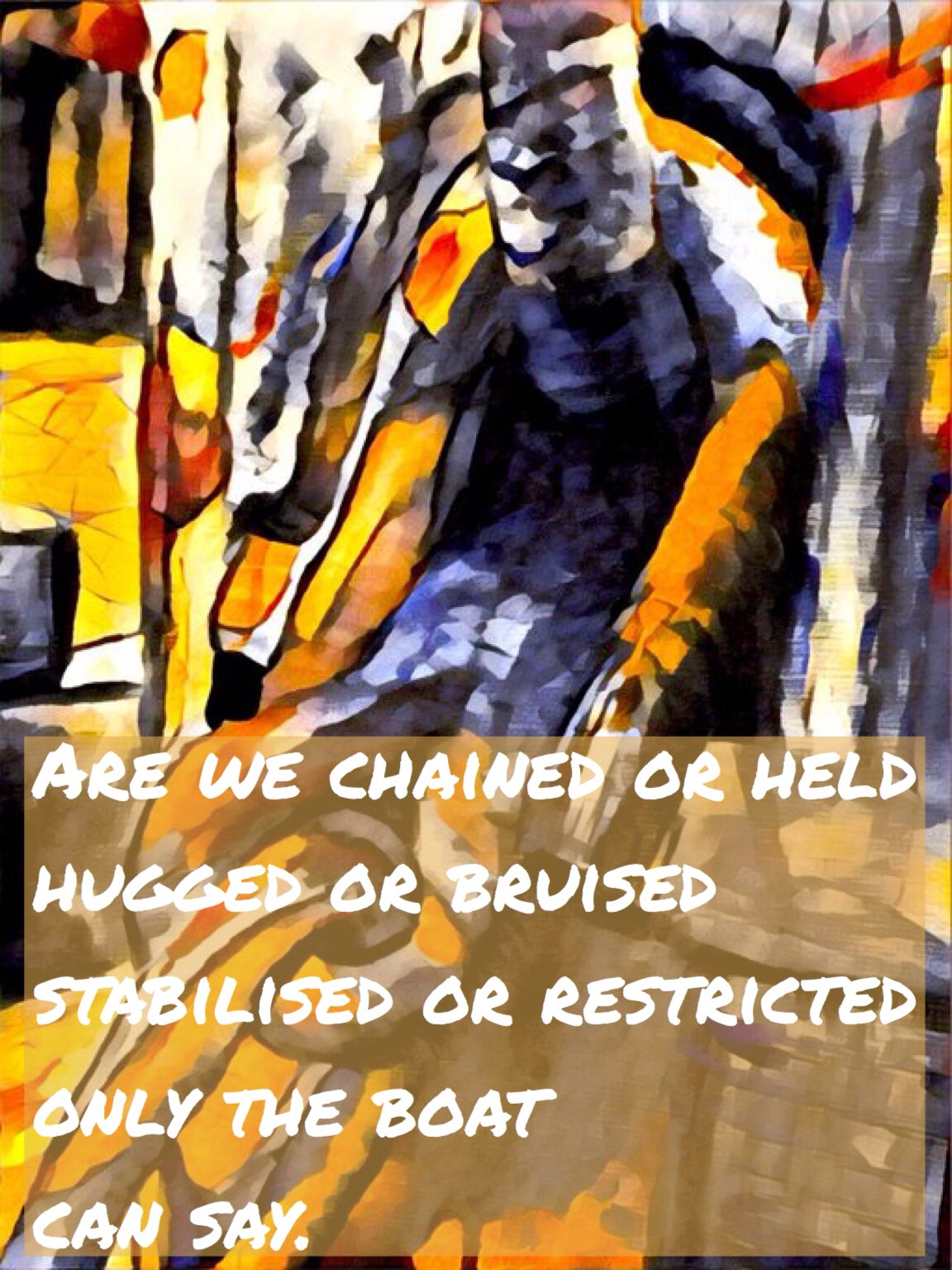
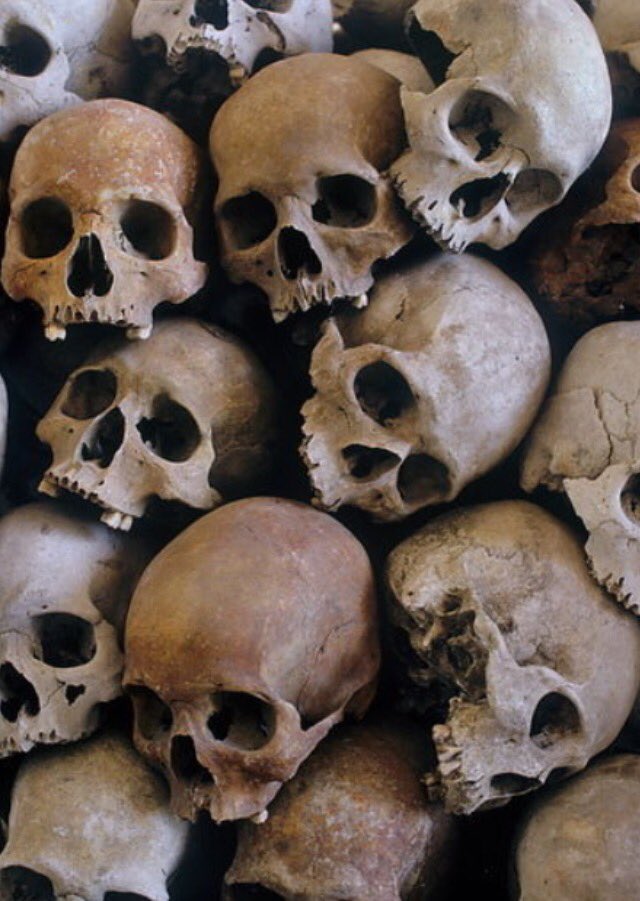
I had spent a little less than a month working on portraits, drawn or painted from photos, and then, unannounced, this face emerged.
He stares out of the page, an unsettling presence.
There are stories to imagine, none to tell.
Well as far as I am concerned he was a piece of recreation.
I simply played with colours and forms until it said stop.
I stopped to contemplate what he or it might mean for future acts.
I find working purposefully, in a concentrated manner on study , on technique, tiring but valuable. I realise that this will be a constant source of frustration but also a challenge and a potential source of satisfaction.
I am not really sure how the idea of completing 30 portraits came about, it just did.
It is this path which arouses my curiosity, which begs me to retrace my steps.
Taking bearings.
Why, I ask myself, does one image attract at a particular moment?
There are people who have an eye that I treasure.
There are people who have a way with words that inspire.
There are those photos that come back to me that I go to search for years after.
What determines this toing and froing from, repetitive technical exercise to recreation?
Instinctively, intrinscially motivated moments of studied effort, concentration, intermingle with instintively motivated moments of freely formed, instinctive creativity.
The monster can't appear without the work on portraiture, the monster can't appear without the freedom to create.
Mapping not tracing.
Mapping most often involves taking knowledge of the lines of others inorder to trace one's own steps....
I suppose what I find so wrong about much of classical education is that teachers don't wait for students to naturally and instinctively search for answers, for mastery, to their own personal questions, to map out their own personal paths.
Most of the time creativity is not called for, only unthinking tracing.
I find myself taking screen shots of the artwork of others, as reference, as inspiration.
I find myself watching documentaries retracing the artistic paths of others.
Moments of serenity, moments of despair....
I think again how objects, images, memories become markers on our maps, moorings for our lives.
I think again how motifs model meaning.
I think about the challenges to accepted motifs and the creation of new forms of art.
I think of how loss of attachment, mooring, meaning, leads us to fearful despair, confusion or outrage.
Tides, waves, lunar movements...
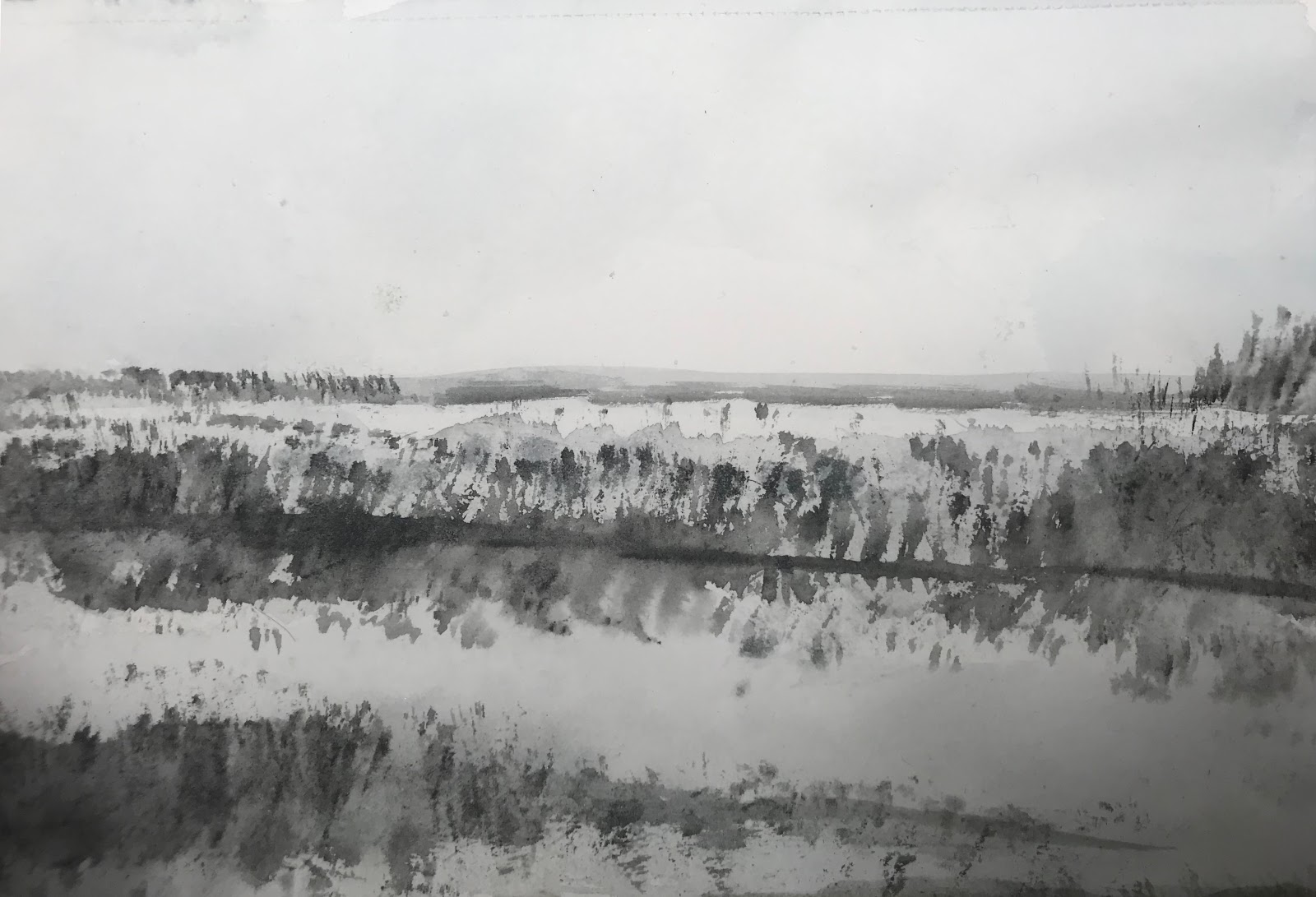
I leave people and portraits and find refuge in landscape.
As I draw, I branch off, my eye drawn around the room.
I glance over at my bookcase and see the mountaineering section, the aikido section, the Stanislavski and Chekov books on acting, the various tomes concerning educational research from the past ten years. Each section represents moments, hours, years of attention, enthusiasm, passion, and its waning.
There are seasons, tides, reverberations, which somehow connect in my thoughts, memories, writing, drawing, painting....
Living for many years on the coast, moving backwards and forwards between two countries separated by the sea, looking at photos from series of annual trips across the channel, the sea is a constant motif in my existence.
“There were profound reasons for his attachment to the sea: he loved it because as a hardworking artist he needed rest, needed to escape from the demanding complexity of phenomena and lie hidden on the bosom of the simple and tremendous; because of a forbidden longing deep within him that ran quite contrary to his life's task and was for that very reason seductive, a longing for the unarticulated and immeasurable, for eternity, for nothingness. To rest in the arms of perfection is the desire of any man intent upon creating excellence; and is not nothingness a form of perfection?” ― Thomas Mann, Death in Venice and Other Tales
Casting off moorings.
Strangely, time appears for this work, when time before appeared absent.
How is it that after so many years, I find this time to paint?
Maybe, I have cast off those moorings that were holding me back.
I find a poem on the Mooring image from Wendy Taleo. It finds its place somehow here.
I don't really know why it is that I am pausing here to write a few notes in this "ship's log".
"Found poetry is a type of poetry created by taking words, phrases, and sometimes whole passages from other sources and reframing them as poetry by making changes in spacing and lines, or by adding or deleting text, thus imparting new meaning." Wikipedia. I have walked Jazz the dog the same route countless times.
Yesterday, it seemed that every few feet I had to stop to contemplate an art installation. How is it that I hadn't noticed these gallery pieces before? Was it the storm which made me more sensitive to the environment? Was I less caught up in my own thoughts? Was I more open to venturing off the path, to bending down, to wandering off into the undergrowth, to varying my point of view?
What of the people who assembled the installations?
To what extent was there any aesthetic intention to the arrangement of these objects in their allotments?
Lot 1. Giraffe and bean poles.
What on earth was this elongated giraffe doing, standing jauntily amongst the bean poles?
Was there symbolic meaning to its angled emplacement?
Did it have a role of watch-giraffe, or scare crow?
Had it been bought especially for the garden or had it been unceremoniously dumped?
What had determined the plan of the planks laid out as walkway?
Had there been any thought as to the relationship between verticality of the bean poles and the neck of the giraffe?
There was no sign, no name of an artist, no leaflet to accompany my visit.
Lot 2. Pallet, panels and branches.
I suppose the pallet, panels and branches had a practical function.
They had been arranged to form some sort of obstacle.
It was an obstacle to what?
There had been some thought which had gone into the propping of the branches.
Whatever the method behind the assemblage, it had apparently been pretty haphazard.
No tools had been used to attach the pieces.
No rope had been used to bind the branches together.
No attempt had been made to minimise the space taken up by the objects.
Whatever the story behind the grouping of the objects, they stood there waiting for somebody to pay attention.
Lot 3. Sheet metal erosion.
It has obviously been standing there for some time.
The corrosion on its surface had begun to eat away at its structure.
Holes were appearing, light was boring through its solidity.
Why had noone thought to throw it away?
Why had anyone thought to leave it standing there?
What possible purpose did it have?
What might have been its origin?
Had it been part of a vehicle?
Had it been ripped off a piece of furniture?
How long had it been there?
No answers were available.
Only questions.
Had anyone else ever thought to stop to pay attention to its rotting beauty?
Lot 4. Oil drum totems, oil drum cemetery.
What is the line between tipping, pollution, and art?
I can imagine people complaining about the eyesore.
I can imagine people complaining about the abuse of nature.
I can imagine people complaining about the thoughtlessness of others.
All I could see was the cylindrical metallic form and the fading colours of the barrels framed, overgrown, accepted perhaps by nature.
I found a funereal peace, a strange spirituality associated with the place.
Was it some sort of cemetery?
Whose heads are these drumstones memorials to?
Were they totems for a rite?
Was this a shrine to unknown gods?
Had there been any decision as to whether the green drum was on the red drum rather than the other way round?
Had there been negligence or care here?
I stop and carefully frame them.
Jazz is impatient to explore.
I pull him back.
He sits down panting...waiting.
Lot 5. Wild-framing, digital filtering.
"It's not entirely representative of reality." I might hear you say.
Yes, I played with an app - Prisma, to search for an intensifying of the colour. (I had written insensifying and I hesistated before "correcting it.)
Once the colour heightened, a wildness of the fence framing is what hits me.
How many fences have you seen with such a design?
How much would you have to pay for such sculpture if displaced in a gallery?
"Oh! What Junk!" I hear you say.
"Rickety rubbish!" I hear you say.
Not to me.
Lot 6. Ramshackle dump.
There is a joy in writing, in hearing the word "ramshackle".
I go and find a quote to celebrate it.
“The windows of the houses - even if the house is ramshackle - are always beautiful because windows represent light!” ― Mehmet Murat ildan
OK, I agree I may be reading into things more than exists.
There may be serendipity in the geometry of the sculpture figured left.
It may be a complete and to some an unpardonnable accident.
But to me, there is beauty, there is wonder.
I wonder if others have stopped to celebrate this ramshackle dump?
“Art is not what you see, but what you make others see.” ― Edgar Degas
Footnotes.
Involuntary Sculpture. "A selection of photos taken by Brassai and captioned by Dali in surrealist periodical "Minotaure" in 1933 bearing the title "Involuntary Sculpture." "Scraps of everyday débris, - including rolled up bus tickets, a piece of bread roll, a curl of soap from a sink, and a blob of toothpaste - featured in photographic close-up as 'automatic' sculptural configurations. These banal and non-artistic objects (one of the bus-tickets was allegedly found screwed-up in the pocket of a bank-employee) were intended at least in part as a riposte to the prevailing perception of sculpture at the time." "Brassai and Dali's photo essay provides a tantalising evocation of sculptural possibility, where forms are both shaped by human hands, sometimes with little conscious thought (the rolled bus ticket) and subject to organic growth (the piece of bread rising and changing shape in the oven). It also freezes its array of objects at a particular moment, before they are discarded, swept or wiped away, dissolved or eaten. Nevertheless, their photographic capturing does give them a certain solid presence, particulary through Brassai's use of dramatic chiaroscuro." Chiaroscuro(English: /kiˌɑːrəˈskjʊəroʊ/; Italian: [ˌkjaroˈskuːro]; Italian for light-dark), in art, is the use of strong contrasts between light and dark, usually bold contrasts affecting a whole composition. Wikipedia.
"Sculpture, especially in the case of antique copies and casts in white plaster, stone and marble, had exceptional photogenic qualities, setting up striking contrasts between light and shade as well as nuances of texture. In this sense both media (sculpture and photography) share a manipulation of the effects of light, as well as a concern, potentially for framing and apprehending an object from a specific point of view. Through photographic representation, sculptures can take on another life, eternalised as images in their own right in what André Malraux would call a 'museum without walls'." "In a late essay, Brassai would argue that the photograph developed in the dark-room acted as a metaphor for Marcel Proust's well-known accounts of 'involuntary memory', a latent remembrance suddenly triggered by an everyday object or experience, such as the taste of a madeleine dipped in tea. In that kind of moment, past and present locations are telescoped, and according to Proust, 'our whole person...totters between them...in the vertigo of an uncertainty like the kind we sometimes experience before an ineffable vision, at the moment of falling asleep, - a state of demi-sommeil." Anna Dezeuze and Julia Kelly in "Found Sculpture and Photography from Surrealism to Contemporary Art.
"It is good to love many things, for therein lies the true strength, and whosoever loves much performs much, and can accomplish much, and what is done in love is well done.”
"It's the greenest spring that I can ever remember. It's just incredible right now. It's stunning. You walk outside when it's sunny and it's like O-M-G! W-T-F! And then there are no words...."
"Poetry melts my bones. enters my blood. and changes its composition." Sanober Khan
"Night is purer than day; it is better for thinking and loving and dreaming. At night everything is more intense, more true. The echo of words that have been spoken during the day takes on a new and deeper meaning." Elie Wiesel.
"Le véritable voyage de découverte ne consiste pas à chercher de nouveaux paysages, mais à avoir de nouveaux yeux." Marcel Proust.
Birthrights...
The massive, tortuously carved, ebony sideboard stood against the wall in the dining room.
It's drawers resisted a small child's curiosity.
It was flanked by a pair of lions on pedestals.
I had no idea of these objects' provenance.
To me, they were just family heirlooms.
I would later learn that the furniture was "Anglo-Indian." Abridged histories...
I pored for hours over the collection of Ladybird histories.
I became well versed in the kings and queens.
I prided myself in my ability to recite lists of monarchs and the six wives of Henry VIII.
I had some difficulty in remembering which ones were beheaded.
Great explorations...
I knew of the great explorations of Cook, Raleigh, Livingstone
Each page of text was accompanied by a colour illustration of the deeds of a great man.
Great swathes of ocean, war, people, and civilisation appear as painted backdrop to each page.
There was Columbus.
I was somehow less interested in him.
Was it that he was Spanish?
Rare women depicted seemed weirdly sacrificial.
Joan of Arc, Marie Curie, Florence Nightingale.
I found them difficult to fathom.
Unclaimed territory.
I leaf through a Ladybird odyssey of Captain James Cook, "An adventure from history." "One of the greatest of all the famous sailors who have set out from the shores of England to discover new lands."
I so loved "adventures from history" with their pictures on every other page.
I met Cook as a young boy.
I was left in no doubt of the acuity of his fine moral compass...
Take your telescope now and gaze with Captain Cook towards uncharted waters.
And gaze.
And gaze.
And gaze.
And raise another Union Jack.
And take your hat off.
And your crew cries:
"Hip hip hooray. Hip hip hooray. Hip hip hooray."
Another page, another discovery.
Take your oars and row to another shore.
Seeing with new eyes.
And we reach this group of islands that...
"no one had seen before.
[I deduce the word native is a synonym of "no one", as "no one had seen" the islands before.]
Then. They bow in awe.
"Nor had the natives ever seen a white man."
A. White. Man. Is. Not. A. God!!
No! Not at all!
Cook is "only a man like themselves."
But!
Be careful now!
Natives are "great thieves" (unlike you, Cook, who wouldn't steal a shilling).
Their friendship is inconstant.
Alas!
Natives become ungrateful, unfriendly even.
They bash your brains out.
Seeing with new eyes... "New Zealand’s maritime history has struck rocks with revelations made by a University of Aotearoa professor, Professor Ika Pounamu, during a dinner speech to the Royal New Zealand Sail-Tub Club. The shock was not simply that a university professor would say something forthright about New Zealand’s colonial past to the Royal New Zealand Sail-Tub Club in Auckland on April 8. The shock was that the professor laid bare the secret mechanisms of empire to a host audience that knew more about knots, sails and navigational signals than the secret meanings behind ‘discovery rituals’ performed by Captain James Cook."
"At the highest point of a small island in Queen Charlotte Sound, located at the top of Te Wai-Pounamu, Captain James Cook cast my ancestors as inferior savages, unworthy of political rights over their bushy and coasty lands. Through his Tahitian navigator and interpreter, Tupaia, Cook actually asked a so-called ‘old Indian man’ if it was alright to erect two wooden poles with flags so that any ships that may pass would know these sailors had been there. Upon raising the Union flag, Cook then had the cheek to claim to take possession of the southern Māoriland in the name of King George III. Cook brazenly toasted with Māoriand he gave the ‘old Indian man’ – a Māorichief – the empty wine bottle, to whom he had already given a threepence coin, which was the going rate for purchasing an acre of land off natives throughout the empire, and some spike nails with the King’s arrow cut deep upon them”.
"Captain Cook was a sissily-costumed Masonic puppet, and a sly-as-a-City-of-London-Corporation-bond-trading trickster, who ‘gained consent’ of ‘the natives’ by a deceptive construction upon the circumstances based on the absence of full disclosure”.
There is something immensely reassuring about recognisable ritual.
We take our bearings from those around us.
"Oh I wish I had such bearing..."
Belonging anchors us.
We play the ferryman, going from port to port, paying little attention to the sea, our eyes fixed on the destination.
For those who would set sail into the unknown, we are plagued by dreams of sea-monsters, wrecks, mutinies, being forced to walk the plank.
Look, I really shouldn't be here with you writing this, but bear with me, you, you have been pressganged as a member of this crew.
There are moments when I think to myself:
"Simon, you haven't got a bloody clue what you are playing at."
At moments such as these, I gaze back longingly to dry docks.
"What the hell are you playing at?"
I am lost in a bloody ocean of uncertainty - actually a classroom.
(or The open space as one colleague named it today.)
Actually that is in itself unusual if I think about it.
In most classrooms who do you see apart from the students?
Today, I spoke with teachers and students and they all seemed to be rather the same like me...a bit lost.
I started off the day with emails to teachers in France and the UK, Facebook messages to students, a Twitter DM to a colleague in Poland.
I find myself a node in networks involved in
Online/offline learning across various online/offline CLAVIER spaces.
Learning projects between three departments in France and the UK.
Organisation of trips between France and the UK and between France and Poland.
Connecting people to existing online and offline communities/individuals.
The students arrived for the afternoon "class".
Four students were talking of their trip to Amsterdam and their plans to write about it in their blog.
One student was asking for advice to learn about working as a teacher in the USA.
Another one was working on a project in schools to reduce sendentarity and thereby obesity while munching crisps and a chocolate bar.
Another one had been communicating with a friend in Nepal that I had enabled him to meet.
He, the friend in Nepal, had shared the work of his association which builds schools and works for peace.
He, the student, seemed to be contemplating while watching magic trick demonstrations on Youtube.
If I hadn't spoken to him, I would never have guessed.
Another group were in agitated conversation - in English (one was playing some video game on his phone) about the interest of a steady relationship over a new, exciting one.
Oh, the moral issues raised!
One of the students mentioned that he had really enjoyed working on his English the day before at home.
He was busy playing video games on his phone.
Another student was struggling with a request of doing a video-conference with a person that I had introduced her to in London.
She preferred chat, she dreaded being seen to be speaking.
She added her name to a list to meet up with some Polish students for tutoring.
Losing bearings...
That is not how classes used to be.
There used to be a list of objectives, a series of planned activities, everything was concentrated in the classroom.
There was even a course book with answers.
Everybody used to be doing the same thing at the same time, like so many scribes in a monastery.
The door used to be closed.
No other teachers wandered in.
I used to address everybody from a distance.
TEACHER to STUDENT and things were clear.
Now everybody is doing their own thing.
I seem to spend a good deal of time in real dialogue with real people.
Frankly, at times, I am all at sea, I honestly find that I am losing my bearings.
I had the feeling today, that there was something missing - that feeling of community.
I am not sure that I feel comfortable with what feels like atomised groups.
I instinctively feel there needed to be more cohesion.
Maybe that is just nostalgia? Maybe that is just insecurity?
Maybe my perspective is not helplful, maybe I needed to try and get a different view?
Maybe I need to include here a link to another post which concerned the same group of students, where there was indeed a clear sense of community - perhaps again that was entirely dependent on my perspective, on where I was standing?
I think to myself: "You must trust yourself Simon."
I think back to the Talking Heads.
Well we know where we're going But we don't know where we've been And we know what we're knowing But we can't say what we've seen And we're not little children And we know what we want And the future is certain Give us time to work it out
I think "Nah..."
I think of the fucking absurdity of much which is recognisable ritual of education.
That Talking Heads song suits my dark humour.
Yes, we're on the road to nowhere.
I much prefer song and surprise and magic tricks to sexy stats and graphs, quack science and ....drear.
Drear...the doldrums...wasn't that what motivated the fucking voyage? "Sod it, Sail on, Simon into the unknown."
Opened16
Meanwhile there are people discussing stuff on the other side of the planet.
How did it happen that I listen to them?
They are mostly in some state of America for Christ Sake.
I wouldn't be able to point to it on a map.
Why should I care about these people?
Isn't TV enough?
I never used to be learning along with a crowd of people all over the place.
Whatever happened to the good old days?
Over the past couple of days, I have dropped in to listen to a few conversations.
There are number of scenes which marked me and pop up here haphazardly.
1) Open exploration and clear destinations.
There was a conversation with George Station and some students about freedom.
It came in the Virtually Connecting Session below.
"Do you like freedom, or do you prefer clear outcomes?" was the question I retained.
I find myself nodding, yes that is a recognisable situation.
What to do when you are the only weird teacher in the students educational lives?
Do we just abandon our difference and conform?
What do we do about drowning - learners and learner teachers?
How do you differentiate drowning learners from those who are simply treading water?
There are enormous issues of trust and no doubt questions of ethics.
We need to question ourselves as to the courses we chart.
I think back to a comment of Frances Bell et al and the ethics of pedagogical experimentation...
We need to wonder whether it's reasonable or ethical to prepare people for high seas navigation when some are just wanting a pedalo to spin around the pond...
As learner/educators we need to trust ourselves when out in an ocean, far from recognisable land.
We need to trust learners to learn while being all at sea.
We need to reflect on what we consider to be the most important means to assess direction.
We need to reflect on appropriate means to share our presence as more experienced navigators.
How and when do we signal existing trade routes, or known reefs?
2) Mentoring and storytelling.
I have to admit to feeling nostalgia on watching Dave Cormier's video on mentoring and storytelling.
I miss rhizo-stories around the camp-fire.
What I appreciated was his willingness to document failure in his attempts to improve undergraduate integration and orientation at his university.
I myself enjoy narrating stories of epic adventures from which we gain much learning however rough the journey.
It is always easier to talk about such epics with bravado after a little while...
Immediately, this connected with my interest in story, culture, change, and learning.
"Why the fuck is he always going on about Odyssey?" Whose stories?
Education, it seems to me at this instant is a ritualised story of power.
I wonder whose stories are dominant in our classrooms, our institutions?
I wonder whose perspectives carry the most weight?
I wonder about a remark made during a conversation at #opened16 about the absence of students.
I wonder how we are to imagine a new education which is really open to newly heard, newly entangled stories.
I wonder about how culture is woven from stories.
I wonder an instant about enlightenment.
“Enlightenment is man's release from his self-incurred tutelage. Tutelage is man's inability to make use of his understanding without direction from another. Self-incurred is this tutelage when its cause lies not in lack of reason but in lack of resolution and courage to use it without direction from another. Sapere aude! 'Have courage to use your own reason!'- that is the motto of enlightenment.” ― Immanuel Kant, An Answer to the Question: What Is Enlightenment?
I wonder if reason is enough?
I wonder whose reason is enough?
I wonder if reason alone is ever ethical?
What is it I have been reading recently about science and the humanities?
I think about some of the conversations that I have had recently with students.
I rather think that they are less concerned with reason and more with the soul.
Can education be ethical if reason is divorced from soul?
Where the hell am I heading? "Maybe I should just settle for not knowing. Maybe it's just good to know that you're not the only one who doesn't know.” ― Bryan Lee O'Malley, Lost at Sea
"People think that stories are shaped by people. In fact, it's the other way around..." Terry Pratchett.
He was at least ninety years old.
He had been suffering this way since he was nine.
"My father always said that I was less handsome than my brother."
He was eaten up from the inside by a parental parasite.
Our bodies are fictional. "Having a body is in itself the greatest threat to the mind....The body encloses the mind in a fortress; before long the mind is besieged on all sides, and in the end the mind has to give itself up."
Marcel Proust.
I looked at myself in the mirror and I said to myself - that can't be me, but it was.
It was a frightful recognition.
I was thinking that there were pages unwritten that I was reluctant to turn.
I don't want this story, I don't want this story.
In writing, I realise that indeed it is the story which is writing me and not the other way round.
I thought of my elders and they offered me a knowing look.
It wasn't much consolation.
I fell upon a passage from Toni Morrison's Beloved.
How can we ever imagine a body free from (his) stories?
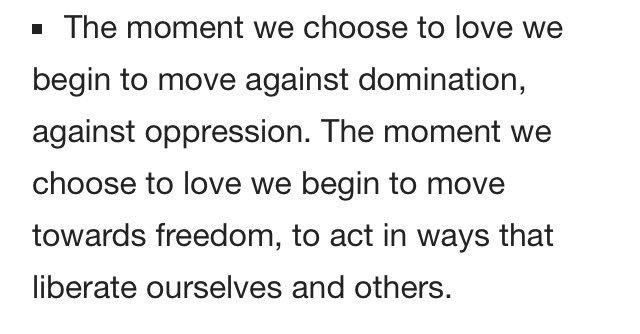
"In this here place, we flesh; flesh that weeps, laughs; flesh that dances on bare feet in grass. Love it. Love it hard. Yonder they do not love your flesh. They despise it. They don't love your eyes; they'd just as soon pick em out. No more do they love the skin on your back. Yonder they flay it. And O my people they do not love your hands. Those they only use, tie, bind, chop off and leave empty. Love your hands! Love them. Raise them up and kiss them. Touch others with them, pat them together, stroke them on your face 'cause they don't love that either. You got to love, you! And no, they ain't in love with your mouth. Yonder, out there, they will see it broken and break it again. What you say out of it they will not heed. What you scream from it they do not hear. What you put into it to nourish your body they will snatch away and give you leavins instead. No, they don't love your mouth. You got to love it. This is flesh I'm talking about here. Flesh that needs to be loved. Feet that need to rest and to dance; backs that need support; shoulders that need arms, strong arms I'm telling you. And O my people, out yonder, hear me, they do not love your neck unnoosed and straight. So love your neck; put a hand on it, grace it, stroke it and hold it up. and all your inside parts that they'd just as soon slop for hogs, you got to love them. The dark, dark liver - love it, love it and the beat and the beating heart, love that too. More than eyes or feet. More than lungs that have yet to draw free air. More than your life-holding womb and your life giving private parts, hear me now, love your heart. This is the prize." "The me you know."
There was something ironic about the title of Maha's blog post.
I am continuously discovering me's that I didn't know.
Some of those me's...well meh...I would rather not have known.
I click on the link. "People close to me in person seeing me as something different from how I view myself as a whole person. Because they don’t read me. And that’s a big part of who I am and what I think and how I feel and how I process my life. Do they really know me if they only know my behavior and not my thoughts?"
People read us all the time, not just our words.
How can I even venture to know someone without living, those readings?
I am reminded of reading an article of Dave Snowden "Humans in effect are able to adopt multiple identities in parallel as well as in sequence. I can be father, brother, husband or son and my behaviour will alter according to the identity that I am assuming. I am increasingly convinced that in a human system it is the identities that are the agents not the individuals"
I suspect that the text is written from the perspective of a man who feels he is able to "assume identities."
We are constantly dressed, trussed up even, with the identities that others thrust upon us.
It strikes me that we are incapable of seeing ourselves as a "whole person".
How on earth can we expect that any other might view us as a "whole person"?
None of us are whole. "By day each soul must walk within its shadow. Only night can make us whole again..." Nicolas Gordon
I think of my parents.
At no time would I have been able to know them as "whole persons."
They were my parents.
They were at times wholly present for me.
Any attempt to consider them as "whole persons" is dependent on imagination.
Crisscrossing stories...
I think of the party for the anniversary of my uncle's passing.
My story was one in a crowd of volumes which crisscrossed.
To each person present the person absent was wholly alive.
To the person absent, each person present must have represented a vital part of his life story.
It is a theme that I realise I visited in a blog post entitled "Story Bound"
I find myself quoting myself. "Not noise bound, their stories were miscellaneously entangled. Their personal footnotes were hidden and unimportant."
It suddenly occurs to me that even here, in this MY blog I am lost.
I am incapable of keeping the stories in order, under control.
They have ganged up on me.
I can hear them skulking in a corner, complaining how once written they are left to their own devices.
I threaten them with erasure, then realise that will be no guarantee of closure.
They have escaped, gained their independence.
I return to Maha's blog post.
"The me you know" "It makes me think about how my embodied self could never live up to my (albeit still authentic) digital self."
I find comments that I wrote on Facebook:
"Fortunately your readers can live up and beyond what any embodied self could ever do. Cos we are distributed - always."
"Reckon we need to think about movements more than about bodies."
There was a question from Bonnie Stachowiak: "I'm curious about this and wonder if you could share more of what you mean (re: movements).."
Dem bodies
We are not the sum of our parts.
Once born we are never whole.
We are forever seeking our other halves, our lost youths, our salvation.
They become the (be)longings of others who pick them up in bits, to be reused or abused.
Dem bones
Ezekiel connected dem dry bones Ezekiel connected dem dry bones Ezekiel connected dem dry bones Now I hear the word of the Lord. Well, your toe bone connected ot your foot bone Your foot bone connected to your heel bone Your heel bone connected to your ankle bone Your ankle bone connected to your leg bone Your leg bone connected to your knee bone Your knee bone connected to your thigh bone Your thigh bone connected to your hip bone Your back bone connected to your shoulder bone Your shoulder bone connected to your neck bone Your neck bone connected to your head bone I hear the word of the Lord! A dem bones, dem bones, gonna walk around A dem bones, dem bones, gonna walk around A dem bones, dem bones, gonna walk around I hear the word of the Lord! Disconnect dem bones, dem dry bones Disconnect dem bones, dem dry bones Disconnect dem bones, dem dry bones An' I hear the word of the Lord! Well, your head bone connected from your neck bone Your neck bone connected from your shoulder bone Your back bone connected from your back bone Your hip bone connected from your thigh bone Your thigh bone connected from your knee bone Your knee bone connected from your ankle bone Your ankle bone connected from your heel bone Your heel bone connected from your foot bone Your foot bone connected from your toe bone An' I hear the word of the Lord! Oh well A dem bones, dem bones, dem dry bones A dem bones, dem bones, dem dry bones A dem bones, dem bones, dem dry bones An' I hear the word of the Lord! Mmmh
A dem bones, dem bones, dem dry bones A dem bones, dem bones, dem dry bones A dem bones, dem bones, dem dry bones An' I hear the word of the Lord! Mmmh Footnote
A final movement catches my attention.
I note it here for further reflection.
"What makes us drawn to music is that our whole being is music: our mind and body, the nature in which we live, the nature which has made us, all that is beneath and around us, it is all music." Hazrat Inayat Khan Image credits.