Towards complexity-informed language teaching in higher education.
To what extent is it possible to adopt “complexity-informed perspectives” (Mercer, 2013) for language teaching in higher education? Considering the classroom as a complex adaptive system (Larsen-Freeman, 1997; Ellis & Larsen-Freeman, 2009), we use mixed methods adapted from Nexus Analysis (Scollon & Scollon, 2004) to explore evolving ecologies of learning (Van Lier, 2010) in a French university language centre’s English classes for non-specialist undergraduate and postgraduate students. Using qualitative and quantitative survey, pedagogical programs, capture of interactions: photo, video, and learner portfolios, we trace discourses in place and interaction orders. We study teacher and learner reflection, narratives and interview to highlight divergent perceptions of affordances. We observe how network-connected technology offers the potential to modify pedagogical practices and assessment in the classroom, to better respect learner diversity and to “situate learning” (Lave & Wenger, 1991; Gee, 2004) in diverse contexts, to facilitate observation and analysis of learners and learning activities. We attempt to identify “core components of the system - hubs where the effect of change is more likely to spread throughout the system” both of the learner and the institution (Mercer, 2013). If research may enable us to identify “general principles which language educators can use to guide their actions” (Tudor, 2003), analysis of individual stories illustrates the complex, unpredictable, emergent nature of learning. What strategies might teachers adopt to facilitate dramatic progress in learning? In an institutional context ordered by program outcomes, marking grids, and time constraints, learners may be more concerned with gaming the system for credit rather than actually learning a language. Teachers’ “historical bodies” (Scollon and Scollon, 2004): experiences, beliefs, attitudes, competences, and time and or financial constraints may enable or limit their desire or means to adapt practices. Going forward, we consider it essential to develop connected, reflective communities of exploratory practice (Allwright, 2003) including learners, teachers and researchers to work towards manageable pedagogical solutions and the recognition of diverse perspectives, competences and roles.
This is brought to you by....
A growing feeling of becoming part of academic communities.
Thanks to people that I can share common VALUES with.
Despite past feelings of disgust for everything academia.
An accessibly human American researcher, Steven Thorne packing an hour long keynote into 45 seconds, responding in dynamic whispers so as not to disturb adjacent partner/sponsor event...
"THIS EVENT IS BROUGHT TO YOU BY...."
speaking volumes about social issues in conversation with Parisa Mehran, an Iranian researcher refused a visa to attend Eurocall.
"SHHH!"
This is brought to you by....
Questions from Joe Dale and Teresa Mackinnon to Steven Thorne about how to connect theory to pedagogical practice.
Questions of how to be a teacher in a complex age of change.
("Was there ever an age that was not one of change?")
Questions of how to enable the work of researchers to be accessible.
Questions of what constitutes citizenship in a connected world.
Questions of identity, of language, of meaning, of POWER.
Questions of frontiers, of who defines our boundaries, our bodies, our movement....our lives.
"Teachers have never been so necessary." Steven Thorne.
"Accessibly human, caring, experts have never been so necessary." I think to myself.
"Working together across artificial frontiers has never been so necessary." I conclude.
"On est ensemble dans cette merde. On a chacun sa responsabilité." He thinks in French.
"Working outside the box, inside the box...tricky...hmm" I contemplate.
Postscript.
This is brought to you by....
Vialogues...
Absolutely worth re-listen cause @stevenlthorne talking at 'maximum syllables per second' in this 'unstructured unpredictability' session!
"Poetry melts my bones. enters my blood. and changes its composition." Sanober Khan
"Night is purer than day; it is better for thinking and loving and dreaming. At night everything is more intense, more true. The echo of words that have been spoken during the day takes on a new and deeper meaning." Elie Wiesel.
I am getting an idea of my contours, of my connections, of my motivations, of possible directions.
Touches of Sense is one example of how I wander when left to my own devices.
I write most often as a stream of consciousness, any learning is emergent.
I take a pause to lay down markers for myself.
If it is to be a usable map then I need to integrate its lenses into more focused exploration.
I am being systematic in my analysis now.
There comes a time for nature to become a template for action.
Poetry is no less a science, it is no less a map, it is no less a means to reimagine our roles.
I post a reference to Shelley here for future reflection:
For Shelley, "poets ... are not only the authors of language and of music, of the dance, and architecture, and statuary, and painting; they are the institutors of laws, and the founders of civil society..." Social and linguistic order are not the sole products of the rational faculty, as language is "arbitrarily produced by the imagination" and reveals "the before unapprehended relations of things and perpetuates their apprehension" of a higher beauty and truth. Shelley's conclusive remark that "poets are the unacknowledged legislators of the world" suggests his awareness of "the profound ambiguity inherent in linguistic means, which he considers at once as an instrument of intellectual freedom and a vehicle for political and social subjugation".[6]
I am fully employed with an interesting profession.
I have been able to invest time in this amateur activity of blogging.
I have been able to invest time in this amateur activity of cmoocing.
I have been privileged to be able to learn in the company of others from whom I have gained enormously.
These others come from wildly different contexts and have a variety of objectives.
I spent some of this last week learning about "blockchain".
I would probably not have invested the energy in the venture had it not been for my peers.
I have worked in a wide number of activities either thanks to not needing money as I was alone and could get by with little or because I have had a job which has enabled me to organise myself to do other things for free or to do irregular but attractive "gigs" for money.
The way things are moving, there are more and more people who will be doing irregular "gigs" not out of choice but out of necessity.
More and more will be "self-employed" "entrepreneurs"...."journeymen."
I was reading reactions to "rhizomatic learning" on Facebook coming from Torn Halves who was suggesting that it was "personalized learning":
So this is personalised learning, is it not? A simple term. No need to trek across a thousand plateaus in order to get an idea of what is being talked about. If a spade is a spade, why call the personalisation of education rhizomatic?
Well I think he makes a valid point.
You could argue that as each person maps their own learning - such a map might include badges or blockchain credits which might be used to validate their efforts in order to monetize them.
I could list the different competences that I have developed over a period of practising "connected learning" or is it "rhizomatic learning"- another term to which Torn Halves might say:
If a spade is a spade, why call the personalisation of education connected learning?
One might remark Dave Cormier's negative reaction to this iteration of blockchain technology
So whatever i thought we could do with blockchain... it's the opposite of this:
after all, isn't "rhizomatic learning" applicable to formal education?
Isn't one role of formal education to enable people to exchange their learning for qualifications, badges, blockchains whatever, for monetary rewards?
Isn't that what Dave Cormier is doing with this e-book draft in which he talks of grading contracts:
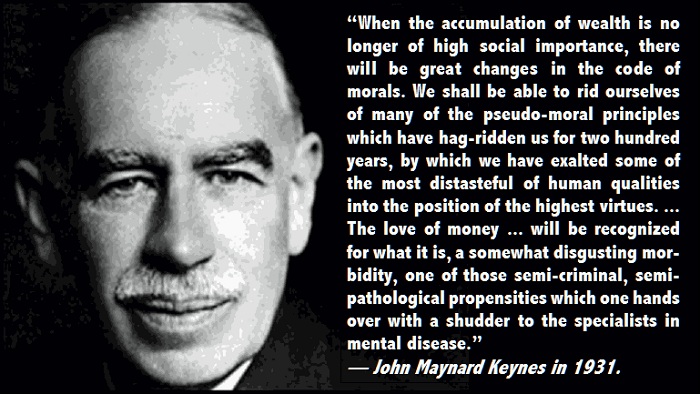
It is all very well for me to say that learning is not about money.
Indeed if Dave is doing #rhizo14/15/16 it is related directly to his salaried profession which allows him to do the activity for free.
Others are able to monetize their research into rhizomatic learning.
We could talk of other learning experiences used for credit in formal education. Here's an article entitled: "Custom Learning Contracts."
So kids are doing all sorts of activities for credit - that is not so far away from what kids are already doing in apprenticeship training.
I return to the question of "normativity" in "rhizomatic learning" in answer to a remark from Torn Halves, I suggested that there is no "normativity" in "rhizomatic learning".
Well I think that Torn is right to challenge that.
If we say there is "no normativity" that is in itself "normativity".
All of this brings us back to the question of "Making the Community the Curriculum."
If we make the community the curriculum that is not the same as a personalisation of learning.
We can have personal learning in service to a community which may enable emergent learning which may benefit all.
Such learning will surely not happen if we concentrate on the "personalization of learning" based on algorithms with expected outcomes.
Algorithms might help. Hashtags might help. Data contained in blockchains might help.
This is more than "personal learning" focused on the individual.
There have been many cases where the learning has not simply been personal but communal -for example the experience of writing the untext for #rhizo14 Writing the unreadable untext .
That is not personalized learning.
There is certainly a "normativity" within the "rhizo14/15/" groups - there are values which are not simply commercial.
There are clear educational values.
The question of extraction of value is crucial to address.
I regret that we cannot ignore "learning for credit" questions related to rhizomatic learning - even if we are not directly interested in it for vulgar monetary gain...
Question: Does "rhizomatic learning" exist without the internet?
Possible answer: Of course.
Possible responses to possible answer:
OK but does it matter?
OK does it count?
OK if it matters/counts why?
Possible supplementary question: Do indigienous/native/aboriginal people do "rhizomatic learning"?
Possible answer: Er...
Possible response to possible answer: Why may your hesitation be important?
Question: What images does the word 'blockchain' suggest to you?
Supplementary question: Do any of the images you associate with the word 'blockchain' correspond to what you consider to be your concept of freedom?
Possible answer: Yes. Validation will be distributed. Everybody will have access to the ledger.
Possible response: Everybody can access music 'knowledge' 'information', 'books', 'freely''...Is that freedom?
Possible answer to possible response: Er...
Possible response to possible answer: Why may your hesitation be important?
If you are reading this it is thanks to a platform.
Touches of the sense is 'my' platform.
I am accessing the platform 'freely'.
Though I am paying the ISP, the EDF (electricity company), for the PC, for the pleasure...
I am giving up access to this 'data' contained on this platform.
When you read this 'freely' you will be enabling the collection of more 'data' for this platform.
I and you will receive more acutely targeted commercial messages thanks to this 'data'.
I may receive more acutely targeted government surveillance thanks to this 'data'.
This is for purposes of security.
I am not sure that that equates to freedom.
If we must access the net to be free what does that say about our freedom?
If we must manage our 'personal data' what does that say about the use of the word 'personal'?
Is 'data' freedom?
Why do I need 'data'?
If I don't need 'data' who does?
Do indigienous/native/aboriginal people need 'data'?
If we must rely on a "globally-stretched net" and be a "global citizen" what does that say about freedom?
I must now submit my tax forms via the net to the French state.
I accept to pay taxes for services which are "for the common good".
I am not sure to what extent my vote guarantees me having any voice in what 'services' are considered 'for the common good'.
I don't have a vote in France.
I don't have a vote in England.
I am voteless.
Unlike Google I pay my taxes here.
Who is paying for my "freedom" here?
Do they have our best interests at heart?
To what extent is Google not evil?
Will Google pay for my health care?
Will Facebook pay for my education?
What will be the cost?
Will I get a vote on how they design my education?
It appears to me that corporate monopolies don't have our best interests at heart.
To what extent does Uber feel concern for taxi drivers in France?
It appears to me that national governments don't have our best interests at heart but at least there is the means to exercise a minimal level of local pressure on such institutions to consider the implications of their policies on the local populations.
What means are there to exercise pressure on an algorithm?
The question is what is this 'better' and who are "the some"?
"The idea of innovation is the idea of progress stripped of the aspirations of the Enlightenment, scrubbed clean of the horrors of the twentieth century, and relieved of its critics. Disruptive innovation goes further, holding out the hope of salvation against the very damnation it describes: disrupt, and you will be saved."
Social improvements have generally come through conflict within communities.
People in power care little for the life of slaves as long as they have fine linen and a nice view.
Moneyed ignorance is bliss.
Moneyed vulgarity becomes a platform for presidential candidates...
Is freedom access to a platform?
Whose platform will guarantee our freedom?
Do our 'democratic' platform politics guarantee our freedom?
People have challenged exploitation, slavery, working conditions...in the streets.
How do you challenge a distant, distributed platform with its artificial intelligence and weaponed drones?
I sat there in the bunker feeling rather smug, smoking.
Not only I had got out of games but I was being paid to do so.
We hardly noticed the 'tac, tac, tac' above our heads.
Suddenly a flag was raised and we raced up the butts to reposition the targets.
The ammunition was live.
The target practice goes on...
In 2001, in the UK, 40,509 kids were receiving military training, including weapons training while at school.
The Ministry of Defence funds a 'youth organisation' whose aim is to:
"provide a disciplined organisation in a school so that pupils may develop powers of leadership by means of training to promote the qualities of responsibility, self reliance, resourcefulness, endurance and perseverance". but it acknowledges that one of its objectives is: "to encourage those who have an interest in the services to become Officers of the Regular or Reserve Forces"
Targeting Peace. "Establishing lasting peace is the work of education; all politics can do is keep us out of war." Maria Montessori
It so happens that I fell upon a report on French TV late last night into the concept of Altruism.
It highlighted an educational program which sought to reduce violence between kids at school through mindfulness training.
It featured an American academic Richard Davidson from Wisconsin.
It featured a French academic-become-buddhist-monk Matthieu Ricard.
If education is 'the most powerful weapon which you can use to change the world' (Nelson Mandela) it is also a battlefield.
There are forces who have massive financial interests in maintaining education in its present state.
There are forces who have massive financial interests in maintaining violent conflict between people.
How can we counter greed?
How can we strive for peace?
Economists are not all convinced in the sustainability or desirability of current exchange systems.
“To put it bluntly, the discipline of economics has yet to get over its childish passion for mathematics and for purely theoretical and often highly ideological speculation, at the expense of historical research and collaboration with the other social sciences.” ― Thomas Piketty, Capital in the Twenty-First Century
I am convinced that we can not remain indifferent to the use of weapons in our societies...
I hear much talk about 'accountability' in education.
"One person trained twelve human beings who went on to so influence the world that time itself is now recorded as being before (B.C.) or after (A.D.) his existence."
"This quote was taken from the introduction of the book "Jesus, CEO: Using Ancient Wisdom for Visionary Leadership",written by Laurie Beth Jones and published by Hyperion.It shows how much power one person has to change the world. We hope it inspires church leaders to use there communications systems to change the future for millions of at-risk youth throughout America, and the world."
Coursera propose un accès universel à la meilleure formation au monde, en partenariat avec des universités et des organisations du plus haut niveau, pour proposer des cours en ligne.
Growing up...
I am the son of an Anglican minister.
I had no faith.
I clearly wasn't going to make it in evangelical christianity.
Growing up...
I am the nephew of an advertising executive.
I had different competences.
I clearly wasn't going to make it in advertising.
Growing up...
"I shall work in public relations," I said to myself.
I had different values.
I clearly wasn't going to make it in public relations.
Growing up...
I arrived in France.
I had a different language.
I clearly could only use English to make it in teaching...
Things are changing...
We can widen 'our' horizons from our armchairs today....
Such power...
Growing up...
My early life was rhythmed by church activities: sport, brass bands, beatles tribute bands, bible reading classes, Whit walks, school visits, pastoral care, baptisms, marriages, burials...
Growing up...
My early career was rhythmed by public relations activites: horse-racing, pipe bands, store openings, promotional tours, giant sausages, client meetings, photo opportunities for Miss Blackpool, bucks fizz...
Growing up....
My present career is rhythmed by educational activities; online and offline exchanges, sport, play, music, information literacy classes, student exhibitions, conferences, team meetings, Youtube videos, blogging...
.
Bridging divides.
When I look at Daniel Bassill's work I have the impression of bridging my own divides.
He was an advertising executive and uses his competences to build caring community.
My uncle fashioned jingles to build market share.
My father shared his passions to build congregation.
Building communities...
I come back to faith:
"One person trained twelve human beings who went on to so influence the world that time itself is now recorded as being before (B.C.) or after (A.D.) his existence."
Christ is a powerful model for an educational networking strategy.
Education is a powerful means to change society.
I am not alone in this belief.
We have the means to network widely and deeply.
Do we want to educate soldiers for a 'religious crusade', consumers for a 'global market', 'citizens' for a 'free society'?
Those working passionately in education have diverse beliefs, values and motivations.
What can not be doubted is the strength of their resolve...for their/our better or for their/our worse.
For those who complain about the politicisation of education, let's be clear:
EDUCATION IS ONLY EVER POLITICAL
There are some educational projects, I consider unbearable.
Nietzsche or God or Mammon or Nation or State may be the inspiration for unbearable horror.
Growing up...
We must remain attentive and critical.
I don't want to work towards building market share.
I don't want to work towards building congregation.
I don't want to work towards building armies.
I want to work with others enabling the emergence of peaceful, caring community.