Showing posts with label #moocmooc. Show all posts

Sunday, March 13, 2016

One.

We go early to the stables, we take out the pony from his box, we get the brushes and start grooming.


The grooming can go on for as much as twenty minutes which is quite a lot of time when one considers that the class will only last one hour.

Then the class lasts for one hour.

At least three times during the class I hear the following instruction:

"Pat your pony now." 

"Pat your pony now."

"Pat you pony now."

If I am thinking about pony grooming...

it's perhaps that Jim Groom left a comment on Alan Levine's recent blog post entitled:

"Open is the porch light being on (and more)"  

or

it's perhaps because we took one of our daughters riding yesterday (while the other one played with the dog).

or

it's perhaps because I have just read an article in the New Yorker entitled:

"The limits of friendship."

I recommend those interested in online learning communities to read those two articles.

If you don't know Jim Groom or Alan Levine...well where the hell have you been?

(sorry this is not respectful for the majority of the world's population who have better things to do than mess around online).

(afterthought - if you are not online you will not be reading this so for all the others... where the hell have you been?)

I have been thinking about the limits of online "communities" and asking a number of questions:

  • How big is an effective online learning community?
  • How Massive can an effective open online learning course be?
  • Is "open" always a helpful term to use when one talks of education?
  • Is inclusiveness something we need to worry about?
  • If inclusiveness is something we need to worry about - to what extent?

Thinking makes my brain hurt.

Like Paul Valéry, I prefer messing around and writing and then thinking.


When I share, sometimes others help me to do the thinking which makes my brain hurt much less.

It's more fun thinking together around a campfire.

Back now down to earth..

I was working with a group of five students last week...the others were busy or asleep.

I wondered how many people I may have touched over sixteen years of teaching.

I calculated that it may be 4000 students.

We believe that personal attention is what counts most.

We believe that meaningful moments have great power when networked.

We capture moments in our learning spaces to share openly with others.

We speak together in little groups, we sing, we dance...
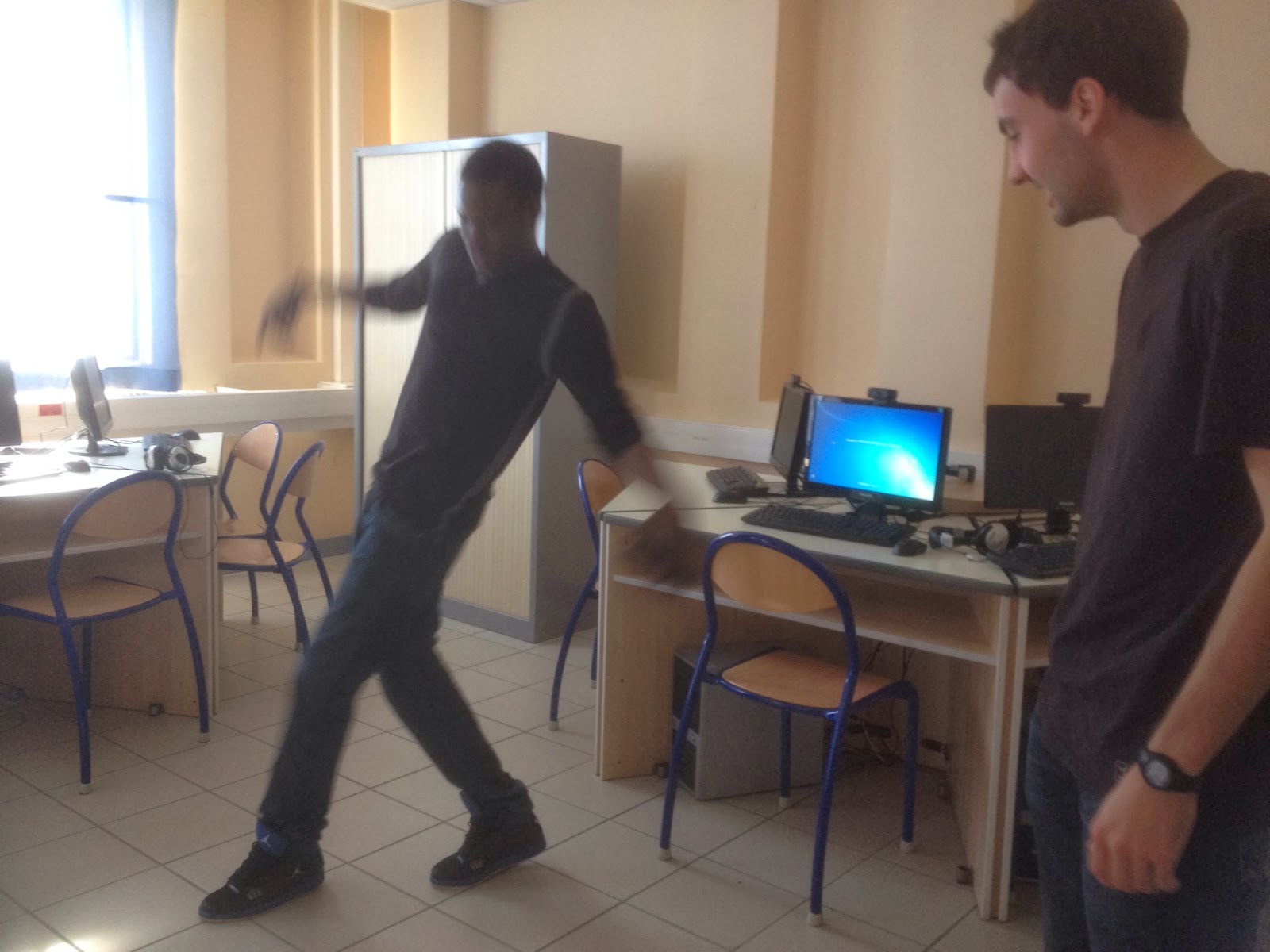


Our space is open to others to come to join in.

We invite learners to share our time with us.


Meaningful moments captured may touch others...

We were sitting in those six comfortable chairs that we have in our learning space.

We believe that to have meaningful personal conversations, you must be a small number.


The problem is that we don't only have six students. 

We have forty four students with two teachers. 

So we need "open" resources and meaningful activities for the thirty two other students that we are not speaking with at a particular moment. 

There are times when a video or written instructions or a blog post or having one teacher speak or one artist perform in front of four hundred or 80 thousand students in the Stade de France is absolutely appropriate - Bono does that masterfully.

If that is the case the video or the written instruction or the performance needs to be open to the people - it needs to attract them and it needs to speak to them in some way. (in the meantime one teacher can speak with one person)

In the case of Bono, we feel like he is speaking to us, he is singing for us, his voice, his words, his humanity touches us. 

He is also helped by having a large team of technicians, artists and the Edge, Larry, and the other one who never speaks but plays bass.  

The large screens and the light show blow Bono up to gigantically megalomaniac proportions.  

The Edge becomes Bono's play thing. 


We become Bono's play thing as we become putty in his hands: 

"Bonjour Paris, Je vous aime Paris, Je pleur pour Paris, Voici ma chambre, Voici ma mère qui est disparue comme ceux au Bataclan"

We are in communion with Bono and the Edge and Larry and the one who plays the bass and doesn't say much and the thousands of other people who hold up their smartphones in the dark and we are one.


God, it feels good for once to feel as one. 

How many MOOCs enable us to feel as one?

Alan Levine talks of #ds106, #CLMOOC, #moocmooc and dat #rhizothang. 

They may become for some people like Woodstock or U2 in Paris and go on for ever in their imaginations.


Oh not that one again...

That's it - Jim Groom IS Bono.  

Is Dave Cormier the Edge?

ONE-Bono-Joey-bloody-Ramone-punk-edupunk-Jim Groom-ONE

ONE-Community-Rhizomatic Learning-Dave Cormier-The Edge-Of reasONE

As Alan Levine says in his post these things get tribal....

There are devices online which may accelerate these tribal feeling while not being that effective for conversation - Twitter chats come to mind.  

We are always on the verge of breakdown if we feel obliged to keep up with the stream. 


It is overwhelming if we try to be everywhere at the same time.

I have tried. It's madness.

Much better look for one or two key moments and share them.

I often do this better with pictures than with words like for this #moocmooc chat example.


Some people who become part of these tribes worry about not being open enough. 
  
They worry about their thang not being inclusive.  

Well I think they worry too much.

Are we Bono? 

Will we perform and share our life stories with millions and make them feel special when our eyes meet on through the big screen? 

I suppose that is the dream of rock-star educators that we will be ONE with them.

We will lift our smartphones up in unison and sing along to biochemistry lectures...for credit.

I am reminded of conversations with Terry Elliott about attention.

We have spent much precious time together with a small group of people creating. 

There are moments of grace which mark us for life.

Here is just one example: Dawn augurs well. 

Nothing can replace quiet, attentive, contemplation.
Nothing can replace close friendship and fellowship.

If we don't want to live in the shallows we need to dig deep and spend time with those who touch us.

That time that we spend creating with our hearts may touch others.

This is open.

Anyone can read it.

Such means of distribution of a personal message were unheard of before the internet.

How many years did Bono spend alone or with a small group of friends writing one?

How many hours did he spend in his bedroom weeping the death of his mother?

Sharing tears and  joy and solitude may touch others.

I sit here with my daughter on the sofa.

We are alone...

We are all one.


Friday, February 12, 2016

Brass bands/Big brands.

I am working through Daniel Bassill's Tutor Mentor Resources.

It is both humbling and inspiring.


I fall upon a title of a blog:

"Involving youth in meaningful ways."

I can think of no better description for how I see my role as an English teacher:

Involving youth in language learning in meaningful ways...

As I rummage through the mass of information on the Tutor Mentor Sites, I come across another document which attracts my attention:

"Faith-based tutoring and mentoring strategies which any group can benefit from."

I find the following quote:

"One person trained twelve human beings who went o­n to so influence the world that time itself is now recorded as being before (B.C.) or after (A.D.) his existence."

"This quote was taken from the introduction of the book "Jesus, CEO: Using Ancient Wisdom for Visionary Leadership",written by Laurie Beth Jones and published by Hyperion.It shows how much power o­ne person has to change the world. We hope it inspires church leaders to use there communications systems to change the future for millions of at-risk youth throughout America, and the world."

I let my mind wander...

I find the following quote:

Coursera propose un accès universel à la meilleure formation au monde, en partenariat avec des universités et des organisations du plus haut niveau, pour proposer des cours en ligne.

Growing up...

I am the son of an Anglican minister.

I had no faith.

I clearly wasn't going to make it in evangelical christianity.


Growing up...

I am the nephew of an advertising executive.

I had different competences.

I clearly wasn't going to make it in advertising.


Growing up...

"I shall work in public relations," I said to myself.

I had different values.

I clearly wasn't going to make it in public relations.

Growing up...

I arrived in France.

I had a different language.

I clearly could only use English to make it in teaching...


Things are changing...

We can widen 'our' horizons from our armchairs today....

Such power...


Growing up...

My early life was rhythmed by church activities: sport, brass bands, beatles tribute bands, bible reading classes, Whit walks, school visits, pastoral care, baptisms, marriages, burials...

Growing up...

My early career was rhythmed by public relations activites: horse-racing, pipe bands, store openings, promotional tours, giant sausages, client meetings, photo opportunities for Miss Blackpool, bucks fizz...

Growing up....

My present career is rhythmed by educational activities; online and offline exchanges, sport, play, music, information literacy classes, student exhibitions, conferences, team meetings, Youtube videos, blogging...
.

Bridging divides.

When I look at Daniel Bassill's work I have the impression of bridging my own divides.

He was an advertising executive and uses his competences to build caring community.

My uncle fashioned jingles to build market share.

My father shared his passions to build congregation.

Building communities...

I come back to faith:

"One person trained twelve human beings who went o­n to so influence the world that time itself is now recorded as being before (B.C.) or after (A.D.) his existence."

Christ is a powerful model for an educational networking strategy.

Education is a powerful means to change society.

I am not alone in this belief.


We have the means to network widely and deeply.

Do we want to educate soldiers for a 'religious crusade', consumers for a 'global market', 'citizens' for a 'free society'?

Those working passionately in education have diverse beliefs, values and motivations.

What can not be doubted is the strength of their resolve...for their/our better or for their/our worse.


For those who complain about the politicisation of education, let's be clear:

EDUCATION IS ONLY EVER POLITICAL

There are some educational projects, I consider unbearable.

Nietzsche or God or Mammon or Nation or State may be the inspiration for unbearable horror.

Growing up...

We must remain attentive and critical. 


I don't want to work towards building market share.

I don't want to work towards building congregation.

I don't want to work towards building armies.

I want to work with others enabling the emergence of peaceful, caring community.


Thursday, February 4, 2016

Fear of silence.

I say nothing.

She wants to look from ahigh.

She sees much farther than me now.

She is a giant on the shoulders of a dwarf.


I take the photo in the only way that I can.

The moment is gone.

I feel caught between joy and sadness.

I fear we can not frame more than our shadows.

"Sustainable pedagogy."

I was thinking of those words this morning.

I was overcome with silence.

Night-line.

"Oh, I love silence," he had said to the counselling mentor.

She said nothing, she looked at him.

She said nothing, she looked at him.

She said nothing, she looked at him.

"What I mean is...."

His wordly confidence had left him stranded.

She said nothing, she looked at him.

Non-directive counselling.

It suddenly occurred to me that this moment had been foundational in my teaching practice.

Empathy

I was speaking with a friend this morning.

"The problem with feeling competent is that we can take on too much," he said.

"I ended up with burnout and depression."

I listened to him. I nodded.

I returned and sat to think.

Sustainable pedagogy...

What does it mean to be a sustainable educator?

I search for the foundations of the counselling training that I had received 30 years before.

It turns up Carl Rogers.

I found a conference on empathy.


I sat to listen.

I hear:

"The most effective listening is where you listen for the feelings and emotions that were behind the words..that were just a little bit concealed. Where you could discern a pattern of feeling behind what was being said."

I ask myself questions:

"What are the feelings and emotions that lie behind our actions words, as teachers/instructors?"

"What are the feelings and emotions that lie behind the words and actions of learners?"

"What are the patterns of feelings behind an 'educational system'?"

"What patterns of feeling do our rituals conceal?"

Fear of silence.

I return to listening.

I find a few quotes of Carl Rogers.

I note them down for future reflection.

"Colossal rigidity, whether in dinosaurs or dictatorships, has a very poor record of evolutionary survival."

I think of massive investment in 'educational content'.

What do those investors feel for learners?

I think of rigidity of teacher timetables, of programs, of systems, of assessment, of teacher assessement, of buildings.

What does such rigidity reveal of the feelings for learners and teachers?

"The degree to which I can create relationships which facilitate the growth of others as separate persons, is a measure of the growth I have achieved in myself."

How on earth can our growth be measured?

Can pedagogy be sustainable if it does not accept change?

Are we really concerned about the growth of others or are we too full of our empty selves?

"The curious paradox is that when I accept myself just as I am, then I can change."
Carl Rogers

What is it to accept ourselves?


Thursday, January 28, 2016

Boundaries and desire.


I have been reflecting on what motivates desire to act and what limits action in an institutional learning context.

As a teacher, there are varying constraints which limit action.

Some constraints are clearly desirable or even essential to our own existence, our identity or an institution's or a groups existence.

Faced with what is a considered unacceptable demand or threat, a person, a teacher even,  may be motivated to attempt to overcome, get around, ignore, physical, political, philosophical, pyschological, cultural, hierarchical...(other) limits.

Clearly what is acceptable to one person is not necessarily acceptable to another.

 The perceived risk of overcoming or simply ignoring constraints will clearly depend on the individual person or group.

At times, boundaries may be breached, or simply crumble and disappear.

Beliefs may over time change or be transformed.

Inside out, outside in.

Desire to act will depend on intrinsic and extrinsic factors.

Desire to fulfill a role in an (educational) institution will depend on a mix of intrinsic and extrinsic factors.

Can one say that purely intrinsic motivation exists?

Perhaps not in a professional setting at least.

He notes that question for another day.

He returns to the confines of he institution.

There are days when we would rather be elsewhere...

There are days when a feeling of professional responsibility, a desire not to let down one's friends or colleagues in the lurch or a fear of losing regular/irregular income only just outweigh the desire to walk away...

The desire to not lose face amongst one's peers weighs heavily.

There are people in all professional activities who hate every moment of their professional existence.

There are people in all professional activities who would rather leave the work to the others...

There are people in all professional activities who have an overwhelming desire for power over others....

Man and machine...  

I am a 'fonctionnaire' - a servant of the state, in service to an education system.

I am a cog in a vast machine. Like all cogs which 'malfonctionne' I am replaceable.

Within a university,educational 'cog's are given more freedom of movement than in schools.

I may define within certain limits the program for the students, (indeed it is my responsibility). I may define the methods, the means of assessment.  Teachers are rarely if ever observed.  Students need to be seen to be, or believed to be in class at particular times and grades need to be rendered to the administration every term.  If I am requested to attend particular training or meetings I go.

Complaints are to be avoided.

The smooth running of the institution's administrative machine is primordial.


Then the machine ground to a halt.

A few days later

What on earth was I thinking?

This is all so complex.

Hurried Conclusion.

This is all so complex.

OFF.


Wednesday, January 27, 2016

My lawyer is a dog.


"Wuf, wuf, snarl"

I am, against my better judgement participating in conversation with people talking about...
(who is this better and why is he/she speaking to me?) 

 INSTRUCTIONAL DESIGN.

"wuf, wuf, snarl...huh?"

I felt it wasn't for me.

I never read instruction manuals (until it is too late).

I once worked with people who called themselves  'Ingénieur Pédagogique'
(instructional designers).

I was impressed.

I am just a teacher.

I asked annoying questions about LMS's.

I obviously didn't understand.

Serious Business.

In France if you are the business you are an engineer of something.

I blame Napoleon bloody Bonaparte, that great liberal thinker.

I looked at the invitation to participate in #MOOCMOOC it included the words:

INSTRUCTIONAL DESIGN.

I had nightmares of Skinner and bloody CD roms.

"It's a nice day today, isn't it? [REPEAT] It's a nice day today isn't it?"


"Oh gawd!" I thought.

I didn't feel that it would be for me.

INSTRUCTIONAL DESIGN

I have been conned into participating.

It happened on Twitter.

I fell into a dialogue with PEOPLE.


They have my attention now...at least for now...


I now have a bloody Storify to work on from last night and then blog about.

There aren't even any deadlines or badges.

Shit!

What am I letting myself in for?

Shit!

Coffee break.


So I sat down for coffee with a bunch of playmobil and a few students.

We started talking about their research questions.

With about two hundred students to help get up and curious, I need coffee and a comfortable chair.

Banter scaffold.

Some are immediately curious and are looking for a sounding board for their ideas.

(It was pretty much like the conversations that I am still working on for #moocbloodymooc.)

We engage in a bit of banter - throwing ideas, pictures, and sounds off of each other.

They go off with enthusiasm...(like me here.)

Banksy approach to education.

I was delighted to be learning in the company of some of my fellow co-learners (students) this morning.

With one, we started talking about Street Art and its influence on political debate.

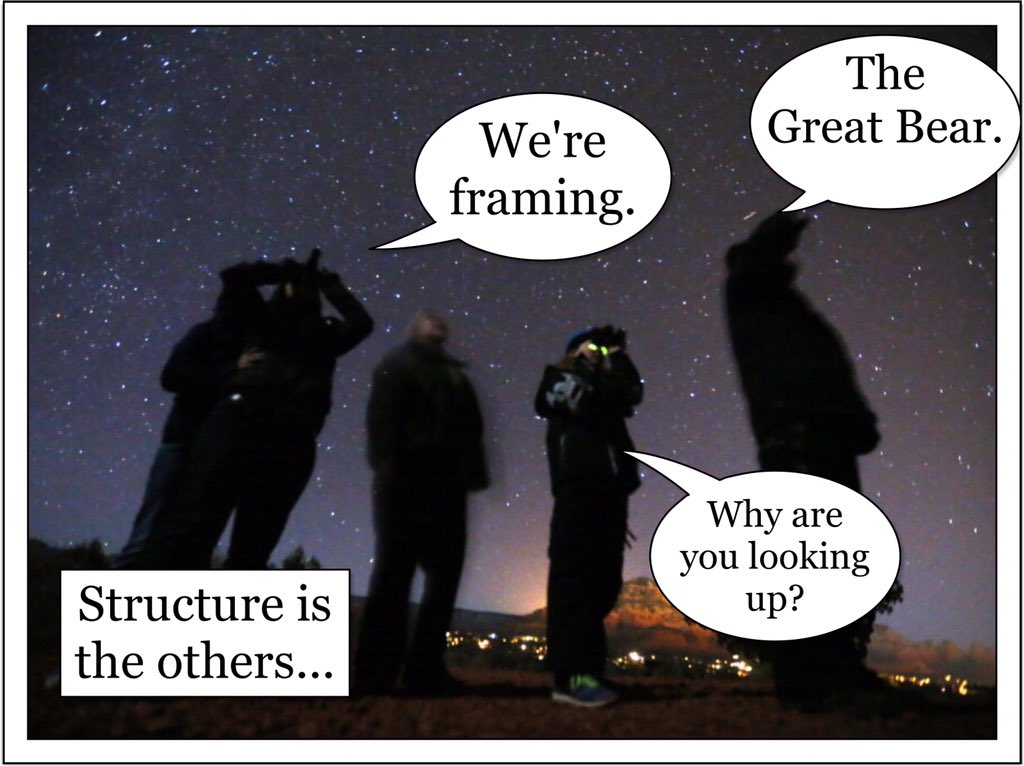
We framed and reframed the debate...together.

Is Street Art still Street Art when it is shared as a photo on Twitter?

Is it Street Art when Deborah De Robertis 'exposes' herself in the Musée Orsay? 

Is her performance art pornography?

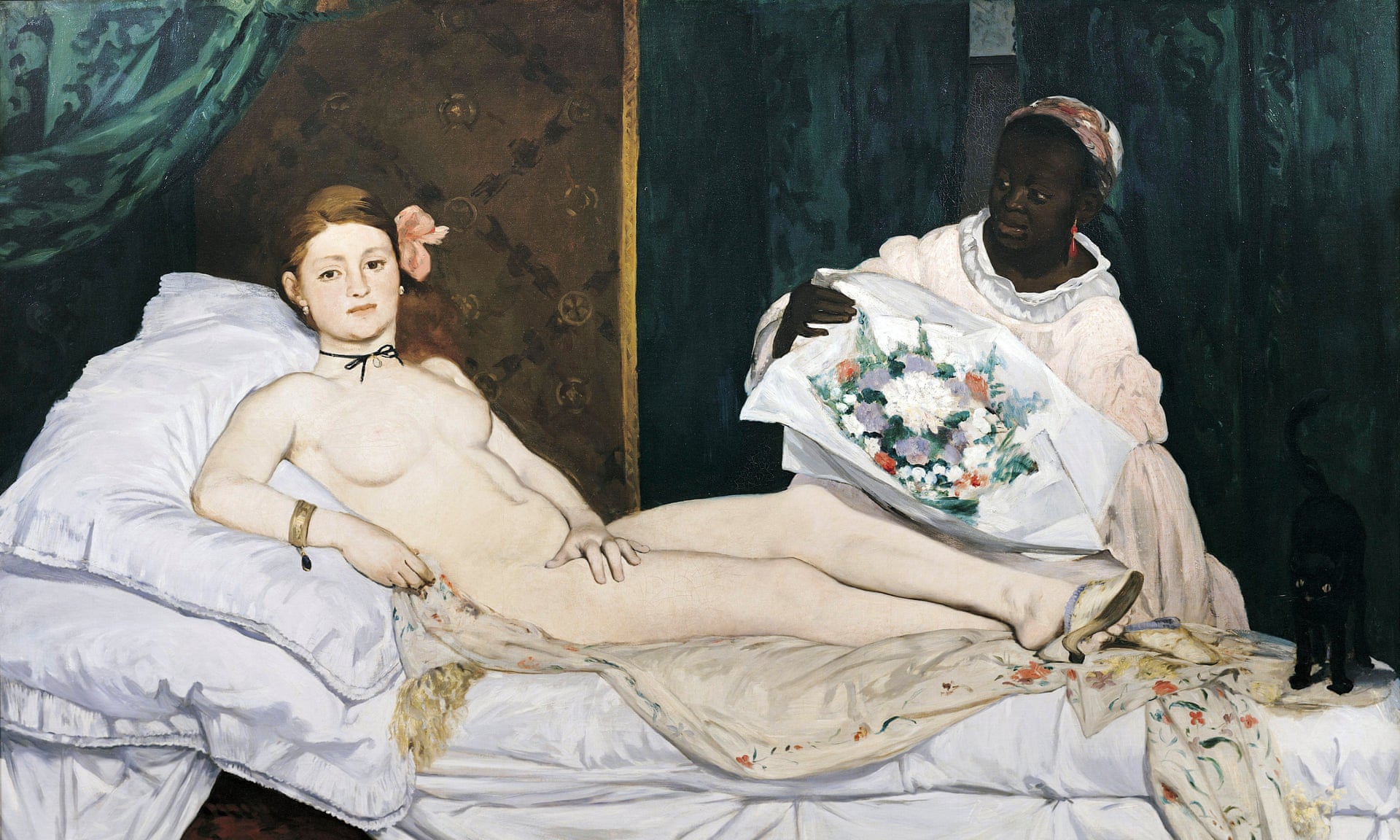
Why is Manet's painting of Olympia not pornography?


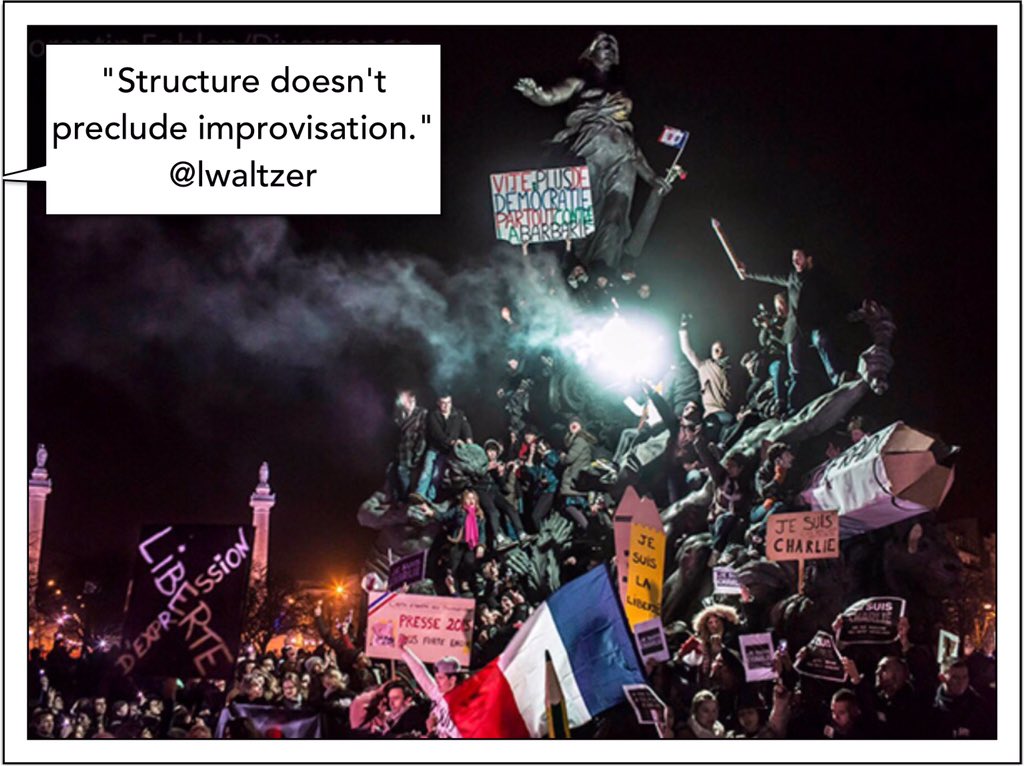
What is the relationship between viral images like 'Je suis Charlie' and the 'traditional media' and the politicians and mass demonstrations in Paris?


I wasn't expecting to be co-framing such a debate with one of the students from Sport Science...over coffee.

Coffee tables, and comfortable chairs restructure relationships.

I never know what I will learn.

That is the joy of what I do, it is never predictable, I have to jump from Drugs in Sport, to Perfect Pitch in musicians, to Sport Fishing, to mushroom hunting.

I feel energised by our dialogues.

Other students have much more difficulty to ask questions.

They seem to have little practise in asking questions, most of their time is taken up by content.

Changing symbols...playing with people.

We sat around the coffee table and a bunch of Playmobil.

We started playing with the little people, the dog, the cow, the house, the boat, the medical bag.


Manipulating the toys seemed to help them to disassemble the tortured sentences that they had been trying and failing to write.

Were we talking about all the people, the kids, the women, the doctor, the policeman?

Were we talking about all the world, a town, a village, a house, an organism?

Do I have to speak dog?

Confronted by the request to define a research question, one student was freaking out and came up to me to ask:

"Est ce qu'il faut que la question soit poussée?" "Does the question have to be sophisticated?"

What he meant was:  does the question have to use that language that the experts I don't understand in class use.

We sometimes forget that others don't understand us
We sometimes forget that others are not all as enthusiastic as us.
We sometimes forget that others don't have the same literacies as us.

Being literate...being illiterate.

Playing Minecraft with my son made me realise how our joystick/gaming literacies are so far apart.

We are playing the games of others...

Working with high-performance athletes makes me realise how amazing their physical literacies are...

Moving around a dense text (network) requires the ability to connect, engage, orientate, select, synthesise...

It is not quite the same as pole-vaulting.

There is not quite the same exhiliration...for them.

Maybe we are blind to our/their literacies?

We could imagine 'scaffolding' which might be more or less adaptive to the individual learner.

(often text based or computer based - no good for people who are allergic to text.)

Liberté pour tous?

We could imagine 'scaffolding' which is deliberately opaque to certain groups of learners so that they are excluded from a knowledge community.

Language is clearly a hell of a great way to include and/or exclude people.

"Quoi?"

Language is clearly a hell of a great innovation to enable sophistication of connections between people(s) and their environments.

Cultural/narrative environments...(networks) are clearly more or less apparent to us.

After all, I'm a fish what the hell is water?

Fish interlude.


Scaffolding may be deliberately, or unconsciously conceived to protect certain groups' privileges.

(The LMS anybody?)

I AM AN ADMIN. 
(I am ingénieur pédagogique)

Dog speak.

My lawyer is a dog.

He is deliberately bred to obscure contractual relationships, for the benefit of the privileged.

When I read the small print on terms and conditions of internet services...

I can't be bothered to work through every clause...

Is this web freedom?

I submit. 

We go for a walk.

Dog translation

There are others who are prepared to translate dog into English.

But God, those guys are necessary.

http://www.theguardian.com/technology/2015/jun/15/i-read-all-the-small-print-on-the-internet

Our relationships have become so complex...(complicated?) ...we need experts.(we do don't we?)

They can give us a cheat code to get to the next level...
(for a small sum)

I suppose this is what we try to do in education.

We unpick dog.

We teach dog.

HOLY DOG!!

Science, technology and text literacy are holy untouchable.

OUR HOLY BOOK (s).


I understand much more now one of Dave Cormier's provocation:

"Books are just stupid people."

KILL THE DOG

There is a question which keeps dogging me.

Are we so used to unpicking dog that we kill the dog?

Is our frame of reference, our Western culture: this frame we have had since the Lumières... killing us?

LIBERTE

Are our frames of reference the only way to live the world?

Are our frames of reference killing the world?

We frame so we are human.


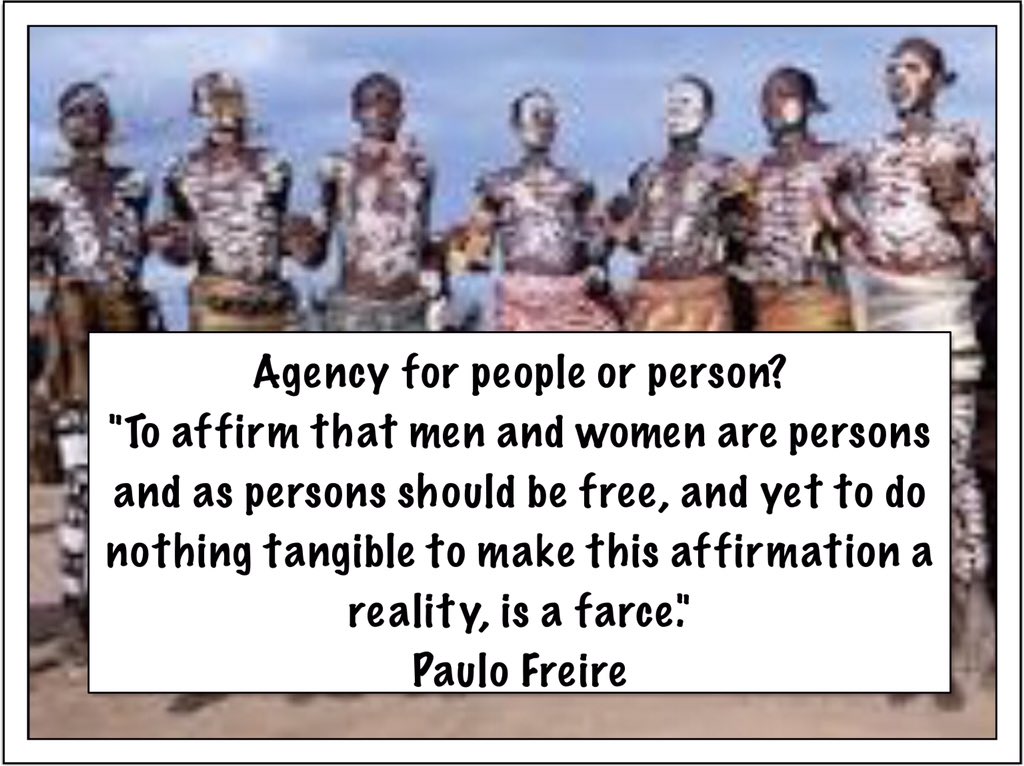
We encourage agency of the individual. We live by freedom-Freire. Does that kill (a) people?


In encouraging agency of the individual do we lose sight of how we are connected in this tapestry we ourselves have woven?

Our tapestries are so beautifully diverse....yet.

Are we missing this essence beyond our words, beyond our ken?


"wuf, wuf, snarl..."

My dog is trying to tell me something...


Thursday, March 12, 2015

Scrabble.


Things were getting serious.

Bob was eyeing up the last triple word score.

Jemima was about to place her blank letter to extend the word 'Quit' to 'Quite'.

That was that. She was going to win again.

Bob sighed, resigned to another pride-sapping defeat.

Jemima counted up the score.

"I think that makes 36 points, if I'm not wrong Bob?'

Jemima beamed proudly.

Bob humphed and added Jemima's score to the tally.

Was he ever going to beat that self-satisfied little Miss Annoying?

He placed four letters on the board.

"No that's no good Bob," said Jemima. "That word doesn't mean anything."

Bob was fed up.

Jemima always beat Bob.

Bob looked forlornly at the list of tallies in the Scrabble box.

Bob: 78
Sally: 256

Bob: 83
Sally: 246

Bob: 56
Sally: 238

It made for sorry reading.

He didn't bother turning over the paper.

Bob felt humiliated and stupid.

Jemima was clearly brilliantly clever.

Stop making sense.

Looked at together, the words placed on the board would have made no sense whatsoever.

There was not a single intelligible sentence to be found.

Nobody would bother reading it all anyway.

That was not the point.

These were just scores.

There was never any question of it making any sense; winning by the rules was everything.

That was something some of the family never seemed to understand.

They seemed to equate being good at Scrabble with understanding, with intelligence.

They were only partly wrong.

Being good at Scrabble was mainly about understanding a game, and having a very specific sort of intelligence.

To hell with making meaning, it was primarily about pattern recognition.

Any words would do as long as they fitted in on the board.

Bob was just about to add three letters (T,W,O) to the board when....

When Sally came to play.

Sally was bored.

"Can I play?", she asked.

"No, Sally, you are too young, and you are ruining my concentration," replied Bob grumpily.

"Buzz off."

Sally, aged four, took no notice of her brother and sister and grabbed a handful of letters off the Scrabble board.

"Hey, Sally stop you are messing up our game!"

"I want to play, I am going to make a house."

Sally was already piling up the seized letters into a leaning tower of meaning.

"Sally, put the letters back right now or I'll call Mum."

"No, I'm playing too."

"I'm making a house."

"Sally..."

With all the petulance she could muster, Sally flung the board on the floor.

"You're stupid. It's not fair, I wanted to play TOO!"


Ivory towers.

I sometimes have the impression that Academia is a very sophisticated form of Scrabble.

The expert players take it very, very seriously indeed.

They have developed their skills considerably over the years.

They practice daily, looking up ever more obscure words in Scrabble dictionaries.

They develop strategy.

They look to measure themselves up against the best.

They play in clubs and go to conventions with their peers.

Looked at together their words don't always make much sense.

They are very unhappy if little kids grab the tiles laid on the board to build towers of their own.


Friday, March 6, 2015

In a tangle.

That's it, now I am completely lost.

I am not at all sure how to draw a/the line.


I am in a bit (?) of a tangle.

I am not at all sure whether drawing a line is appropriate.

I am only sure that drawing or should I say typing this is making me feel like it's a life-line.

Where there is life there is hope as they say.

Yes of that I am sure, I am typing this here...

I can see it.

I mean I could see it when I was typing.

Existential questions.

I am not even sure of myself!

Who am I?

Am I: English, French, a learner, a teacher, a researcher, a facilitator, an academic, a writer, a pundit, a critic?

I am not sure that one answer is ever adequate to such a question.

I shall settle for, in this present context:

Simon, @sensor63, Simon Ensor. Simon David Anthony Ensor. Learner.

What is this?

Is this:


a) careful reflection?

b) instinctive nonsense?
c) emotional?
d) rational?
e) a useful contribution?
f) useless noise?
g) respectful?
h) disrespectful?
i) offensive?
j) inoffensive?
k) etc
l) none of the above?
m) all of the above?
n) other.

Will this be:

a) read?
b) unread?
d) misunderstood?
e) understood?


Where am I?


I was reading Frances Bell's post 'Cool Webs for Rhizo 14'  and an ensuing discussion about the value of spaces which are 'Cool'.


For some people 'cool' is associated with a blog.

So is this blog space 'cool'?


If I then post it on Twitter or in a FB group does it remain cool?  

Is a back-channel (where I let fly my feelings) cool?

I am at a loss to understand this concept of a 'cool web'.

Frances explains in her comments:

"I am thinking of the cool web as a safer space where people with different assumptions/ languages/ cultures can try to engage in dialogue without too much pain."

I am not at all sure that this space on my blog is necessarily safe from pain. 

Is this an issue of a particular space or an issue of a particular relationship that I might have with someone?

Marianna Funes continues this discussion and chips in with:

"When I teach cross-cultural psychology in a business context we often focus on the need to attend to what is taken as self-evident and to presuppose that, even that which seems ‘outrageous’ to somebody in a culture they do not understand, has a basis that makes sense for the group of people adopting the given action."


I am getting the distinct impression that this is not about 'cool webs' but about 'cool people' who are able to question their assumptions, their own ways of being and of communicating.

So this is not a question of a particular space but of developing a trusting relationship?

On the whole I would say that Rhizo 14 has been a 'cool course' with 'cool people' .

(but maybe I am using a different meaning of cool here - sorry).

I would include Frances and others who comment on her blog as 'cool people'. 

(provisionally, until I decide they slip momentarily into another category; it rather depends on if/how they respond to this blog post).

Ultimately we will all be 'cool people'.

 (I digress and in my attempted humour I make an elementary mistake, I think even dead people are not at all necessarily cool. Indeed SOME very DEAD PEOPLE are definitely NOT and will NEVER BE COOL).

I apologise for the shrieking capitals here, but I rather like them, and this is my domain.

(no I know it is not a domain of my own cos I am lazily still on Blogger, sorry)

What is loud? What is silence?

I have been having a continuing discussion with Marianna (so silent that she may not be aware of it) about the question and value of silence. 

I am very much intrigued about this question. I always remember the power and importance of silence from my days as a counsellor, and as a salesperson and now as a teacher.

Silence has the potential for great power in a relationship.

Stony silence is in my experience undoubtedly NOT 'cool'.  

So being silent would not necessarily be a means to establish 'cool webs', it might have exactly the opposite effect.

If I participate actively in a space am I facilitating conversation or silencing others?

What is the appropriate volume of participation?

Must we take turns? 

If that is the case then we might have to wait a LONG time (and it wouldn't be really very rhizomatic IMHO).

If I leave silent participants be silent am I excluding them or am I being respectful?

I remember my father at the end of his life who would find the 'noise' of his grandchildren oppressive. I can fully understand that. His grandchildren were not being noisy (I can assure you I know the difference) they were excited to see him and wanted him to play with them.

When he was younger he would have loved the rough and tumble and the noise.

It was so frustrating for all of us when we were divided by volume.

I remember being sad at the volume of the television which stopped all conversation.

What was low volume for him was high volume for us.

I have been intrigued at conversations going on around this issue of 'noise' and 'silence' on the web.

I am not sure if I am in a 'cool web' or a 'hot web'.

Maybe I carry my own personal micro-climate with me, whereever I am?

I noted a twitter conversation the other day.
I loved that tweet.

I even replied to it.

Then I thought better of it.

I deleted my reply.

I agreed with Nick Kearney, yes 'sometimes the only response is silence'.

Is his tweet an example of the 'cool web' the  #stillweb?

I suppose if he puts the hashtag #stillweb it must be.

If I put a grisly image on the hashtag #stillweb will it still be #stillweb? (probably not).

I am not sure about this 'cool web' business.

Maybe it is not about a space but a relationship?

Should I tweet him a link to this post?

Will he regard it as noise?

I am not sure.

Nothing is clear for me.

What is pain? 
Frances talks of pain in her comments to her post.
What is painful for me would certainly not be painful for others. 

I may have developed high resistance to pain.
She says: 
"We might cool down the conversation with explicit norms, clarifying our objectives and assumptions,offer facilitation and other support in an attempt to achieve real dialogue. Over time the constraints could be loosened."
I wonder who it is 'we'? I wonder what 'cooling down conversation' means? 
Will this blog post be cool and within explicit norms?
I am not sure. I shall ask Frances (that is a joke Frances).
Would an emotional blog post be cool and within explicit norms?
Who will decide on the emotional charge? 
I don't know.
Wouldn't a legalistic or scientific article be a cause of pain for someone?
I am in a (bit) of a tangle.

I suppose this is my attempt to ask respectfully the question.

I am sorry if I offend.

I shall be a little upset (emotional blackmail and silencing tactic?).

THE COMMUNITY

There has been much talk 'in' #rhizo14 of community, all over the spaces.

I suppose Dave Cormier should be happy about that.

He did entitle his course  'The community is the curriculum'.

I am having great problems with this idea of 'community'.

I am having so many problems with it that I shall have a short pause to muster strength.

Here is a  musical interlude offered by the great (my opinion) Serge Gainsbourg.


For those of you who can't be bothered to listen to Serge Gainsbourg, he sings in French and he asks a large number of times:

"Who is in? Who is out?".

So this is my question for THE COMMUNITY (you know who you are if you are reading this):

"Who is in? Who is out?" and when and where and who decides?

Frankly this is quite clear for me now.

There is not one community.
There are multiple communities.
These multiple communities are not fixed (much).

I am not sure that I feel that I  belong to any particular community.

I don't do belonging very well.

Of course this feeling doesn't mean that I don't belong to a or several community/ies.

I have clearly identifiable traits - I am a man for example. (of this I AM SURE).

I have behaviours which mark me as a community member, like speaking English with a more or less middle class pronunciation with twinges from the North West and some French derived borrowings.

I am a human tangle embodied.

Dave Cormier, I think that he agreed to the idea that there were a number of communities in #rhizo14 in an interview that I vaguely remember with Maha and Sarah.

However I still have a few questions:

How long do a bunch of people have to stay together to consider themselves a community?
How long do a bunch of people have to stay together for others to consider them a community?

I think that the "rhizo14" community has never ever been fixed if we consider that there might be one.  That being the case there can never be A CURRICULUM, but multiple, dynamic, oscillating and competing curricula.

So I suppose I could say that the varied and fluctuating communities in and around rhizo14 have varied and fluctuating curricula.

If we consider that the course was about Rhizomatic Learning, it would seem to me that this is as far as we can take it.

There can never be at any time A COMMUNITY or A CURRICULA.

Ethics.

If there is no 'cool web' or 'hot web' and no 'COMMUNITY' nor 'CURRICULUM' then that is chaotic, exciting and potentially full of risk and power struggles - a bit like life.

Keith Hamon has written a great (IMHO) post about complexity ethics. I shall put a link here:

Ethics for MOOCs: Assertive Humility.

I think we could change that title and just write:

Ethics for life (and a better world): Assertive Humility.

If there is no one 'COMMUNITY' then there can only ever be personal ethics and desires which will vary and fluctuate according to who, with whom and when and where people interact.

There are moments when I prefer (like now) a bit of peace to sit down and reflect.

There are moments when I am moved to formal academic research.

There are moments when I love larking around on FB telling Sarah Honeychurch she's a typical anarchist. She doesn't appear to take any offence. (I worry Sarah.)

There are moments when I find people in general and people in particular annoying, hypocritical, contradictory, bossy, noisy, disrespectful, snooty, superior, confusing,  boring, egocentric [add any negative adjective] and I include myself in those negative qualificatives applied to people.

I prefer to be inclusive.

Hope and forgiveness

There are two stories associated with rhizome and rhizo 14 which I would like to highlight.


There is a story of hope and there is a story of hopelessness.

There is a light side and there is a dark side.

On one side of the coin (the light side) there is the possibility that diversely humoured and skilled people can learn to live like the baboons in the video 'Understanding the Effects of Hierarchy in Society" that Howard Rheingold shared with me the other day.  With the Alpha males dead, they lose their desire for dominance and hierarchy and become increasingly forgiving and open.


There is the hope that we can learn to live with our differences, value our different perspectives, take a deep breath or two when we feel like we are being talked down to or ignored, or excluded, or... (add any negative feeling towards others) and try to work towards more open, perhaps less rigid societies which allow for diversity and mutual respect.

On the other side of the coin (the dark side) we can take from #rhizo 14, an impression of fixed positions, fixed labels, fixes spaces, hierarchies, stories of power struggle, memories of the inabilities of humans to use their imaginations to see the other peoples' point of view.

We can imagine rigid and unchanging community lines, a need for rigid policing of behaviour, a need for a quota of words written, a series of instructions as to acceptable forms of expression.

I doubt that anybody in #rhizo14 would really want that.

I hope that I am mistaken.

On the other hand there might be another group of extremists who might emerge and become dominant.

They might decide to follow the actions of Pol Pot and decide that all Alpha males, and in particular those who they consider to be senior academics should be sent to the killing fields, with the objective of achieving an earthly paradise and a 'less violent society'.

It worked for the baboons...

The rhizome, nature, and  humans in particular do have an ugly side.

I prefer to live in hope (perhaps stupidly).

Yes, I accept that Rhizo 14 is an experiment.

I often change my mind.

I am hopelessly and annoyingly inconsistent.

That in itself gives me some cause for hope.

I am in good company.

I am happy to be in a tangle.

Thank you for your part in my tangle.