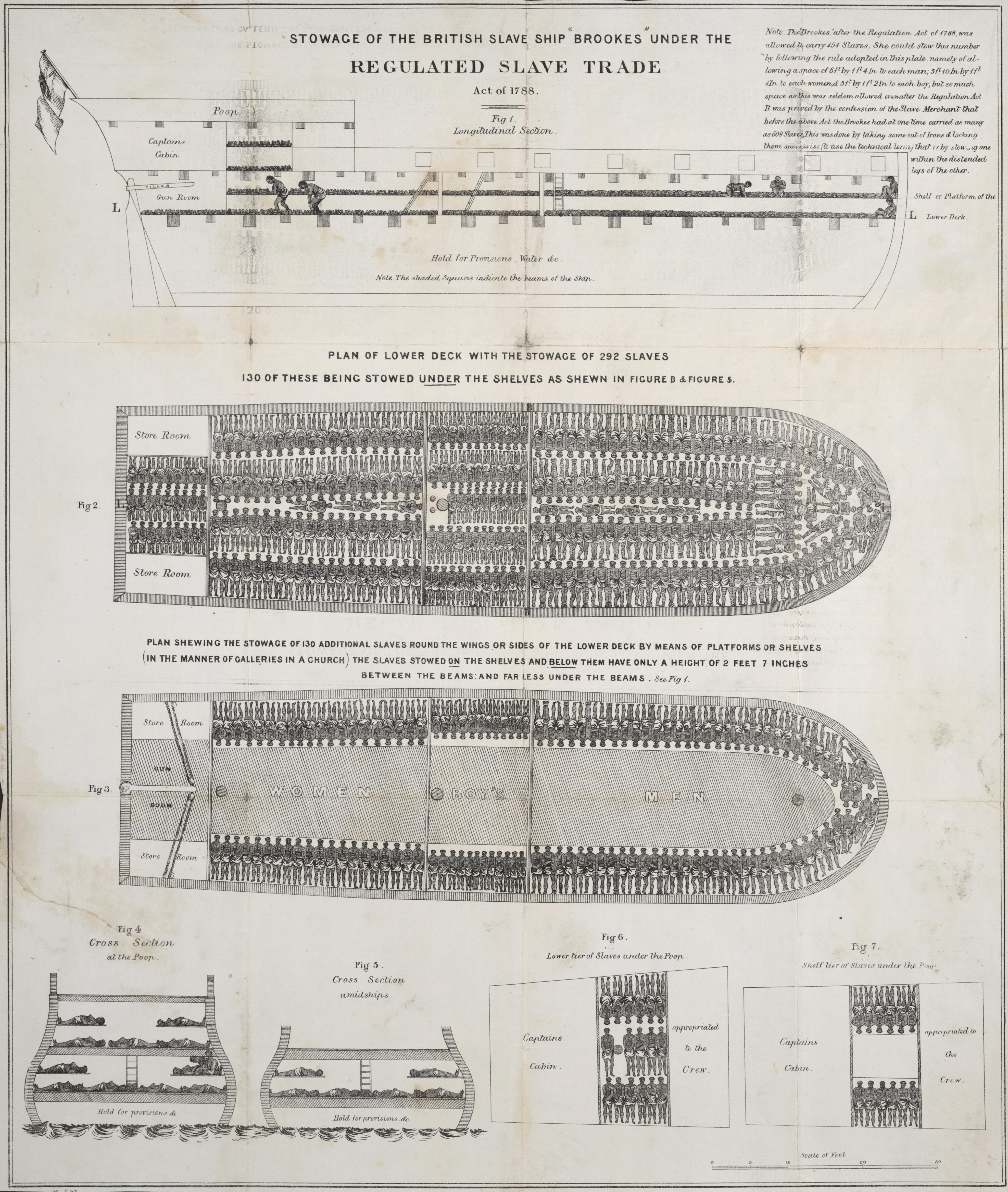
"When talking about the problem of refugees, we use dehumanised language,
which reduces human tragedy to numbers and statistics. But this
suffering concerns real people, who – just like us - have families,
loved ones, friends; their own stories, dreams, goals... Only when you
sit down opposite a specific person and look into their eyes, you no
longer see an anonymous refugee, one of the migrants, and notice the
human before you, just like yourself – loving, suffering, dreaming... 20
years ago, psychologist Arthur Aron discovered that 4 minutes of
looking into each other's eyes can bring people closer. Using this
discovery, we decided to carry out a simple experiment, during which
refugees and Europeans sat opposite each other and looked into each
other's eyes. Clearly, it is most important to give each other time to
better understand and get to know each other."
I noted the following: "we use dehumanised language,
which reduces human tragedy to numbers and statistics."
Isn't the tragedy of education the use of "dehumanised language" which reduces people, all our children to "numbers and statistics" ?
I fell uponthe words of Clint Smith.
I looked back at what I had written:
"telling seems superfluous".
I felt ashamed.
What is education if it is not about enabling others to tell their truth?
"This is your path, this is your path." "Your path is not my path."
Life paths may be limited by words given to us even before our birth.
There are those who are born to be heard, there are those who are born and are silenced.
"There's really no such thing as the 'voiceless'. There are only the deliberately silenced, or the preferably unheard."
I didn't have time to fill in the details in the picture.
I wanted to paint (scribble) with broad strokes.
I hope there is enough to make sense for others.
There is a band playing in the circus ring.
You can imagine the music.
Oh I don't know, something contemporarily popular, sufficiently recognisable, all gone brass.
There is the band leader.
You don't really need to know that that is my father.
It could be me, it could be you.
There's that music.
There is an audience, listening.
Perhaps they are tapping their feet.
Perhaps they hate the music.
I did.
I can hear my father practising that bloody cornet in the attic.
You know how you can't wait till something stops, and then when it stops, you miss it?
He is long dead.
The cornet plays silently on (bloody noisily actually) and I smile now.
This story is not about him.
This story is not about me.
This story is about us.
And a circus...
It means nothing much without you.
Over a period of fifty, sixty years my father played all the brass band instruments equally badly.
He never stopped practising.
He loved it.
He was never any good really as a musician.
He was a willing amateur.
He put his hand to all the instruments with equal enthusiasm.
He loved hearing those around him that he had somehow attracted to play (much better than him), with his rubbish jokes, winning smile, undying enthusiasm, and spiritually rooted love.
In every parish he worked, he set up a brass band.
The jokes never changed.
Years later, the bands were still going strong.
I don't know if they remembered the jokes.
One had risen from humble beginnings to win national prizes.
I remember a photo somewhere in a Brass Band magazine.
Many band members never knew how the bands had started.
That doesn't matter.
That didn't matter.
The music plays on.
It gives folk meaning and fellowship and stories and culture to share.
And that popular music.
I have been thinking a lot about culture these days.
I have been thinking a lot about distributed narrative, love, hate, complexity, order and change and my part in these intertwining ecosystems.
I am back taking stock, drawing maps, identifying key nodes, constraints, and all along telling stories.
I wanted to sketch out a few notes here while this is fresh.
I have been thinking again of this intertwining ecosystem with which I am acting.
This particular series of actions this evening were provoked by Sean Michael Morris.
To say that he is responsible for this action would be to deny the complexity of the discourses within which I, er we, are acting.
Nevertheless I can identify a post of his on Facebook which triggered a screen shot and a flurry of tweets.
So, from an initial post from @slamteacher talking about the need for critical action, an interaction involving him, Daniel Bassill who is involved in community mapping and mentoring networks (@tutormentor), Dave Snowden (@snowded) of Cynefin framework fame, we arrived at distributed ethnography, a scratchy doodle on a piece of A4, and a tweet which connects various others in this dance.
I note in waltzing that I had also just before been reading a post by Maha Bali (@Bali_Maha) whose tweet introducing a rather marvellous article about action to take to enable different voices to be heard caught my eye and makes me smile after listening to Dave Snowden, an older man than Maha is a woman, speak, in a suit...
I am sick of attending conferences where I listen to panel after panel of older men in suits [esp when i know more]https://t.co/37CjWl0q6F
So here we have: Sean Michael Morris, Daniel Bassill, Maha Bali all speaking about action.
Child's play...
I returned back to an earlier post entitled "Party Management" in which I had Vialogue annotated a previous Dave Snowden video and added Hypothes.is for good measure.
This morning with my colleague we were talking about how we are aware of the transformation of culture within the learning ecosystem that we have been successively probing, observing, introducing different attractors, changing spaces, extending boundaries, narrating with the help of colearners, several of whom are noted in this post.
This is what this aforementioned picture is helping me attempt to make sense of.
There were a number of aspects of Dave Snowden's recently shared talk that necessitate that I go back and annotate to really grasp what he is saying.
I was reassured by a number of the remarks that he made.
Small actions...
I now need to spend more time with his work in the light of my own questions as to action.
Distributed cognition - huh?
I know that my co-learners will enable me to see this and other texts with differing, clearly drawn perspectives.
I am fortunate in my ever evolving, distributed narrative ecosystem.
I am thankful to those with whom I may play, whose opinions I value and whose values I trust.
I think of that sketchy picture of the band playing in a Blackpool circus.
It was for a radio broadcast.
I note for a moment the title of Dave Snowden's conference: "How leaders change culture through small actions."
In the light of the work of Sean Michael Morris, Daniel Bassill, Maha Bali, et all, it seems important to dwell on what small actions we may now take.
Meanwhile a brass band plays on...something Disney.
"Ships that pass in the night, and speak each other in passing, Only a signal shown and a distant voice in the darkness; So on the ocean of life we pass and speak one another, Only a look and a voice, then darkness again and a silence."
Henry Wadsworth Longfellow
A little girl reaches out towards the approaching coast.
Does she sense the tears which well up in my eyes?
She will walk for a first time on the land that her father called home.
I think of the people that lie there she will never know.
A little girl reaches out..
I wonder how far our humanity stretches?
Other journeys cross my mind.
I think of a four-year old child washed up on social media, on international press, on a beach in Greece.
Two children on average drown in the Mediterrenean Sea every day.
Without leaving my office chair, I OK Google searched the information.
It was a Virtually Connecting Hangout from the DML conference that got me thinking.
What does empathy really mean in a digitally connected world?
Can technology enable us to develop empathy more quickly?
Listening takes time.
The Friday before, I had spent over an hour in the company of Terry Elliott in a Kentucky.
I was speaking at lunch time, Terry had gotten up to chat at rooster time (early).
We had organised a hangout, and spoke of many things, some of which I wouldn't share here.
It has taken over two years of blogging, playing, writing poetry, speaking together for me to talk of things with him that I wouldn't share here. I consider him, a good friend. He is one among a few real friends that I have made online.
It helps us find our place in the world when we find people that we can trust, no matter where they are.
Between humans, sometimes listening is enough.
Sometimes listening is all that we can do.
.
No short-cuts for empathy.
So, I was watching a VConnecting hangout.
Howard Rheingold turned up wearing a hat.
Sometimes, someone's hat is enough to make you feel happy.
Mia Zamora mentioned the idea that it would be great to have an "empathy hat" so that we could understand other people's stories.
I am not sure that either listening or understanding are always enough.
There is something that Maha Bali said during the VConnecting session that had me nodding:
There are no short-cuts to establishing dialogue with others so as to develop empathy, friendship.
There is no question that working as a connected educator via blogging and social media has enabled me to gain a broader range of understanding of diverse contexts, diverse world views, diverse life stories. From this respect technology may indeed help us to widen circles of empathy.
Technology has helped me focus on individual stories through narrative research as a means to identify trends, as a means to broadly modify pedagogical action.
Nothing replaces the time taken sitting next to a person in dialogue.
Using technology in the classroom has enabled me to concentrate my energy on individual dialogue.
Emotional intelligence.
It is one thing to speak together in a private offline space, it is quite another to do so online.
Who do our data trails, which enable more pertinent "recommendations", belong to?
Let's call it "formative assessment" and watch while the panopticon laughs at how we did it to ourselves. #2016DMLhttps://t.co/eyyWA91oAd
I Google the word "verlan a French term for a secret backwards language used to speak privately.
"Many verlan words refer either to sex or drugs, related to the original purpose of keeping communication secret from institutions of social control".
I think of how English, of how the internet, is a means of social control.
While
this internet may appear to give us greater reach - informational,
relational, commercial, it demands that we question whose reach is most
enhanced.
Facebook reveals news feed experiment to control emotions.
I am so fortunate with my internet connected Polish friends.
I immediately feel an increased identification with distant people.
This is progress.
I got to visit Auschwitz with my students.
It reeks of the death of empathy.
“We walked inside and saw these skinny people who were still living, and one of my enlisted men who walked in with me realized they were starving. We had nothing but some candy bars, which we got in a ration, and one of my men gave the candy bar to one of these people who grabbed it and ran away and gulped it down so fast that he became unconscious and probably choked on it when he tried to swallow it before someone took it away from him. These Jewish people and these Polish people were like animals. They were so degraded, there was no goodness, no kindness, nothing of that nature, there was no sharing. If they got a piece of something to eat, they grabbed it and ran away in a corner and fought off anyone who came near them.”
Samuel Glasshow, liberator of Woebbelin http://www.holocaust-trc.org/the-holocaust-education-program-resource-guide/oh-no-it-cant-be/
How far does our inhumanity stretch?
Most of the time our global media glut does little more than render us desensitised.
We see pictures of dead children, under heaps of rubble, washed up on the shore.
So many people, so many corpses, so many untold stories, not enough tears.
So what the fuck?
Passage to India.
I gawp with my children at yachts on the Cannes seafront.
Which celebrity will we spot?
We don't take a selfie.
There's a couple of elderly people drinking tea on a Bermudan boat.
Surely British...Ceylon Tea, far away from Frinton-on-Sea.
A swarm of red-tshirted lackeys are polishing the brass and scrubbing the deck.
It is coming up all ship-shape.
I make a note that many of the yachts at the quay are flying a red British Ensign.
What stories do these boats tell about our globalised economy?
It is a real struggle not to feel some sort of patriotic (jingoistic) pride.
What does this say about me?
What did my mother tell me about the flag waving at the Last Night of the Proms?
I think a moment about Britannia ruling the seas.
That imagined British community is beginning to make me feel sea-sick.
Whose passage paid for that Bermudan yacht?
I think a moment about the USA ruling the waves.
“The middle-class standard of the independent self has increasingly become the default American standard for how to think, feel and act in the world…this middle class self is not just a matter of individual attitudes or beliefs; it is an understanding of what it means to be a person that is built into and promoted by the social machinery – law, politics, education, employment, media, and health care of mainstream American society. Although the independent self is widely accepted as the cultural standard, it is not the natural, normal, neutral or even the most effective way of being a person. Instead, it is a privileged and culture-specific understanding of what it means to be a person that flows seamlessly from the resources, opportunities, and experiences linked with middle-class American standing in society.”
It was clear that there were irreconcilable differences.
No amount of discussion, argument or counter argument would bring the two sides closer.
Rational debate gave way to emotional outbursts and hurt feelings.
There was no way forward.
They agreed to stop the discussion, to change the subject and accept mutual misunderstanding, their differences.
I've been thinking about the question of "inclusion" over the past few days. Being European...
This is particularly topical for me as I have started the process to apply for French nationality.
I have lived in France longer than the time I spent in the country of my birth - The UK - but as a European citizen I never felt the need to change national status.
As a result of the Brexit vote, I , like so many others, have been spurred on to put in the necessary paperwork to take the nationality of our residence.
As a distant observer of the Brexit referendum, I was saddened but not surprised to see the strength of feeling against "Europe".
For years, "Europe" had been experienced by a cosmopolitan elite as something positive.
For others, some my friends, "inclusion" in European Union was felt more as an intrusion.
Returning to the UK, year, after year, I have witnessed dramatic transformations to the country that I grew up in.
The marketisation and corporatization of everything and everybody from museums, to football stadiums to highways, to education, the predominance of finance and the City of London, the growing gap between derelict midland and northern town centres and shiny metropolitan centres.
I no longer feel the same attachment to this country.
I feel an attachment to what was. I feel alienation.
I suppose such feelings are shared by those who voted for Brexit.
I felt much readier to be included as a citizen of the French Republic.
I have become much more aware that my own lack of attachment to place that roots some of my friends is indicative of the class into which I was born.
We were brought up with stories of adventure, of explorers...empire.
We were snatched away from our families at an early age to be brought up in boarding school.
We have that mutilated 'emotional detachment'.
I was forever more immigrant than resident.
I rather envied the rootedness of some of my friends.
As a son of a middle class clergyman in a working class town I was, I suppose, coloniser.
I was to borrow a term of Sean Michael Morris, "troubled" , a "troubled coloniser."
As an English as a foreign language teacher, I am it would seem a "troubled coloniser."
Why, after all, should French students be compelled to learn English?
What is this "European project" which demands that we learn English?
Whose interests does this language, this project, this education serve?
Finding our tribes
Living a fair amount of time online, I have wondered about this sense of belonging.
Whose interests are served by "living a fair amount of time online"?
I have wondered about this demand that students should be "digitally literate."
I have heard many people talk of "finding my tribe".
Might "finding our tribe" online be an escape from a reality within which we must concentrate our energy?
I have, I suppose been drawn to those progressive educators who would constitute "my tribe".
I don't work exclusively with my tribe...
I suppose my identity as "outsider" is stronger than any sense of belonging.
I worry about "echo chambers".
I worry about always meeting people with whom I agree with.
On the other hand, how do we deal with people with whom there is profound disagreement?
Is walking away the only answer?
On becoming "français"
I return to my demand for French nationality.
There is a battle in France as to what constitutes "French national identity."
There are those who would use the concept of "laicism" or rather the "laic state" to deny liberty to some that they would rather stigmatise.
Having spent some of the summer on the Côte d'Azur, I can say that there is tension, and underlying hysteria which threatens peaceful co-existence of diverse communities.
There is underlying racism, which is not so underlying anymore.
When speaking with one person about the Nice attack, I was shocked by his reaction.
"Somebody should bomb a mosque that would shut them up. I tell you that is the solution."
"Don't you think that is precisely what the bombers are looking for?" I asked
I shouldn't have been surprised, the National Front have extremely strong support in the south (and the North.)
It is similar to the alienation of people in areas of the North and the Midlands in the UK who voted for Brexit.
It is no doubt similar to the success of Trump in the rust belt of the USA.
What should be our reaction to irreconcilable differences?
Should we even bother discussion with racists?
What of those who feel uncomfortable with LGBT rights?
Should we retreat into our "tribes"?
How rigid should be our "tribes" boundaries?
How far can we reach out?
Recent events in Cannes, where the mayor has forbidden burkinis on the beach, claiming that such clothes were associated with those worn by terrorists!
It is a measure to maintain the peace during a "state of emergency".
Such a claim found some resonance in Corsica where a violent conflict between communities resulted in this same measure to "keep the peace."
« Plages laïques » : la mairie de Cannes interdit le burkini sur ses plages ! | Le Libre Penseur https://t.co/HIHvVzhURs
It protects the freedom of its citizens regardless of their origins to follow the religion of their choice.
«La République assure la liberté de
consciente et elle garantit la liberté de culte.» «Nous sommes tous égaux devant la loi sans distinction d’origine ou de
religion.»
It protects the freedom of speech.
«La libre communication des pensées et
des opinions est un des droits le plus précieux de l’homme : tout citoyen peut donc parler, écrire et imprimer
librement, sauf à répondre de l’abus de cette liberté dans les cas déterminés par la loi.»
I return to the question of irreconcilable difference.
Between 5,000 and 30,000 protestants were massacred by mobs of Catholics.
The problem of religious violence is one of the reasons why the French republic is based on an idea of separation between state and religion. This is the grounding for laicism in the constitution.
It is a community's response to the question of how to live with "irreconcilable differences".
I am wondering aloud here about the difficulty of accepting our differences.
I remember the differences which tear away at community ties online.
I am beginning to think that this is our most important work.
How can we respectfully stretch our "inclusion" so as not to deny basic fundamental human rights?
How do we maintain a sense of belonging without denying that others different to us live with us?
I was reading Kate Bowles excellent post "Us/not us" and fell upon a comment of Alan Levine.
"It seems to be a paradox in almost any community. No matter how open, welcoming, hospitable you think you are, unless you discard every shred of what we are familiar with in being part of a group, it’s going to be inhospitable to people."
On arriving in France, I felt immediately not at home.
On living in France, I have come to value the strong sense of what many have been brought up to have pride in: La République.
I have become, perhaps, more French than British (whatever that is).
It is, I suppose La République is an experiment in living with "irreconcilable differences".
What is important is that it is considered as an ongoing, living, discussion as to how best to develop a sense of adherence to a project which respects diversity rather than denies its existence.
What is essential is that we don't deny our differences but attempt to work with them or around them - even, or perhaps especially, those differences that are irreconcilable.
When it became clear "what I was" he lost interest. It's the people stupid!
It was people whose stories Cathy told that grounded her talk.
It was people whose voices are not usually heard that were central to her pedagogy.
It was people whose futures are in play that she seeks to give the tools to understand and perhaps challenge a system that threatens our societies.
It's the economy stupid!
The first part of her talk set out the historical context within which we are asked to work as teachers.
Ours is an uncomfortable role: being employed to enforce and replicate a profoundly unjust, inhumane system for the benefit of the privileged few.
Her reference to meat-packers adopting then modifying a college ABCDF grading system made me think back to a meat and murder in "Livestock, Dumbledore and I."
However we paint it, "We are all in boxes."
We are indeed silent data in the cells of spreadsheets for those who only have interest to see people as numbers.
The question is how to push back against the forces which oppress. "We must think expansively within the box." Cathy Davidson
How do we use our education, our allies, our tools, their tools perhaps... to enable change?
How do we identify attitudes, actions, and behaviours, in ourselves which are barriers to change?
We must ask: "To what extent am I the problem?"
We must start from those boxes within which we work and live.
Doing nothing is not a solution
When faced with challenge, it is easy to feel despair.
When faced with challenge, it is vital to feel not alone.
Cathy Davidson's conference, her energy, humanity, and action picked me up.
How could he have planned? HOW COULD HE HAVE PLANNED?
It appeared in the bottom right hand corner.
Shriek.
"No matter how good you think you are at multitasking, you will not be truly focusing your attention on the speaker, who has no doubt spent hours preparing for this moment." Twitter wouldn't do. Instagram wouldn't weigh it up. Scratched pens captured some of its portent. No close reading. Only fragments. A moment? A collaged haphazard. Shriek. No serious argument would suffice.
Shriek.
For a moment it comes back to me.
Why now?
Why like this?
This is not what he meant.
No this is not what it meant at all.
Shriek.
For a moment I think of "my students".
A remark of Jesse Stommel came back to me.
"Every one of my students has a different cultural context. When we say 'My students are...', we reduce their complexity. @Jessifer#digped
from light to darkness,
from surface to depths
from fish shoals to urchin.
Attention fuses...
instinct,
unthinking flow,
imagined danger.
Shriek.
Water, waves, sunlight, clouds of bubbles, warmth, a snorkelled breath.
Are you truly focusing your attention?
We have spent hours preparing for this moment.
This is what it meant....
This is what he meant now.
WHY?
Is it so difficult to [under]stand?
Post Script.
"You shall no longer take things at second or third hand, not look through the eyes of the dead, nor feed on the spectres in books. You shall not look through my eyes either, nor take things from me, you shall listen to all sides and filter them from yourself."
Local alcoholic comes for respite from the bottle.
He will never hit his wife that one time too many.
He loves the kids so.
He love the kids so.
He loves the bottle more.
He hates himself.
He sobs.
How will they make sense of this?
Grieving family comes to bury their differences.
Troubled souls share their distress.
Dead Papa drums his thumbs on the kitchen table, the time of the evening dinner.
Mama shivers, kiddies shake, won't Papa be at peace yet?
Be silent, be still, be gone, please be gone.
How will they make sense of this?
Lost, infirm, insane, abusers, addicts, losers. rusers, terminally ill all.
We come to find counselling.
We come to mark our births.
Another page turns.
I am born.
I sat on the stairs at the age of four tapping my feet and waiting for the bloody hymn-singers to go home.
Won't they go home now?
"Holy, holy, holy, Lord God Almighty."
I felt wholly not at home.
I didn't swear when I was four.
I would have done, if I could have done.
Those bloody hymn-singers.
Won't they go home now?
How to make sense of this?
Lighted windows rush by, the time of a train journey, to school.
I feel the cold window, pain on my cheek, condensation streams down
Lives flash by.
Lives flash by.
What sense do I make of this?
I have no home.
Little homes, little people, big dreams little means, short lives, sadness and joy,
They fly past, too fast to know, slow enough to reflect some home I miss.
They will miss those little lights when they are far, I think.
"I love working with people," my father said.
"I love working with people," I say to my father now.
He is long gone.
He is dead.
He is here by my side.
We are at peace.
How do I make sense of this?
So here we are.
So here we are now.
We are here together.
What lies behind your smile, your tears, that grin, that bravado, that triumph, that despair?
I feel for you.
I feel for us.
I believe in kindness.
Throw that stone at the monster.
Will it hurt?
Will it scream?
How shall we make sense of it?
Don't you recognise yourself?
It is you, that monster.
Deny, deride, delete.
Go on. Go on. Go on now.
I drum my fingers on the kitchen table.
It shall haunt you yet.
"I was taunted and sneered at so that I would not go home to my meals, and used to stay in the streets with an hungry belly rather than return for anything to eat, what few half-meals I did have, I was taunted with the remark—'That's more than you have earned.'"
They are wrong. He is wrong. She is wrong. I am wrong. You are wrong. It is wrong.
We are wronged.
It came from discussions, conversations,
tangled monologues, challenges, squabbles,
crossed swords,
that alienating platform
and
ended in
feelings of hurt
and
hard words.
We are right.
It is written.
Striving for moral high ground we crash
Icarus wings flaming
to Stygian mire.
Nobody is listening.
Nobody knows.
Nobody cares.
We feel bad.
We think, and we think, and we think, and we think, and we think and we are lost to our thoughts.
We can not think freedom.
We feel bad.
“ if I do not love the world if I do not love life if I do not love people I cannot enter into dialogue.”
― Paulo Freire, Pedagogy of the Oppressed
Does freedom lie in love?
“The secret of freedom lies in educating people, whereas the secret of tyranny is in keeping them ignorant.”
― Maximilien de Robespierre
Does freedom lie in dialogue?
“To defend the oppressed against their oppressors, to plead the cause of the weak against the strong who exploit and crush them, this is the duty of all hearts that have not been spoiled by egoism and corruption… It is so sweet to devote oneself to one’s fellows that I do not know how there can be so many unfortunates still without support or defenders. As for me, my life’s task will be to help those who suffer and to pursue through my avenging speech those who take pleasure in the pain of others. How happy I will be if my feeble efforts are crowned with success and if, at the price of my devotion and sacrifices, my reputation is not tarnished by the crimes of the oppressors I will fight.”
― Maximilien de Robespierre
Who are our oppressors?
Is there justice in vengeance?
“This, then, is the great humanistic and historical task of the oppressed: to liberate themselves and their oppressors as well.”
― Paulo Freire, Pedagogy of the Oppressed
Does liberation lie in forgiveness?
“To punish the oppressors of humanity is clemency; to forgive them is cruelty.”
― Maximilien de Robespierre
Oppression lies in terror.
“[T]he more radical the person is, the more fully he or she enters into reality so that, knowing it better, he or she can transform it. This individual is not afraid to confront, to listen, to see the world unveiled. This person is not afraid to meet the people or to enter into a dialogue with them. This person does not consider himself or herself the proprietor of history or of all people, or the liberator of the oppressed; but he or she does commit himself or herself, within history, to fight at their side.”
It was his final paragraph which really touched me: "As I finish writing this post, I can hear the distant call to prayer carried on the breeze over Cairo. I pause to listen, to wonder at why it stirs me. I must always allow myself to be stirred -- by learners, by teachers, by pedagogy, by the weird transpersonal nature of digital networks -- and I must always let that stirring call me to critical practice in my teaching." I not so much thought but was captured by this instant. I took a piece of paper and scribbled some words and some lines and some shading.
"What is most precious?" I wonder.
Love - that is present - in the moment. Giving-forgiving. To be attentive to ourselves, to others, so that we may move beyond ourselves. To be alive to silence, to words, to meaning. To accept our common vulnerability, our inability to communicate, our ability to not quite communicate... To be alive to our common humanity and our relationship with time... The time that is counted which counts for all but nothing. What is knowledge without love? It is foolhardy. I put in the word "Love" in the search box of this blog. I couldn't contain the word...it was beyond me. I strived and I failed. I gave up. There were too many occurrences for me to contain them here. I browsed through the posts, picking up pieces which caught my attention. Other pieces will capture my attention tomorrow. I make some sort of order of this. It is vain. We cannot be contained my friends, neither love, neither learning, neither education. We are for ever in movement, spirit more than bones. We are ether with a voice. Educare Making space is the most important role for the teacher, In MemorIam "There is no sense if there is no love. There is no education if there is no love. There is no learning worth learning if there is no love." So that we may be alive.
"A light breeze is dancing on my skin. I can feel the hairs on my arms moving. I can hear the leaves in the trees..." Educational Complex "There is this idea of always striving, never arriving, of being authentic in our relations with the other...in this our lives." Remember Stormier Days
"Hacking 'On the shore', I discover hidden waves, hidden rhythms.
I am swept out to sea.
I love the sea."
Feint intention. "Scrawl etched on surface Criss-crossing haphazard lines; Feint intention felt." In a Different Light "I contemplate photos in no particular order. I am not looking to do anything. I let myself wander. I love this feeling of freedom. Where will I be taken today?"
"We are thrown out and there we lie, helpless. Little by little we try to make sense of our lot. I think we all come to the same conclusion: Alone we are meaningless."
Dear Maha "We must unpick the colonisation of our minds, bodies, spirit, as children of the slaves and the slave-owners, as mothers, as fathers, as sisters and as brothers." Distance Learning “Looking at the past must only be a means of understanding more clearly what and who they are so that they can more wisely build the future.”
― Paulo Freire, Pedagogy of the Oppressed Being Here. "The word content is beginning to feel like a pervasive prison. We have all the content in the world but we appear to be unhappily self-contained. I am coming to the impression that the concept'content' hides a distinct world view...the politics, the economics of enclosure, of appropriation, of extraction, of individual isolation/wealth/poverty/identity, of identifiable authors, of 'scientific progress', of superiority over nature.."
Order from chaos. "An inflexible frame is a corpse" The Fear of Silence "Colossal rigidity, whether in dinosaurs or dictatorships, has a very poor record of evolutionary survival." Carl Rogers Souk "Navigating through formatted academic wasteland where orderly discussion is the order of the day, I soon start tapping my fingers, looking out of the window, find any distraction from the monotony." Learning is a mechanism.
"Critical moments, of connecting with others uncritically, semenly critically, a mass of bodies, a mire."
Eclosuredisclosurenclosure "The definition of scholarship seems to be open to negotiation. I prefer to be called Simon anyway. If that name gives me no authority to be curious and to be heard...why? Wasn't that the idea of democracy?"
"When I hear 'it is generally accepted that we need to be raising a generation of life-long learners', I fear that what we may be saying is that we need to have a generation who will have to accept geographic mobility, instability, constant retraining, for ever diminishing returns."
"I don't believe that we can progress as communities, as societies, without play, without taking risks.
I don't believe that we can work with people as if they were disconnected parts to be machined.
I believe that we are in the dark ages of human social development."
The Fear of Silence "The degree to which I can create relationships which facilitate the growth of others as separate persons, is a measure of the growth I have achieved in myself." How on earth can our growth be measured? Can pedagogy be sustainable if it does not accept change? Are we really concerned about the growth of others or are we too full of our empty selves? "The curious paradox is that when I accept myself just as I am, then I can change." Carl Rogers
"I think my educational world changed when I started viewing myself and my fellow learners as one of these 'little guys', part of a wilder, wider learning ecology."
Summer Holiday "They begin to realise that the real interest of the holiday was not the bus, was not the destinations, was not the surf-boards, the bucket and spades and the whole palaver but the shared story.
The man with the umbrella joins them again in St Tropez, they sit down on the beach, they exchange stories around a glowing camp-fire, they laugh about the madness of the venture, the absurd sight of seeing Mildred trying to waterski, they sing songs, they plan new trips.
Finally, those instants spent around the camp-fire make the rest of it all seem worth it.
From afar, young kids hear the laughter, see the glow, and dream."
"There was a gleam in his eye. There was a connection. I suddenly felt a spark run through me. I suddenly felt a whole lot less tired.
Joy rises. This is joy. This is spring. This is love. It is infectious."
From Mobs to Communities "People care, people are generous, they would love a better lot for them, for us, they are awaiting a lead not a promise. We are not all maggots."
"I have proof that they have ceased to exist now...of sorts. They still talk to me. Maybe I am in touch with the spirit world. I am still deeply attached."
"I am becoming unable to follow their traces. I am now reliant on others who will be able to tell their part of the story, a part in which I am now absent."
"Perhaps that is the most important thing to try to learn from these courses: how to push ones' own limits and continue to live peacefully with others who challenge them."
"If there is no one 'COMMUNITY' then there can only ever be personal ethics and desires which will vary and fluctuate according to who, with whom and when and where people interact."
Random Eyes "No matter. I am now looking at this page anew. It is blank, crying out for a release from its mutism. It is a dumb waiter. I am flying down to a basement. If only the top will keep spinning. I will write before it is too late."