Showing posts with label capitalism. Show all posts

Thursday, May 31, 2018

Where are you from?


"Where are you from?" 

I am never quite sure how to respond to this question.  

What does the person really want to know (if anything)?

"Do you want to know where I was born?"

"Well, I was born in Blackpool."

"Do you want to know where I live?"
"Do you want to know where I lived?"
"Do you want to know where I work?"
"Do you want to know with which place(s) I identify?"

"Well, I am from Clermont Ferrand."

This was an answer I gave to a man in a queue at the checkout of a hypermarket in France.

My answer clearly did not satisfy him.

"Oh, you're not really from here," he says with spite, "You're a plum (pudding)."

He means rosbif, English...

I have lived in this town for 30 years - longer than anywhere else in my life. 

I could stay another seventy years but to this man and others of his ilk, I will never have the right to say:

"I am from Clermont Ferrand."

Others are less aggressive, they smile when I answer:

"I am from Clermont Ferrand."

They immediately detect that I am "from somewhere else".

"But you're not really French." 
"I can hear a little accent."

The fact that I have French nationality means nothing to them.

"But you're not really French."

I will never be "really French."

"So you're English."

"Well no in terms of passports, I'm British and French."

"Oh...but you're not really French."
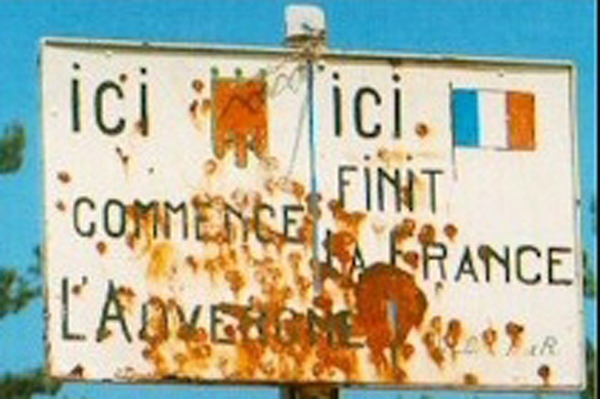

The Auvergne, the region in which Clermont Ferrand is located, is not really France...to some.

Alsace and Lorraine, a border territory between France and Germany, has alternately been "French" and "German".

Wars have been fought so that they can say it is "français" or "deutsch".

It is for now "French".

What do people from Reunion island, in the Indian Ocean reply to the question:

"Where are you from?"

"I am from France."
"I am Reunionais."

Who decides what it is to be French?

Who decides what it is to be Auvergnat?

Who decides what it is to be English, British?

What do I answer when I am aware of my heritage with its English, Scottish, Irish, Dutch, and Norman origins?

On what criteria shall I be judged "really English"?

I chat with one of my friends from university that I have known for thirty years.

"You're not really English now are you?" he says in a broad Derbyshire accent, "You're more French than English."

Where are you from?

As a child, I lived in a big house, a rectory, as my father was a clergyman. 

When I played in the park and spoke to the other kids, it was clear that I was unlike them.

They gave me dirty looks and chattered between themselves.

I never had a local accent like theirs.

I never sounded like I was from any place in particular.

I remember being able to detect the accent from a small town near Preston in Lancashire.

"That person's from Bamber Bridge," I rightly guessed.

Nobody easily detected where I was from.

I didn't come from a place, I came from a class.

I was marked as "posh"  by some.

I spoke, like many middle class kids, a version of "received prononunciation"


I alternate vowel sounds from the North West and from received pronunciation.

I am not quite one thing or another.

I am not a real anything really.

I am a human...I suppose.

"So where are you really from?"

Talking with a British colleague in France, I immediately determine that he, like me, has been to boarding school, to public school.

"So, where are you from?"
"I am from a class, I am from public school."

Where he or I are from is an irrelevance.

We come from privilege.

Suspect origins, suspect sexuality, suspect intentions.

So, I am in a pub with my family in Yorkshire. 

As we come in, the local people all stop speaking and stare.

We are NOT one of them.

I am reminded of a scene from American Werewolf in London.


An American Werewolf In London - The Pub Scene from Sajeev cheeroth on Vimeo.

I forget the norms of masculinity in Yorkshire, I have, like many French men, a shoulder bag.

"Oh, look he's got a handbag." jeers one of the "real" men at the bar.

How could I have forgotten that having a shoulder bag would make my sexuality appear ambiguous?

"So, where are you from?"

I run through the possible answers in my head.

"I was born in Blackpool."
"I lived for many years in Manchester."
"I identify with the North West of England, Lancashire."
"I am from Clermont Ferrand, in France."

I settle for:

"I was born in Blackpool, but now I live in France."

The men in the bar appear not to be able to get their heads around that.

"Oh...right..."

"Can I buy you a drink." one offers.

I do a quick mental calculation of the number of rounds I will be up for and politely decline.

I am rejecting their challenge, their "hospitality," to be mascot, a token, a guest member of their drinking fraternity.

They go back to speaking about football.

I am irrelevant.

Where are you local?

If I am writing of this now, it is because I am currently studying on a course which concerns intercultural facilitated virtual exchanges.

As preparation for a synchronous video conferencing session, we are asked to watch a TED video entitled:

"Don't ask me where I am from, ask me where I am local."

I decided to annotate the video and tweet it out on Twitter.


I choose a number of friends whose reactions to the video intrigue me.

These people, I know, have lived in a number of different countries, are living in colonised lands or are more rooted, and identify with a land, a  national group.
I wonder how occupation by invaders or colonisers of a territory affects the strength of people's association with populist concepts of "nationality".

In times of mass migration or military invasion, I wonder about "resistance" to "diversity."

"Where are you local?"
"Where are you from?"

What would a coloniser answer to this?

Oh for heaven's sake...

"Why don't we just all go back to where we came from?"

"We're not from here are we?"

How do the colonised feel?

Do indigenous people identify with national myths, national concepts?

Would some indigenous people see any relevance to the question:

"Where are you from?"

How many generations does it take for people to feel a sense of a place being "home".

I think of people in Corsica, in Majorca and other "desirable" territories for "second homes" who are being priced out of the market by wealthy investors who buy up property and let it out on Air B'n'B, ripping out the heart of communities.

What to say of how attachment to land, to culture, to home is being wrenched from families?

I get some more reponses to my tweet.


I think of connection in a time of disconnection.

I wonder who really benefits from Erasmus "Intercultural", "Virtual Exchanges" ?

Indeed, whose interests does "European Union" really serve?
I wonder to whose and what ends academia and its markets are performed?

I think of my lack of attachment to the earth, my lack of manual skill, my dependence on a system...

I am ever so proud of having seeded a lawn.

I never get round to growing food.

I pick up fruit and vegetables in the hypermarket.

"Where are they from?"

"Corsica, Spain, California, South Africa, China, Guyana, Kenya..."

I go and take a tour of IKEA, I go to the cafeteria...
I look at labels on my clothes.

"Where are they from?"

"Vietnam, China, Tunisia, Romania..."

Where they are from is an irrelevance.

I don't care where they are from.

I look at the price.

I don't care about the cost to others.

I am detached from the people, the children perhaps, whose calloused hands made my t shirt.

"Where is it from?"
"Where are you from?"

The t shirt and I are from a system, an exploitative system.


I wonder to what extent our local attachments, our feelings of belonging are under threat.

I wonder who benefits...
Is all that counts not knowing or not caring the answer to the following question:

"Where are from?"

"Where is your/our wealth from?"


"All fixed, fast-frozen relations, with their train of ancient and venerable prejudices and opinions, are swept away, all new-formed ones become antiquated before they can ossify. All that is solid melts into air, all that is holy is profaned."Karl Marx, Communist Manifesto


Thursday, December 8, 2016

Return on investment.


I am unfortunate, my course has a low interest rate, students are quick to calculate returns on investment and place resources elsewhere.

Compared to other classes, learning a language requires considerable effort.  

If you haven't built up socio-cultural capital over the years or generations, you start with a deficit. 

Such deficits demand drastic efforts to compete, relocation even.

This little world.

Oh we have a joyous band of brothers in the English class.

'Tis a sanctuary against the rude elements.

"This happy breed of men, this little world, 
This precious stone set in the silver sea, 
Which serves it in the office of a wall 
Or as a moat defensive to a house, 
Against the envy of less happier lands,-- 
This blessed plot, this earth, this realm, this England."

William Shakespeare Richard II

Mythomanes, and bad actors find it easy to wax lyrical thus.

It is easy to focus one's attention on that little course for which one is responsible.

It easy to lose sight of the big picture.

We would do well do change perspectives.

Should we not see ourselves from the point of view of an administrator?

Of a region
Of a country 
Of a public institution.
Of a multinational corporation within a globalised economy. 

Should we not see ourselves at threat from vicious competition?

Should we not stop overestimating our importance?

Should we not only think of our value in market terms?

"But we're human beings with inherent value," I hear you whine.

"We have an important social and educative role," I hear you pine.

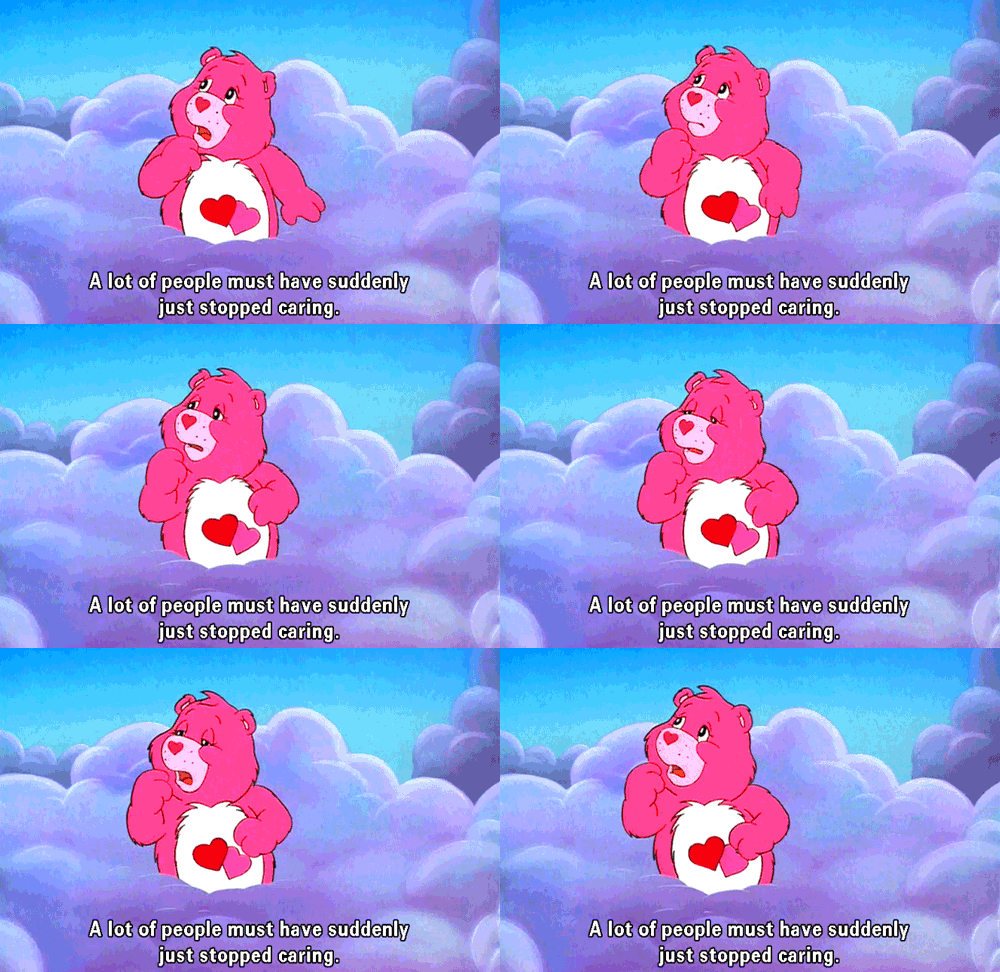
"Grow up! We're not living in Care Bear Land," I retort.

"This is serious business matey!"

We should be thankful that we don't find ourselves in a war zone.  
("You do? Oh Sorry...Jolly bad luck.")

We should be thankful that we don't find ourselves in a zone for redevelopment.
("Don't be so sure.")

We should be thankful that we don't find ourselves threatened by flooding due to rips in the ozone.
("Just make sure you don't forget the sun-cream")
("That's just quack science.")

Market forces.


Intelligent teachers generally choose the best, brightest, smallest of classes which offer comfort, charming company, the latest in tech, intellectual stimulation, academic accolades.

Stupid, masochistic, naive, idealistic, dumb teachers, (I place myself in all these categories), don't choose the easier classes.

Poor losers, such as these kind haven't understood the business, the education market.

You have to fight for your piece of the glory gateau.

Simple arithmetic.

Those who count don't teach.

Those who count don't listen.

Those who count don't care.

Haggling in the souk.

It was rather a surprise to see him.

He hadn't been anywhere near a class.

He had only taken the unembodied form of intermittent, curt emails.

He was, I suppose, a virtual student.

I suppose I should have counted myself lucky that he had appeared in the flesh.

With the benefit of hindsight I would have counted myself lucky that he had remained absent.

At no time was there a real exchange between people.


This would be purely transactional.

He was a market vendor, I was a market buyer.

He was clearly trying to take me for a mug.

I didn't buy his spiel. I didn't like the tone. I shook my head.

He mumbled some vile about the quality of the course.

He folded his wares, and walked off in a huff.

Overseas, and far away.

I overheard the news on the radio.

French students were coming up short in comparison with the Koreans on PISA.

UK students were protesting against  a  "disastrous direction" taken in higher education.

South African students were protesting against tuition fees.


Return on investment.

I am considering my own personal investments in light of recent market trends.

There are those who stand to lose, there are those who stand to gain.

Some will lose all.

There are those who are shouting wildly:  "Sell, sell, sell."

I am a hopelessly dumb, naive investor.

I tell myself frequently:

"You're a fucking idiot. Stop Caring."

"Sell out while you can."


Image credit.

1960's Riot Police 

Minoru Karamatsu

https://www.flickr.com/photos/pandx1/8637383860

Tuesday, November 15, 2016

A HOLLOW MAN.


A HOLLOW MAN

SLOTH
GREED
GLUTTONY
LUST
AVARICE
WRATH
AND
PRIDE

[BEFORE THE FALL]


A HOLLOW MAN

FILTH
BREED
HI HONEY
BUST
GRILL AND WHIST
DRAFT
AND
DERIDE

[BEFORE THE FALL]


A HOLLOW MAN

BOTH
PLEAD
WHY BUNNY
TRUSSED
PILL THEN PISSED
LAUGHED
AND
CRIED.

[BEFORE THE FALL]


A HOLLOW MAN

GROWTH
HEED
VASECTOMY
PUSS
SCALPEL MISSED
GASPED
AND
DIED.

A HOLLOW MAN


"If you shut up truth and bury it under the ground, it will but grow, and gather to itself such explosive power that the day it bursts through it will blow up everything in its way."

Emile Zola.

"The umpreparedness of the educated classes, the lack of practical links between them and the mass of the people, their laziness, and, let it be said, their cowardice at the decisive moment of the struggle will give rise to tragic mishaps."

Frantz Fanon, The Wretched of the Earth.

"There should be equality among all people save only the king. There should be no serfdom and all men should be free and of one condition. We will be free forever, our heirs and our lands."

Wat Tyler.

"Everything can be explained to the people, on the single condition that you want them to understand."

Frantz Fanon, The Wretched of the Earth.

"If every day a man takes orders in silence from an incompetent superior, if every day he solemnly performs ritual acts which he privately finds ridiculous, if he unhesitatingly gives answers to questionnaires which are contrary to his real opinions and is prepared to deny his own self in public, if he sees no difficulty in feigning sympathy or even affection where, in fact, he feels only indifference or aversion, it still does not mean that he has entirely lost the use of one of the basic human senses, namely, the sense of humiliation."

Vaclav Havel.

"The basic confrontation which seemed to be colonialism versus anti-colonialism, indeed capitalism versus socialism, is already losing its importance.  What matters today, the issue which blocks the horizon, is the need for a redistribution of wealth. Humanity will have to address this question, no matter how devastating the consequences may be."

Frantz Fanon. The Wretched of the Earth.


"Once the rage explodes, they recover their lost coherence,they experience self-knowledge through the reconstruction of themselves; from afar we see their war as the triumph of barbarity; but it proceeds on its own to gradually emancipate the fighter and progressively eliminates the colonial darkness inside and out. As soon as it begins it is merciless. Either one must remain terrified or become terrifying - which means surrendering to the dissociations of a fabricated life or conquering the unity of one's native soil. When the peasants lay hands on a gun, the old myths fade, and one by one the taboos are overturned: a fighter's weapon is his humanity. For in the first phase of the revolt killing is a necessity: killing a European is killing two birds with one stone, eliminating in one go oppressor and oppressed: leaving one man dead and the other man free."

Frantz Fanon. The Wretched of the Earth.

"Although the scythe isn't pre-eminent among the weapons of war, anyone who has been on the wrong end, of, say, a peasants' revolt will know that in skilled hands it is fearsome."

Terry Pratchett.

"Zombies, believe me, are more terrifying than colonists."

Frantz Fanon, The Wretched of The Earth.

"Get this into your head: if violence were only a thing of the future, if exploitation and oppression never existed on earth, perhaps displays of nonviolence might relieve the conflict. But if the entire regime, even your nonviolent thought, is governed by a thousand-year old oppression, your passiveness serves no other purpose but to put you on the side of the oppressors."

Jean Paul Sartre.


Image Credit

Friday, November 11, 2016

Out of the shadows.

Out of the shadows they come, the bogeymen, the orcs, the foul hoards.

Nothing will stop their thirst for blood.


Their vile fantasies drive them on.

Their shrieks haunt your nightmares.

They crave darkness, they await the moment to be unleashed on the helpless.

"A depressingly long list of hateful attacks shared online since Trump's election."

Mordor is not some distant land, it lies in our hearts and minds.

There is a black wind blowing.

“Cold be hand and heart and bone,
and cold be sleep under stone:
never more to wake on stony bed,
never, till the Sun fails and the Moon is dead.
In the black wind the stars shall die,
and still on gold here let them lie,
till the dark lord lifts his hand
over dead sea and withered land.” 


J.R.R. Tolkien.

The devil has a debonair charm, he lulls us with his eloquence, his messages of hope, we drop our guards, we look up with shiny eyes.

It was ever thus.

The privileged have an easy way with words.

Give them enough rope.

The menu is tempting, the table dressed, we sigh in expectation.  

Not for us the shit, the blood, the last shudder of the beast in the abattoir. 

Nothing so fucking vulgar.

We are so fucking educated.

"In bourgeois society itself, all exchange of personal services for revenue — including labour for personal consumption, cooking, sewing etc., garden work etc., up to and including all of the unproductive classes, civil servants, physicians, lawyers, scholars etc. — belongs under this rubric, within this category. All menial servants etc. By means of their services — often coerced — all these workers, from the least to the highest, obtain for themselves a share of the surplus product, of the capitalist’s revenue.
But it does not occur to anyone to think that by means of the exchange of his revenue for such services, i.e. through private consumption, the capitalist posits himself as capitalist. Rather, he thereby spends the fruits of his capital. It does not change the nature of the relation that the proportions in which revenue is exchanged for this kind of living labour are themselves determined by the general laws of production."


Marx, The Grundrisse (1857)


We don't get our hands dirty.

We don't have a rope in the house to hang ourselves.

We'd have to settle for the fucking computer cable.


“I’m going to kill myself,” he told his wife more than once over the next few weeks.
One rainy winter day, he found a rope, tied a noose and threw it over a high beam in the barn."
Do we stop one instant and wonder how the meat got on our plate?
Do we stop one instant and have a thought for the source of our comfort?
Do we stop one instant and question the origins of the tools of our digital literacy?

We are so fucking educated.

We still believe in make believe.

If we have the easy life there are others who will pay the bill.

"The secret anguish of the French farmer."

We will live off the land, we have no sure footing,we are free like air.

"All fixed, fast frozen relations, with their train of ancient and venerable prejudices and opinions, are swept away, all new-formed ones become antiquated before they can ossify. All that is solid melts into air, all that is holy is profaned ..."

Marx & Engels, Communist Manifesto (1848)


Others will pay the bill.

We don't need to build a wall.

We already have walls in our minds.

They are so high, they are so historically thick, we have no time to tear them down.

Let the scum build the wall to protect our privilege.

We great nations, great democracies, land of the free.


"What is free trade, what is free trade under the present condition of society? It is freedom of capital. When you have overthrown the few national barriers which still restrict the progress of capital, you will merely have given it complete freedom of action. ...

But, in general, the protective system of our day is conservative, while the free trade system is destructive. It breaks up old nationalities and pushes the antagonism of the proletariat and the bourgeoisie to the extreme point. In a word, the free trade system hastens the social revolution. It is in this revolutionary sense alone, gentlemen, that I vote in favor of free trade."

Marx & Engels, On Free Trade (1848)


We great nations, great democracies, land of the drones, the hell-fire missiles, the stealth fighters.

Let the uncouth go and fight our battles so that we may decorate them and offer crocodile tears.

We will smash all, we will terrorise all.

We are so fucking educated.

We will stand in triumph and light the fire for the forgotten, for the unknown soldier.

We will not weep the alien child.

Unfortunate casualties die in a war for our freedom.

These are not strikes, hits, or casualties, they are your fucking children.


I tuck into a hearty meal, I cut into the meat delicately, I engage in intellectual pursuits.

On the TV the French president is lighting the fire for the unknown soldier under L'Arc de Triomphe.

What is this fucking Triomphe?

Meanwhile men, women and children die in their fucking wars.

Kill the pig.


They will stop at nothing to amass the mobs, to smash the freaks, to preen their crass carcasses.

They are smug in their towers, protected by their gorillas, fawned upon by their lackeys.

They are easy in their life-long struggle for the dispossessed while speculating to accumulate.

You don't need to understand Latin.

DIVIDE ET IMPERA
DIVIDE AND RULE
TRUMP THAT BITCH

We are all so fucking educated.

We need to start questioning how it is that we are so comfortable while others are throwing ropes over trees.

We need to start questioning how it is that we accept to take our eyes of the real problem.

US

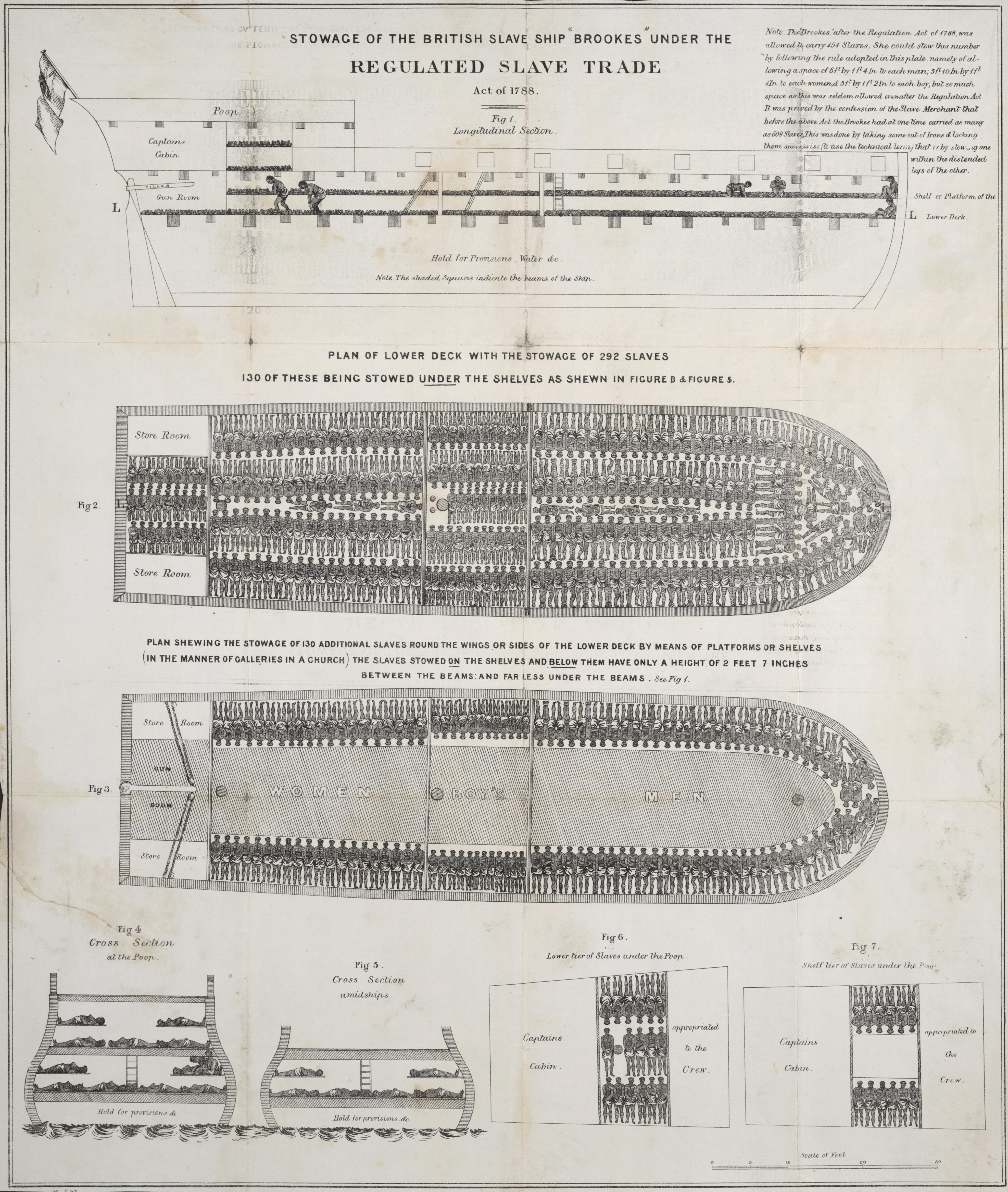
We are not free if we subject others to slavery.


You want it darker?


If you are the dealer, I'm out of the game

If you are the healer, it means I'm broken and lame

If thine is the glory then mine must be the shame
You want it darker
We kill the flame
Magnified, sanctified, be thy holy name

Vilified, crucified, in the human frame

A million candles burning for the help that never came
You want it darker
Hineni, hineni

I'm ready, my lord
There's a lover in the story

But the story's still the same

There's a lullaby for suffering
And a paradox to blame
But it's written in the scriptures
And it's not some idle claim
You want it darker
We kill the flame
They're lining up the prisoners

And the guards are taking aim

I struggled with some demons
They were middle class and tame
I didn't know I had permission to murder and to maim
You want it darker
Hineni, hineni


I'm ready, my lord


Magnified, sanctified, be thy holy name
Vilified, crucified, in the human frame

A million candles burning for the love that never came

You want it darker
We kill the flame
If you are the dealer, let me out of the game

If you are the healer, I'm broken and lame

If thine is the glory, mine must be the shame
You want it darker
Hineni, hineni

Hineni, hineni
I'm ready, my lord
Hineni

Hineni, hineni
Hineni


You want it darker?

“Those who are against fascism without being against capitalism, who lament over the barbarism that comes out of barbarism, are like people who wish to eat their veal without slaughtering the calf. They are willing to eat the calf, but they dislike the sight of blood. They are easily satisfied if the butcher washes his hands before weighing the meat. They are not against the property relations which engender barbarism; they are only against barbarism itself. They raise their voices against barbarism, and they do so in countries where precisely the same property relations prevail, but where the butchers wash their hands before weighing the meat.”

Bertolt Brecht

FASCISM INC


Monday, October 10, 2016

Passing ships.


"Ships that pass in the night, and speak each other in passing, Only a signal shown and a distant voice in the darkness; So on the ocean of life we pass and speak one another, Only a look and a voice, then darkness again and a silence."

Henry Wadsworth Longfellow


A little girl reaches out towards the approaching coast.

Does she sense the tears which well up in my eyes?

She will walk for a first time on the land that her father called home.

I think of the people that lie there she will never know.

A little girl reaches out..

I wonder how far our humanity stretches?

Other journeys cross my mind.

I think of a four-year old child washed up on social media, on international press, on a beach in Greece.  

Two children on average drown in the Mediterrenean Sea every day.  

Without leaving my office chair, I OK Google searched the information.


Had I thought of children drowning in the English Channel?


How far does our humanity stretch?

As far as the keyboard and the mouse?

As far as the screen?

Can we do no more than shed a (virtual) tear?

Hanging out, messing around, geeking out

It was a Virtually Connecting Hangout from the DML conference that got me thinking.

What does empathy really mean in a digitally connected world? 

Can technology enable us to develop empathy more quickly?


Listening takes time.

The Friday before, I had spent over an hour in the company of Terry Elliott in a Kentucky.

I was speaking at lunch time, Terry had gotten up to chat at rooster time (early).

We had organised a hangout, and spoke of many things, some of which I wouldn't share here.

It has taken over two years of blogging, playing, writing poetry, speaking together for me to talk of things with him that I wouldn't share here.  I consider him, a good friend. He is one among a few real friends that I have made online.

It helps us find our place in the world when we find people that we can trust, no matter where they are.

Between humans, sometimes listening is enough.

Sometimes listening is all that we can do.
.
No short-cuts for empathy.
 
So, I was watching a VConnecting hangout.

Howard Rheingold turned up wearing a hat.

Sometimes, someone's hat is enough to make you feel happy.

Mia Zamora mentioned the idea that it would be great to have an "empathy hat" so that we could understand other people's stories.

I am not sure that either listening or understanding are always enough.

There is something that Maha Bali said during the VConnecting session that had me nodding:

There are no short-cuts to establishing dialogue with others so as to develop empathy, friendship.  

There is no question that working as a connected educator via blogging and social media has enabled me to gain a broader range of understanding of diverse contexts, diverse world views, diverse life stories.  From this respect technology may indeed help us to widen circles of empathy.

Technology has helped me focus on individual stories through narrative research as a means to identify trends, as a means to broadly modify pedagogical action. 

Nothing replaces the time taken sitting next to a person in dialogue.

Using technology in the classroom has enabled me to concentrate my energy on individual dialogue.

Emotional intelligence.

It is one thing to speak together in a private offline space, it is quite another to do so online.

Who do our data trails, which enable more pertinent "recommendations", belong to?


Is spending time "really getting to know" our students to "personalise" our interactions only postive?

How much do educators need to know about their students?

Who should we trust?

How much should we or our students share of our lives online?

Developing our "emotional intelligence" is all very well but whose intelligence is being developed?

I find an article entitled:

The Dark Side of Emotional Intelligence.

http://www.theatlantic.com/health/archive/2014/01/the-dark-side-of-emotional-intelligence/282720/

How much data are we aware of giving up?

Love networks powerfully.

It is love (and hate) that networks powerfully. 

I suppose I always return strategically to the gospels for inspiration 

Powerful parables work.

Jesus Christ didn't need empathy bracelets or like buttons to change his world.

No written media and his impact would surely have remained anecdotal.

We must bear witness to our times.

Silence speaks volumes.

There was something that Chris said during the hangout that had me nodding: 

There are things that we don't want other people to know, there are things that we choose not to say.

There are times when we imagine that a website may bring us anonymity to share what we would find difficult to say to others...


I Google the word "verlan a French term for a secret backwards language used to speak privately.

"Many verlan words refer either to sex or drugs, related to the original purpose of keeping communication secret from institutions of social control".

I think of how English, of how the internet, is a means of social control.

While this internet may appear to give us greater reach - informational, relational, commercial, it demands that we question whose reach is most enhanced.

Facebook reveals news feed experiment to control emotions.

https://www.theguardian.com/technology/2014/jun/29/facebook-users-emotions-news-feeds

Whose language are we speaking?

"Laisse beton."

Visions of Citizenship

I struggle rudely with the term "digital citizen". 
  
What the fuck does being a "digital citizen" mean?

Do we have "digital democracy"?

Do we have a "digital constitution"?

Not all "digital citizens" are created equal.  

Are we a "digital citizen"  if we are engaged in the manufacture of digital devices?


Are we a "digital citizen" if we live in a country where access to the wider internet is  restricted?


Here I am,  a "digitally engaged citizen", I scroll, I click, I type, I make bold.

I share a video of a little girl in tears.


What the fuck do I do else?

I look at the statistics for a Google Search:

[girl charlotte city council tears 650,000 results]

It doesn't stop another bloody killing.

What is the internet really doing to increase empathy?

Beware America's shocking loss of empathy.


Hate networks powerfully...

Troll di laa, troll di dee

This is fucking poetry.

I feel helplessly angry.

It doesn't help.

I think of Howard Rheingold's feelings of cynicism towards the web being a means to develop civic, civil argumentation, and social progress.

Walk the talk...

I struggle to find a needle of hope in a haystack of populist kitty crap.

I think of how social media facilitates assembly, demonstration, action.

Yes, finding empathy with others online can enable us to act locally.

Enough is enough: How Polish Women's Black Protest Defeated Abortion Ban.

http://www.huffingtonpost.com/tewodros-melesse/enough-is-enough-how-poli_b_12385382.html

I am so fortunate with my internet connected Polish friends.

I immediately feel an increased identification with distant people.

This is progress.

I got to visit Auschwitz with my students.

It reeks of the death of empathy.

“We walked inside and saw these skinny people who were still living, and one of my enlisted men who walked in with me realized they were starving. We had nothing but some candy bars, which we got in a ration, and one of my men gave the candy bar to one of these people who grabbed it and ran away and gulped it down so fast that he became unconscious and probably choked on it when he tried to swallow it before someone took it away from him. These Jewish people and these Polish people were like animals. They were so degraded, there was no goodness, no kindness, nothing of that nature, there was no sharing. If they got a piece of something to eat, they grabbed it and ran away in a corner and fought off anyone who came near them.”

Samuel Glasshow, liberator of Woebbelin

http://www.holocaust-trc.org/the-holocaust-education-program-resource-guide/oh-no-it-cant-be/

How far does our inhumanity stretch?

Most of the time our global media glut does little more than render us desensitised.

We see pictures of dead children, under heaps of rubble, washed up on the shore.

So many people, so many corpses, so many untold stories, not enough tears.

So what the fuck?

Passage to India.

I gawp with my children at yachts on the Cannes seafront.

Which celebrity will we spot?

We don't take a selfie.

There's a couple of elderly people drinking tea on a Bermudan boat.

Surely British...Ceylon Tea, far away from Frinton-on-Sea.

A swarm of red-tshirted lackeys are polishing the brass and scrubbing the deck.

It is coming up all ship-shape.

I make a note that many of the yachts at the quay are flying a red British Ensign.


What stories do these boats tell about our globalised economy?

It is a real struggle not to feel some sort of patriotic (jingoistic) pride.

What does this say about me?

What did my mother tell me about the flag waving at the Last Night of the Proms?


I think a moment about Britannia ruling the seas.

That imagined British community is beginning to make me feel sea-sick.

Whose passage paid for that Bermudan yacht?


I think a moment about the USA ruling the waves.

“The middle-class standard of the independent self has increasingly become the default American standard for how to think, feel and act in the world…this middle class self is not just a matter of individual attitudes or beliefs; it is an understanding of what it means to be a person that is built into and promoted by the social machinery – law, politics, education, employment, media, and health care of mainstream American society. Although the independent self is widely accepted as the cultural standard, it is not the natural, normal, neutral or even the most effective way of being a person. Instead, it is a privileged and culture-specific understanding of what it means to be a person that flows seamlessly from the resources, opportunities, and experiences linked with middle-class American standing in society.”

What does it mean to develop a "digital identity", find your "voice"?

Who are we developing it for?

Whose stories are we to tell?

Who is paying for it?


"My humanity is bound up in yours, for we can only be human together."

Desmond Tutu.