Showing posts with label change. Show all posts

Friday, May 13, 2022

Some way back...

“Every child is an artist. The problem is staying an artist when you grow up.” Pablo Picasso


“I was 19, I was happy, wasn’t sure where I was going. Not much has changed in 30 years.” 


Those were the first lines written on this blog, Touches of sense…


Here I am in 2022, starting a new adventure, a web site, to be entitled: 


Some way back… 

Simon.Ensor.Art


I have always known that I was an artist.


My father used to ask me to illustrate his sermons. 

My mother told the school I painted like Lowry (I didn’t).


"I have come to believe that a great teacher is a great artist and that there are as few as there are any other great artists. Teaching might even be the greatest of the arts since the medium is the human mind and spirit."

John Steinbeck.


My art teacher was a great teacher, he would give me excellent marks and then fail to convince me to do some work. 


Others told me to concentrate on more serious subjects.


Below is a drawing I knocked off for homework when I was 16 years old. 


The art teacher’s comments have been nagging me ever since.


I am writing now as a 60 year old Anglo-French artist, driven by a single question:


“What happens when I really put my mind to developing a body of visual art?” 


Some way back…

is a means to document and share responses to that question. 


“An artist without faith is like a painter who was born blind.”

Andrei Tarkovsky


As an artist, I have been working passionately for the past 34 years as an English teacher with thousands of students, exploring the medium and discovering the desire and the means to transform it. I have spent years studying and adapting my actions to the complexity and unpredictability of human interactions and learning. Faith and hard work has enabled this artist to see further…


Art has always been a way to lose myself and to find myself elsewhere.


Along the way, 

I have developed my voice as a blogger in Touches of sense…, connected and collaborated as an educator and as an artist with kindred creative spirits from around the world and employed more or less academic genres to communicate and to publish radical educational messages. The 482 blog posts that I have written since 2010 have become progressively more and more concerned with visual art. The last one, Touches of light, preciously preserved marked some sort of epiphany.


“A page escapes to leafy paths[...]Ephemera rendered eternal.Taking a moment to contemplate. Pause, gaze, breathe in, remember. Moving, losing sight, feeling loss.


Ever since I was born, I have been acutely aware of the ephemeral nature of life and the infinite value of artistic expression. My father’s work was rhythmed by life’s passing seasons and the rituals of baptism, marriage,and death. My mother shared her love for music, poetry, gardening and nature,and an eye for beauty to be found in driftwood, pebbles, and bric-à-brac. 


Some way back…

Is made up of moments of figurative and abstract meaning making. I find flow and express emotions by letting myself be moved by the moment, the media, making marks intentionally or serendipitously. I am drawn to gaze at distant horizons and to investigate universes glimpsed through close focus. At times, images emerge organically with no apparent source. Certain motifs are  recurrent: nature, landscape, seascapes, mountains, rocks, trees, paths…the objective is always to discover new lands to be able to perceive what lies beyond the self, the subject, the page.


"The real voyage of discovery consists not in seeking new landscapes, but in having new eyes."

Marcel Proust


Touches of sense… has been a means to map out areas I want to explore and to excavate and to study the reasons why they are important.


Each collection, each image has its back story. Some way back will build upon these foundations. 


Between 2014, and 2018 much of my artistic work was multi-media,collaborative and digital, combining poetry, spoken voice and images in assemblages. I owe much to my friends of #clmooc.


Since 2018, starting with “A vine branches wildly…”  I have concentrated my art practice predominantly on watercolor painting, ink, charcoal and graphite drawing. 


The more you learn, the more you realize how little you know and how much you need to learn.


When I speak to those who I consider to be master artists, I am comforted when they agree with this quote of George Leonard:


“We fail to realise that mastery is not about perfection. It’s about a process, a journey. The master is the one who stays on the path day after day, year after year. The master is the one who is willing to fail, and try again. For as long as he or she lives.”


I have stayed true to my path day after day, year after year. 


To my surprise it appears that this is its latest twist. 


I am working now on some way forward.


Simon Ensor

Artist exploring the ephemeral nature of life via figuration & abstraction, flow & scribble, intention & serendipity.


P.S.
I have no idea whether this will be the last post in Touches of sense...
It has been quite a while since I felt moved to write here.
The words just wouldn't come...

Monday, October 17, 2016

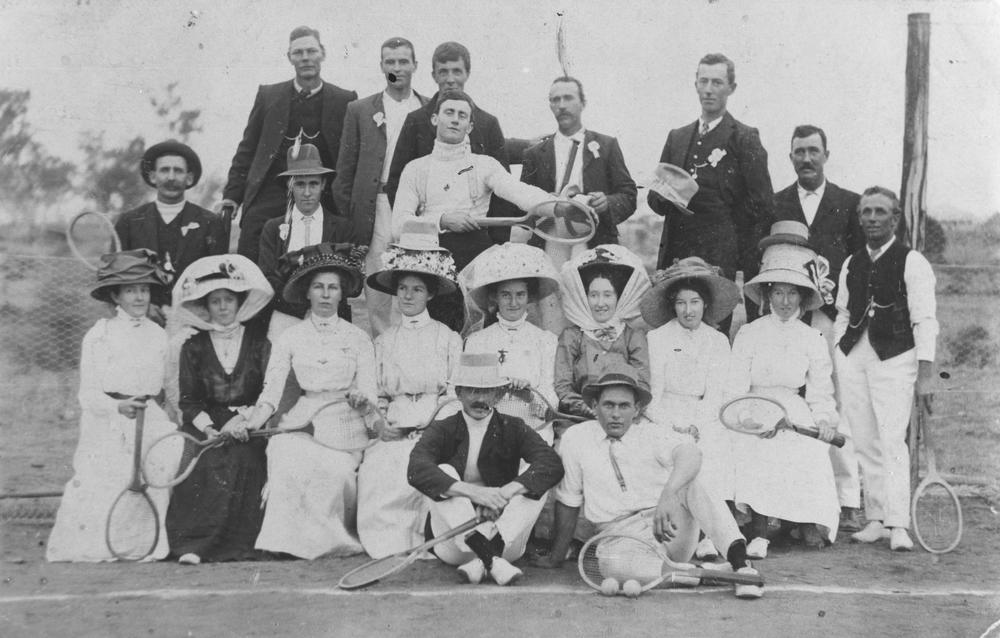
Anyone for tennis?

"Oh good shot that man!"

"15-30."

"First service."

"Let."


"First service."

"Oh, an ace!"

"30 all."

"Oh bravo!"

There are times when discussions in education seem like a racket sport.  

For a start, you have to be a member of tennis club in order to be invited to toss up a few balls.

You need time to engage in jolly banter.

You need to be appropriately dressed and to play by the rules.

The ladies and the men are often playing separately.

(Ladies and gentlemen are almost equal now.)

Only men get to play seriously over 5 sets.

Mixed doubles is all very well, but it's reserved to middling players who won't threaten for major titles.

It's all about scoring points.

It's all about major titles.

It's all about grandslams.

The majority of the population is quite unaware of the "enjeux".

The most important thing about tennis is its irrelevance.

One can let off a bit of steam.

One can rage about decisions of the umpire.

One can throw one's racket dramatically to the ground in mock disgust.

Tennis will never do 'out to change the world.

The committee hang their rackets on the clubhouse walls as trophies.


Thursday, February 4, 2016

Fear of silence.

I say nothing.

She wants to look from ahigh.

She sees much farther than me now.

She is a giant on the shoulders of a dwarf.


I take the photo in the only way that I can.

The moment is gone.

I feel caught between joy and sadness.

I fear we can not frame more than our shadows.

"Sustainable pedagogy."

I was thinking of those words this morning.

I was overcome with silence.

Night-line.

"Oh, I love silence," he had said to the counselling mentor.

She said nothing, she looked at him.

She said nothing, she looked at him.

She said nothing, she looked at him.

"What I mean is...."

His wordly confidence had left him stranded.

She said nothing, she looked at him.

Non-directive counselling.

It suddenly occurred to me that this moment had been foundational in my teaching practice.

Empathy

I was speaking with a friend this morning.

"The problem with feeling competent is that we can take on too much," he said.

"I ended up with burnout and depression."

I listened to him. I nodded.

I returned and sat to think.

Sustainable pedagogy...

What does it mean to be a sustainable educator?

I search for the foundations of the counselling training that I had received 30 years before.

It turns up Carl Rogers.

I found a conference on empathy.


I sat to listen.

I hear:

"The most effective listening is where you listen for the feelings and emotions that were behind the words..that were just a little bit concealed. Where you could discern a pattern of feeling behind what was being said."

I ask myself questions:

"What are the feelings and emotions that lie behind our actions words, as teachers/instructors?"

"What are the feelings and emotions that lie behind the words and actions of learners?"

"What are the patterns of feelings behind an 'educational system'?"

"What patterns of feeling do our rituals conceal?"

Fear of silence.

I return to listening.

I find a few quotes of Carl Rogers.

I note them down for future reflection.

"Colossal rigidity, whether in dinosaurs or dictatorships, has a very poor record of evolutionary survival."

I think of massive investment in 'educational content'.

What do those investors feel for learners?

I think of rigidity of teacher timetables, of programs, of systems, of assessment, of teacher assessement, of buildings.

What does such rigidity reveal of the feelings for learners and teachers?

"The degree to which I can create relationships which facilitate the growth of others as separate persons, is a measure of the growth I have achieved in myself."

How on earth can our growth be measured?

Can pedagogy be sustainable if it does not accept change?

Are we really concerned about the growth of others or are we too full of our empty selves?

"The curious paradox is that when I accept myself just as I am, then I can change."
Carl Rogers

What is it to accept ourselves?


Thursday, January 28, 2016

Boundaries and desire.


I have been reflecting on what motivates desire to act and what limits action in an institutional learning context.

As a teacher, there are varying constraints which limit action.

Some constraints are clearly desirable or even essential to our own existence, our identity or an institution's or a groups existence.

Faced with what is a considered unacceptable demand or threat, a person, a teacher even,  may be motivated to attempt to overcome, get around, ignore, physical, political, philosophical, pyschological, cultural, hierarchical...(other) limits.

Clearly what is acceptable to one person is not necessarily acceptable to another.

 The perceived risk of overcoming or simply ignoring constraints will clearly depend on the individual person or group.

At times, boundaries may be breached, or simply crumble and disappear.

Beliefs may over time change or be transformed.

Inside out, outside in.

Desire to act will depend on intrinsic and extrinsic factors.

Desire to fulfill a role in an (educational) institution will depend on a mix of intrinsic and extrinsic factors.

Can one say that purely intrinsic motivation exists?

Perhaps not in a professional setting at least.

He notes that question for another day.

He returns to the confines of he institution.

There are days when we would rather be elsewhere...

There are days when a feeling of professional responsibility, a desire not to let down one's friends or colleagues in the lurch or a fear of losing regular/irregular income only just outweigh the desire to walk away...

The desire to not lose face amongst one's peers weighs heavily.

There are people in all professional activities who hate every moment of their professional existence.

There are people in all professional activities who would rather leave the work to the others...

There are people in all professional activities who have an overwhelming desire for power over others....

Man and machine...  

I am a 'fonctionnaire' - a servant of the state, in service to an education system.

I am a cog in a vast machine. Like all cogs which 'malfonctionne' I am replaceable.

Within a university,educational 'cog's are given more freedom of movement than in schools.

I may define within certain limits the program for the students, (indeed it is my responsibility). I may define the methods, the means of assessment.  Teachers are rarely if ever observed.  Students need to be seen to be, or believed to be in class at particular times and grades need to be rendered to the administration every term.  If I am requested to attend particular training or meetings I go.

Complaints are to be avoided.

The smooth running of the institution's administrative machine is primordial.


Then the machine ground to a halt.

A few days later

What on earth was I thinking?

This is all so complex.

Hurried Conclusion.

This is all so complex.

OFF.


Friday, January 22, 2016

Open doors are not enough.

Value and vanity.

"Wow, that was a great class."

"Wow, what an inspiration."

God, it's great for the ego!

Open doors are not enough.

I was asked this week whether I was going to any interesting conferences.

I am not going to any interesting conferences.

"To what extent will communicating at conferences enable change of education where I am", I ask.

I do thought experiments:

"To what extent will becoming minister of education enable change of education where I am," I ask.

"Be careful what you wish for."

I conclude that many brilliant people and less brilliant people become ministers.

Nothing much changes...

I shall never be minister...

I shed a few tears.

I am preparing to speak with Daniel Bassill and Terry Elliott about strategy next month.

I keep having to accept that I am not 'just an English teacher', I am not 'just a teacher'.

It is an insidious message that repeats itself:

"But you're you, you're hopeless, you know you are...you've got no time, mind your own business....you're just a bloody English teacher."

"BE REALISTIC!!"

That's it, I have said it now.

Nothing, nothing will ever change.

Change for the better.

Over the past ten years, I have asked myself one question:

"What can I do to enable change for the better in language learning?"

Of course 'change for the better' is a loaded question.

What is to be our 'change for the better'?  
Who is 'our'?

I am working on my answers to those questions...

To be quite honest, I have asked myself wider questions:

"What can I do to enable change for the better in education here where I teach?"

Of course 'change for the better' is a loaded question.

What is to be our 'change for the better'?  
Who is 'our'?

To be quite honest, I have come to the conclusion that you can not enable change for the better in language learning, if you do not enable change for the better in education.

To be quite honest, I have come to the conclusion that you can not enable change for the better in education if you do no reflect on the role of education in society...if you do not reflect on the different players trying to 'enable change for 'their better' in education.

It is, it appears an open battlefield for our minds, for our money...for our activity...for our communities...

This is freedom.

This is one of many visions of freedom...

Freedom is both battlefield and battlecry.

Freedom for who?

Whose freedom?

Freedom for some is an anathema.

"Handle with care."

One can not remain, just an English teacher, neutral.

Just (English) teachers, just students, just researchers, just ministers are disposeable...

Other peoples' values judge us.

Nobody is irreplaceable.

If all the English teachers where I teach, were to adopt the same approach as myself and none of the other teachers in other disciplines, the effects of such a change would be contained...

If all language researchers only speak with other language researchers then the potential influence of such research is contained...

If all the language researchers only speak with other language researchers, then their language becomes increasingly opaque for those outside their conversations.

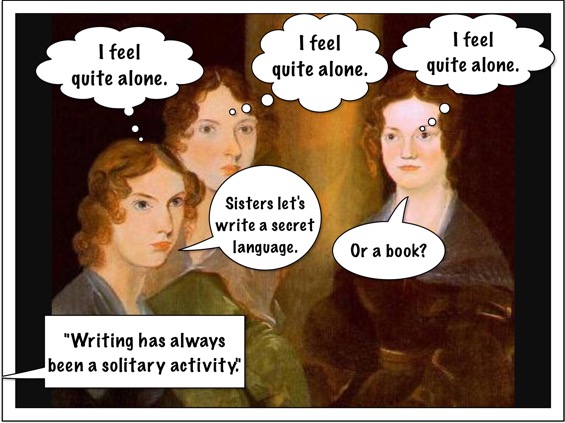
It is the Bronte Sisters' secret language writ large.


If researchers and teachers only ever speak with researchers and teachers what is the place of their institutions in the wider community?

Do institutions exist for the researchers? For the teachers? For the students? For the minister? For..?

Whose language do we speak? 

Whose interests do we serve?

I read with interest a blog post of Maha Bali concerning a conference on education reform in Egypt.

http://blog.mahabali.me/blog/citizenship-2/reflections-after-an-education-reform-event-in-cairo/

She speaks of a keynote by Pasi Sahlberg

 "It was an instance of a success of an international guest speaker who didn’t necessarily realize how controversial his speech is and so it was very satisfying for those of us on the more radical end of what education reform could/should look like. And possibly made policymakers cringe. Unless it totally went over their heads. For example he repeatedly said “don’t do what Finland did; do what would work for YOU” and people still continued to talk about copying snitches of the Finland model, often ignoring the emphasis on equity and trust in teachers in that model (possibly the main two “values” in it that are core and re-contextualizable)."

If Egypt is not Finland, then neither is Clermont Ferrand. 

I return to my question:

"What can I do to enable change for the better in education here where I teach?"

I do a thought experiment:

"To what extent will my becoming Pasi Sahlberg enable change for the better in education here where I teach?"

I conclude: a little perhaps.

I resign myself to not ever being Pasi Sahlberg.

I weep uncontrollably. (he lies)

I must be more realistic, I am just an English teacher.

I read Maha's blog a little further:

"Some of the highlights of his keynote were his comparison between countries who have been failing at reforming education (GERM = Global Edu Reform Movement) and those who succeed (see screenshot in the Storify embedded below)
Some of the things that continue to frustrate me with Pasi’s work (also had this problem with his book, Finnish Lessons) is why he continues to use PISA as the evidence of good education in Finland. It’s a standardized test. Even if it tested reading, math and science literacy accurately, it does not test the things he talked of as key to the purpose of education, namely supporting the child to grow into their potential and find their passion. Every time he says PISA it disappoints me. It’s looking at a (pretty narrow) outcome and making inferences about education quality. I know it’s probably true in Finland, that they have good quality, but it doesn’t tell me anything about what truly matters about education in Finland. It doesn’t tell me that actually good learning is happening in the classrooms. It just tells me about specific literacies, not the whole student."
I conclude that I do not want to be Pasi Sahlberg if I have to cite PISA.

Pasi Sahlberg is not the change I am looking for.

I return to conversations between Daniel Bassill, Terry Elliott and myself.

"Breaking down walls, opening minds.."

What do elite schools in France (or elsewhere) consider valuable?

A good teacher to student ratio? Meaningful learning? Mentoring? Networks?

I look at the presentation of HEC in the Economist:
http://www.economist.com/whichmba/hec-school-management-paris/2013.

it would seem that 'student led learning' and 'quality time' are considered priorities.

Its MBA program ranks highly and was recently overhauled:

"HEC revamped its curriculum in 2012, with the help of Bain & Co, a consultancy. The result is a more hands-on approach to analytical thinking and leadership development."

Hmm...'a more hands-on approach'.

"The school offers dual degrees with institutions such as New York University, Dartmouth’s Tuck school, MIT, Wharton, National University of Singapore, Chinese University of Hong Kong and London School of Economics."

Hmm...an extensive and wide ranging network of learning opportunities.

No doubt they have plenty of opportunities to learn languages within these networks...

An effective mentoring program:

Yes they have one of those...

Indeed, mentees are enthusiastic about the individual support they receive:

"Discussing my plans seriously allowed me to see things a bit more clearly, as I was forced to formulate my expectations in front of a “stranger”, while knowing that he was not there to judge me."
Mentee

Of course these people are privileged, they have extensive resources...

Don't poor people have...people??

Don't poor people have...time??

I think briefly that I need to study in depth what Daniel Bassill has been doing for the past 40 years...

I come back to Clermont Ferrand.

No we don't have the same resources as HEC....

No the students, the ones I teach at least, probably don't have the same 'skill-set' as those in HEC.

No they definitely don't have the same networks...

I reflect on what I can do...

I return to the question of mentoring.
I return to the question of wide ranging networks.
I return to the question of a more 'hands on approach' to language learning.
I return to the importance of communication.
I return to the importance of the diverse messages necessary to communicate.
I return to the question of who such communication should be most effectively targeted to.

I return to Daniel Bassill and his Tutor Mentor Program in Chicago.

I am just an English teacher.

I am not just an English teacher...

I repeat it to myself, it doesn't always help.

I think of all that money I am losing...all that time playing around.

I am weird, I continue all the same.

I reach out here.

"Discussing my plans seriously allowed me to see things a bit more clearly, as I was forced to formulate my expectations in front of a “stranger”, while knowing that he was not there to judge me."
Mentee

Change for the better would enable learners to find meaning in their activity and to realise that they can play a role to improve relationships within their own communities. 

I am a learner.  I remember Keri Facer, "Learning Futures: Education, technology and social change."


Change for the better would enable learners to contribute freely within their communities without fear of judgement.

Acting strategically.

Time and energy is limited. 

I must act strategically with my resources.

My resources have increased dramatically since I connected to wider networks...

I should return to mapping my route, reflecting on strategy...

I realise that my messages to students are beginning to change...

I realise that the messages I receive from students are beginning to change...

I note the appearance of a growing number of mentors...

I note the positive effect of communicating openly...

How shall I act now?

("You're barmy" the insidious/sensible voice repeats)


Wednesday, December 16, 2015

Party management

I have to note this down immediately.

It is an important leap for me.

I am fascinated by story.

I was toying with complexity thanks to an improbable connection made as the result of remarking a Facebook conversation.

I wrote a post asking about the compatibility of story to complexity.

I had never heard of the term: 'Homo Narrans'.

I concluded my post a few hours ago with 'we are story.'

Homo Narrans...indeed.

I reflected on the patterns which emerged from my post.


I went and Googled complexity and narrative.

I fell upon a couple of videos by Dave Snowden (a person unknown to me).

I watched a first one. I watched it a second time. I shared it with friends of my network.

Terry Elliott immediately set up a Vialogue with the first video.


I will return once again to annotate.

There was a metaphor which immediately resonated.

Dave Snowden talks of different approaches to party management - for party management think classroom management, think education.

A complex systems approach to education therefore entails determining boundaries to what is acceptable and making sure that these boundaries are flexible and open to negotiation with the learners.

'Catalytic probes' are introduced, in the kids' party example -  'a video', 'a barbecue', 'a computer game', in the hope that a pattern of play (learning) will form.

If the kids group around the 'video game' it is what might be called 'an attractor' and if this 'attractor' is beneficial to the 'party' (think education,think language learning) we amplify it and if it is a 'negative attractor we dampen it.'

'We manage the emergence of beneficial coherence within attractors, within boundaries.

As an educator we manage what can be managed (not learning), we manage 'for emergence' (of learning).

This all suddenly rang bells with discussions around rhizomatic learning.

This all suddenly rang bells with discussions that I had been having with my colleague this week.

Over a number of years, we have been defining potential attractors, people, communities, activities inside or outside of the classroom, online or offline, negotiating boundaries with learners and colleagues, amplifying the beneficial activities, dampening the 'negative ones'.

We are constantly working in the present to adapt what we are doing.

'Managing the evolutionary present'.
Dave Snowden

We are in constant beta.

I never had this technical language before.

Along the way, we have been benefiting from the stories emerging from the participants.

We are constantly trying to rewrite our own narratives faced with complexity.

Dave Snowden's next points about research methodology - distributed ethnography will require weeks of study.

I then watched a second video of his entitled 'How not to manage complexity.'

Such an important conference!


I have much reading and listening to do.

I made a link with conversations that I had had with Bruno Winck about knowledge managment.

On reading around, I fell upon the Cynefin Framework, a diagram that I had seen before, noted, but never searched the source.


It was a framework that Viplav Baxi had talked about in a conversation that I had noted partially a few hours before...

I have a fair amount of learning to do...


Monday, October 19, 2015

Pretty Vacant.

I  have been fringelurking #dlrn15 twitter streams and Vconnecting sessions.

I wasn't able to access the live streams, not sure what I missed.


I listen to people introduce themselves:

I'm a learning designer/consultant.
I'm a doctoral student.
I'm a post doctoral student.
I'm a hyper post doctoral fellow. etc

I'm not a doctoral anything, I'm just curious.

I feel, at times, like a gate-crasher.

I am not marginal. I am me.


Being me, I am marginal.

I remember when I was invited by a flatmate to a Jewish society evening in Manchester.

The others kept assuming that I was Jewish.

I wasn't from Stanmore, Golders Green, I wasn't Jewish. 

Why was I there?

They were confused.

I felt sorry for them, it wasn't their fault, it was mine.

Inclusion was impossible.

I suppose that I might have converted...

There are moments when I have the distinct impression that I inhabit a different planet.

I went to my friend's thesis defence last week.

He was talking about teaching classes of 80 students in Cameroon to speak French.

He had to pay out of his own pocket for his students to have access to the computer lab so that he could do his research in order to present his thesis.

The French/Swiss jury's refined questioning was possible only as a result of their privileged contexts.

As I said to a friend sitting next to me:

"If you are starving you don't concern yourself with how you want your steak cooked." 

We stood up to hear the jury's verdict.

He had made it, he was pronounced doctor.

There were tears in his eyes.

I felt like I was in church.

I never felt comfortable in church.

I don't care about robes and hymn books.
 

There are moments when I have the distinct impression that I inhabit a different planet.

It is not just an impression.

Enrobed learning.

If I embarked in research, it was to help me change things.

It helped us change things.

It gave us sufficient recognition/seriousness/validation/permission to give us the space to change things.

Somebody said "education is broken".

Was education ever not broken?

Two hoots..

Many of the teachers around me do not care two hoots for change.

Many of the researchers around me do not care two hoots for change.

Many of students around me do not care two hoots for change.

They appear pretty vacant.

Pretty Vacant

There's no point in asking, you'll get no reply
Oh just remember I don't decide
I got no reason it's all too much
You'll always find us out to lunch


Oh we're so pretty
Oh so pretty
we're vacant
Oh we're so pretty
Oh so pretty
A vacant

Don't ask us to attend 'cos we're not all there
Oh don't pretend 'cos I don't care
I don't believe illusions 'cos too much is real
So stop you're cheap comment 'cos we know what we feel

Oh we're so pretty
Oh so pretty
we're vacant
Oh we're so pretty
Oh so pretty
we're vacant ah
But now and we don't care

There's no point in asking you'll get no reply
Oh just remember a don't decide
I got no reason it's all too much
You'll always find me out to lunch
We're out on lunch

Oh we're so pretty
Oh so pretty
we're vacant
Oh we're so pretty
Oh so pretty
we're vacant
Oh we're so pretty
Oh so pretty ah
But now and we don't care

We're pretty
A pretty vacant
We're pretty
A pretty vacant
We're pretty
A pretty vacant
We're pretty
A pretty vacant

And we don't care


Lyrics. Sex Pistols.

I listened to people talk about the weather, enjoying dinner, agency and stuff.

I wondered why I was listening.

I wondered if  my time wouldn't be better spent talking with kids around me...

They, at least, might benefit from my care.


Tuesday, July 14, 2015

Dancing in the open


A few years ago, I asked myself : "How can a teacher change an education system?"  


The answer, of course, is that a teacher alone can not change an education system.  

A system is not one teacher.

After feeling a little less weighed down, I decided to investigate how I might play my part in such a systemic change...

I went out and did some research...

I went out and met people...

This is part of an ongoing investigation...

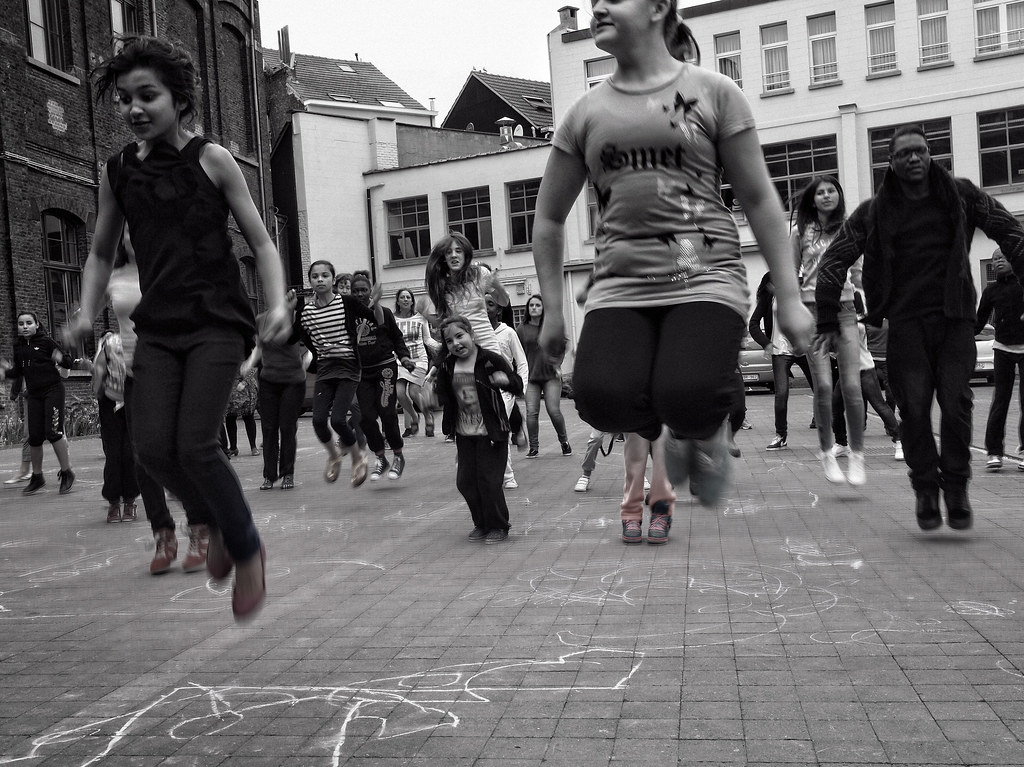
Dancing in the open
A teacher can learn how to dance publicly and let others join him or her.

A teacher can document the dance steps so that others may follow long after he or she is gone. 

Here I am dancing openly again in this blog.

I am way past feeling ridiculous sharing my steps...


A teacher may understand that a single choreography can become a dance phenomenon. 

It doesn't need to be classical dance.

Anybody for the Harlem Shake?


About a year ago, I was documenting some of the change which had been enabled from working as a connected educator.  


CLMOOC is part of a wider internationally connected dance.


A few days ago, I witnessed a virus unpredictably and rapidly spreading and mutating again.


Space for change.

It reminded me again of the importance of space for change.

You need space to dance.

Colleagues from completely different disciplines were using photos from our Nomad's Land Album which we had taken to document our learning journey to illustrate the repurposing of an ex-university library into a new open, modular, connected learning space.


I remembered the inspirational work of Stephen Heppell on Super Classes and Learning Spaces. 


I remembered reading the book of Diane Oblinger on Learning Spaces. 


I found it hard to believe what I was witnessing.

This space would bring the community into the institution and involve learners in redesigning their own learning space.

I remembered the work of Juliet Heppell's students in designing their own learning space.


I remembered the talk and book of Keri Facer on Learning Futures. 


A few days before that, I had been visiting a fablab maker space in an art school, this is to become one element of this new learning space. Strange how maker space connects to CLMOOC...


A few days later, I was sitting discussing the importance of open connected, social media enhanced, reflective learning for an international dance class. 


Last night, I was working on translating an article for an ex-student become athletics coach/international social entrepreneur.

I invited him to work with us as a co-teacher/learner in the new open learning space.

He seemed happy to contribute. 

He is one of a growing number of people helping us out.

As they say in Africa; 

"It takes a village to educate a child."

This morning, I am thinking again about changing systems.

Change seems so impossible at times.

We can feel like we are just a helpless cog in a machine.


I don't believe that we are cogs...

I am reviewing the dancing man video on Youtube.


The dancing man remains for me the simplest model of how to transform a system.

The most important person in the system is not the one who leads but the one who follows.