Showing posts with label systems. Show all posts

Monday, July 20, 2015

Let them eat (binned) cake.


I came out of the local Intermarche to be met with a scene from Zola.

A horde of poor people were disemboweling an enormous wheely bin belonging to the supemarket.

One guy was shaking the contents of boxes onto the pavement. 

A woman, holding an infant, was piling up half-rotten provisions onto the child's push chair.

A group of women were squabbling over their spoils. 

Cost-cutting, ´low-cost',  'no-cost' come together around a car-park in central France.

We are talking about the nourishment of children in Clermont Ferrand in 2015.

Educational problems.

I don't know about you but all of this appears to me like a problem.

At school, kids study  hypothetical problems.

We then complain that they lack responsibility.

At universities, scholars study possessive pronouns or sport sociology.

They then complain that they are not valued by the wider community.

There are moments when I have the impression that education is rather 'hors-sujet' (off its rocker, irrelevant) 

Why do we bother with made-up problems when our neighbourhoods provide plenty of scope for useful study? 

A few example problems 

Why is it that French people confuse Roumanian with Rom and then are obnoxious with them?

What is the point of European Union for those who democratically vote as European citizens?

What simple gestures might help people to smile more about being in the same super-market car park as those who shop in wheely bins?

The problems are so complex that kids would gain enormously from studying, speaking with those concerned or elaborating schemes to help their 'foreign' peers.

Education might not just be about the reproduction of existing unworkable systems it might also be conceived as a means of working for a less unbearable system.

I insert, as footnote, data which would suggest that we are going in a rather different direction.


Image: Steve Wheeler for #blimage


Tuesday, July 14, 2015

Piles of stuff.

These sentences in the CLMOOC make 4 introduction caught my attention:


" A pile of bicycle tires is not a system. If you remove one tire from the pile, you still have a pile of tires and nothing more. However, if you put that tire on a bicycle, the tire becomes part of the system and all of the parts of the bicycle, including the tire, work together to make the system function. If the tire gets a flat, the system cannot function until the flat is repaired."


1. A pile of tyres

I still remember the pile of tyres used by a farmer to weigh down a silage tip.


Every week, I would run along the path enjoying the view and speed up as I came to the ugly pile of tyres.

Funny how these tyres should pop up here.

Is the memory of this pile of tyres (long since removed) a system or part of a system?

Is the pile of tyres itself a system or part of a system?

On one level, the pile has become part of CLMOOC's system.

It will perhaps become part of a system of reflective learning.

I am beginning to think that the pile of tires is a system of itself.

I quickly jump to another pile.

2. A pile of photos

I have piles of photos in Google.

What system are they part of?

I think the answer must be that they are part of multiple systems.


3. A pile of empty tin cans.  

On the face of it there is little interest to be had in this photo.

If one looks carefully one can see that the tin cans are not abandoned;  they are an exhibit behind glass.

Reflected in the glass are the shadows of people who are gazing intently at the pile of tin cans.

One of the people thus reflected is myself.

This pile of tin cans is a system.

It is part of a terrifying system.

It is part of a terrifying spectacle...


4. A pile of spectacles

Looking at this through its glass darkly one becomes aware of the enormity of a system.

Seeing maybe believing; it is surely not understanding.

One cannot disconnect the tin cans from the spectacles, or for that matter from the other exhibits.


5. A pile of pots.

These cooking pots seen individually have little apparent intrinsic value other than as part of a holocaust exhibit.


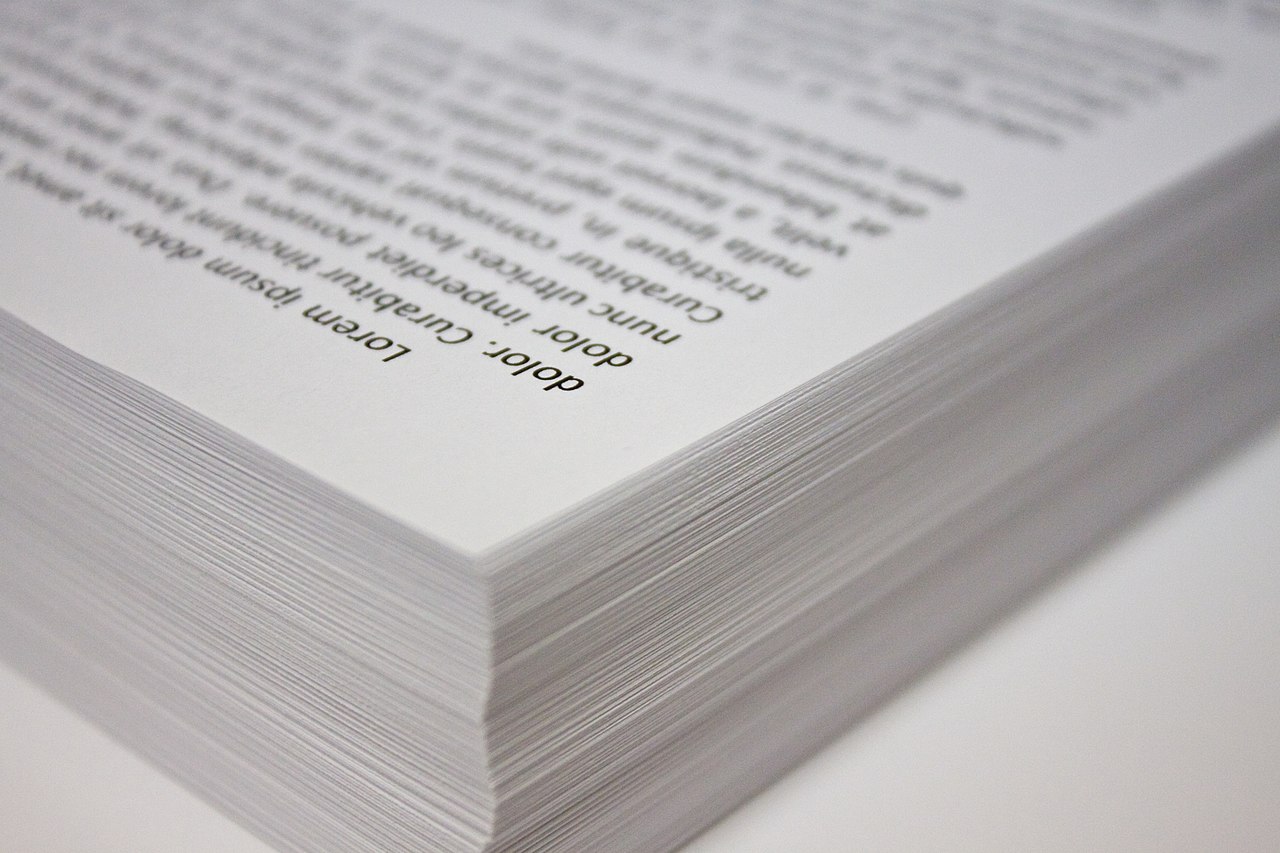
6. A pile of photocopies

Pile upon pile of photocopied paper, left on shelves.

There are cupboards which I dare not open for fear of being submerged by reams of ancient photocopies.

Hour upon hours of mechanical reproduction.
Hour upon hours of comprehension exercises.
Hour upon hours of educational waste.

I remember people long-since retired who are still present through their stacks of photocopies.

An empty space, a warehouse, a noman's land.

When we first ventured out of the over-constraining classrooms, we started to see disused space with new eyes.

7. A stack of tables

The stacks of tables and chairs indicated that nobody had really thought much about this space which wasn't really a corridor and wasn't really a classroom.

"What shall we do with these old chairs and tables?" 

'"Let's leave them here."


Four years on, and the space where we found the stacks of tables and chairs has been repurposed as an open learning space.

Now, I come to think about it, this post is full of repurposing of objects, repurposing of spaces, or reimagining systems...

8. A stack of soup cans


9. A pile of blog posts

10. A pile Facebook posts

11. A pile of Google + posts


12. A pile of bricks

A pile of bricks is just a pile of bricks?

I suggest that you try removing one of the bricks from the Carl André sculpture in the Tate Gallery in London to test the veracity of this statement.


13. A pile of electronic waste.

A pile of stuff is never just a pile of stuff...