"Everybody knows that the dice are loaded Everybody rolls with their fingers crossed Everybody knows the war is over Everybody knows the good guys lost Everybody knows the fight was fixed The poor stay poor, the rich get rich That's how it goes Everybody knows" Leonard Cohen.
One moment, he's a clandestine illegal immigrant from Mali...(that's in Africa)
Then he goes and saves a life on Youtube.
Spider-Man, a superhero.
Now, he's being fêted as a symbol of "volonté" (will) which Macron (president of France) claims is foundational to "French identity".
Now, he's being employed by the fire-fighters of Paris, to save lives.
Spider-Man, a photo opportunity gift from God, to President Macron.
Members of the Front national, self-proclaimed "protectors" of "French identity" are raging against the announcement that Mamadou Gassama, will be rewarded with French citizenship.
One moment, he's being sued in court for tax fraud and being threatened with a jail term.
Next moment, he's being fêted by the Elysée.
Death is great for tax-evasion!
Communiqué – HOMMAGE DU PRESIDENT DE LA REPUBLIQUE, EMMANUEL MACRON A MONSIEUR SERGE DASSAULT
Death is great for business!
Rafales, over Mali (that's in Africa).
Rafale M: €79M (flyaway cost, FY2011) The Dassault Rafale (French pronunciation: [ʁafal], literally meaning "gust of wind", and "burst of fire" in a more military sense) is a French twin-engine, canard delta wing, multirole fighter aircraft designed and built by Dassault Aviation.
Burst of fire on the ground in Mali.
Mirage-Man:
tax evader
billionaire arms dealer
corrupt politician
owner of Le Figaro.
Mirage-Man, a superhero.
Dassault, a symbol of "volonté" (will), of French "air-superiority" of overseas projection.
The French are in Mali "to help destroy jihadists" aren't they?
"Everybody knows that the dice are loaded Everybody rolls with their fingers crossed Everybody knows the war is over Everybody knows the good guys lost Everybody knows the fight was fixed The poor stay poor, the rich get rich That's how it goes Everybody knows" Leonard Cohen.
The current crisis in Mali is a product of French colonialism, and their intervention will sadly create more blowback.
Postscript: I went back and read a post from December 2016 entitled "The end of the world". I had forgotten that Abba had already educated me on French interests in Mali. Here is a section from the post: One of them, Abba, from Bamako, Mali, was busy educating his friends on global politics and colonialism. "Where do you think the French Nuclear Industry gets its uranium from?" He asked "There aren't many uranium mines in the Massif Central." "'What do you think the French army is doing in Mali?" "Have you heard of Areva?" "Did you hear that they have found oil in Senegal?"
I walk pretty much, every day, that same route, past the pile of free newspapers in the lobby , open a door, walk down a dark corridor.
There, offices each side.
There, people looking at PC screens.
What are they doing?
I really had no idea.
I cross people in the corridor, we nod, smile, say hello, having acknowledged each others' existence, we continue on our route.
How do we discover which person holds clues to the whereabouts of treasure?
I mean you can't go in every office and ask all the people who they are and what they are doing, it would take too long.
That would be ridiculous.
Maybe there are people in offices we need to find?
How do we know which office to choose?
Official charts, organigrams, plans tell us little we need to know....maybe that is their purpose....concealment.
If we sent a message out in a bottle, how many would find it, would read it, would understand it?
Occupation.
We are occupied.
We have so little time.
Fifty five, fifty five, fifty five.
Occupied. Occupied. Occupied.
Occupied, with what...by whom, for what ends?
I went upstairs.
I was met by a stony face.
I don't insist.
Pebbles on the beach.
There are so many pebbles on the beach.
People that is.
I mean, I wasn't looking for anything or anybody in particular.
I bump into a colleague from the library.
Serendipity...really?
Funny, I was just thinking about contacting him.
He is speaking to one of those unknown people from the offices along the corridor.
He is speaking to one of those people with whom I exchange nods and smiles.
He looks vaguely familiar.
I can't for the life of me figure out why.
My library colleague gives us an opportunity, a pretext, to communicate something other than a nod.
We start talking, as one does around a coffee machine.
It appears that he is interested in the conversations that we are having with my colleague from the library.
I explain a fair while what I am working on.
I suddenly think of the importance of coffee as a pretext for conversation with strangers.
That recalls a talk of Steve Johnson entitled "Where do good ideas come from?"
I think of the stony look upstairs, of unproductive frosty meeting.
I think of my online friends. They, the ones, who have fuelled much of my creativity.
I think of how these friends have become part of my physical world at this moment.
I explain how these friends know me in a way those who I cross in a teachers' room can not.
What can such "online coffee shops" bring to us locally?
How can we enable people who don't know each other locally to speak together?
How can we signal what we are looking for when we don't know what it is?
I can only think that openness is a prerequisite.
I think of the difficulty of introducing such openness, such ongoing familiarity building such as I have experience via cmoocs and social media, Twitter in particular, to a local institution, to peoples' daily lives.
We speak about maps.
I talk of mapping narratives.
I talk of being able to combine narrative mapping with strategic planning.
I think again of the work of Dave Snowden and Sensemaker.
I think of how in my personal research, I am still looking to use very personal, artisanal means to map.
Merchants, spices, warehouses.
I talk of a university as a port.
Merchant ships bring in wares from afar.
I talk of a book as a port.
Warehouses spring up to stock vittals.
Merchants, help us choose the best rum, the best spices.
Is this blog a ship, a warehouse, a tavern, spice?
I think of my conversations, my journeys, my life online.
I drop into conversations in distant taverns.
They are in my head - conversations fuse, confuse, enlighten, the people, the taverns.
They become part of me...bodily.
I am seeing this/these conversation/s through the lens of a multitude of selves.
How do we open up our minds and those of others to see the interest of virtual taverns?
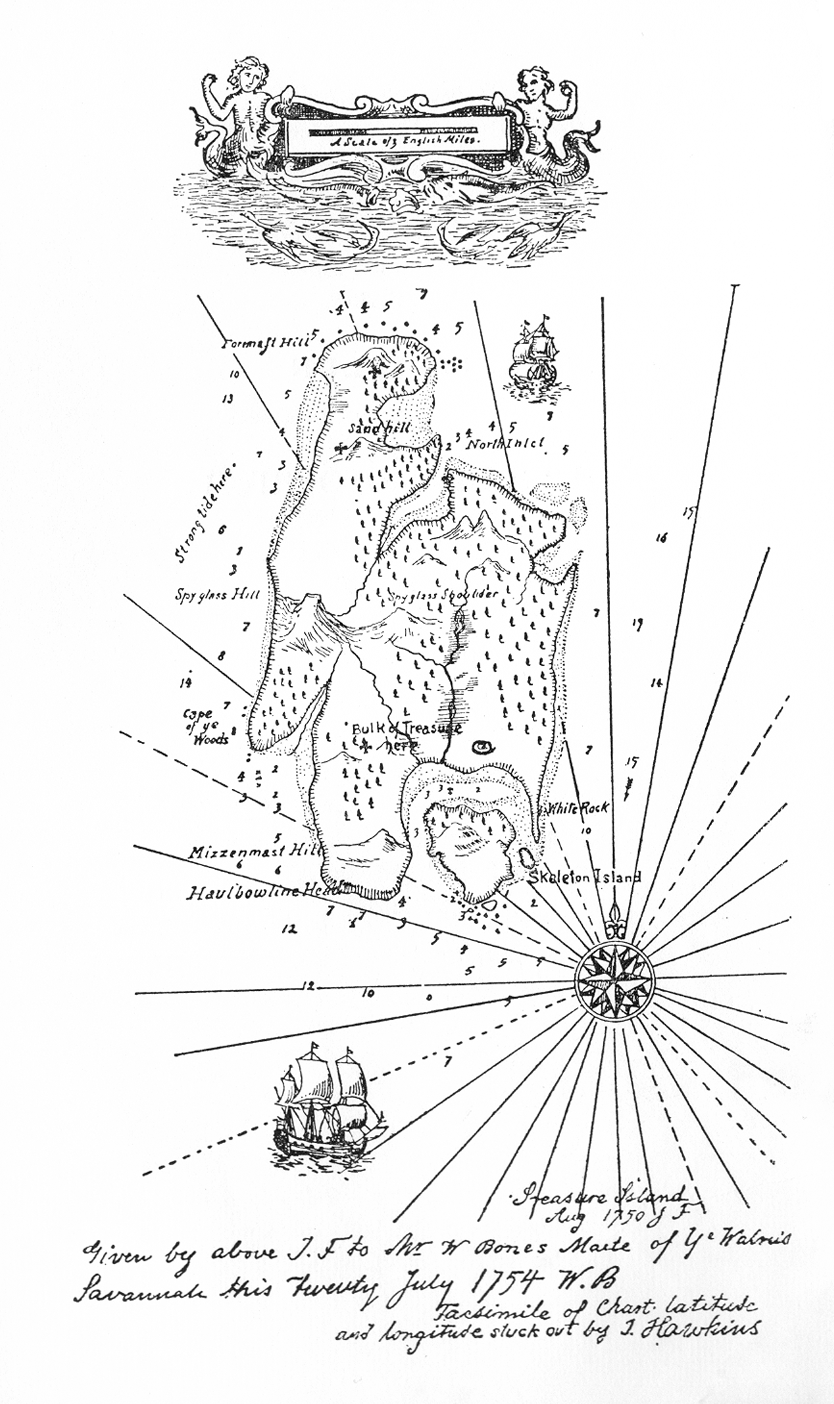
Treasure maps and occupation.
I talk of looking at a map together, of speaking the same language, of sharing a common understanding.
How do we know which people will be able to see meaning in a map?
Perhaps, I think to myself, it is our occupation which is already mapped.
Perhaps, I reason, it is pointless to offer any alternative map, if it doesn't correspond to existing charts.
Perhaps, I conclude, that is what one must do first, one must fully understand how occupation is mapped in peoples' minds, bodies and spirits.
I talk of my friend Daniel in Chicago.
How do we bring others together to discover treasure in our maps, particularly when they are otherwise occcupied?
Perhaps we don't.
Treasure mapped.
I think of treasure.
For myself, treasure is in personal mapping.
X does not mark the spot, X marks the questions, the curiosity, the wonder.
What is this treasure?
I think of my nephew in Glasgow.
I think of his new project selling beer in Glasgow and building wells in Africa.
I think of how his eyes light up.
I think of the dull gleam of unburnished metal.
That is not his treasure.
Treasure is not a lonely acquisition.
Is treasure meaning and fellowship?
Is meaning fellowship?
Post Scripts.
"Once you see the boundaries of your environment, they are no longer the boundaries of your environment." Marshall McLuhan.
Questions of mapping.
Movements
Where/how do I move/travel, where/how do I walk (to/into/out of/around/up/down) ?
Senses
Who/what do I see/hear/smell/touch/?
Feelings.
How do I feel?
Lenses.
What sense/thoughts/memories/feelings make me see/feel things in a particular way? Actions
What do I do?
Who do I do these actions with?
Who do I speak to, write to, draw to, sing to, touch and where do I write/speak/draw?
Where do I speak, write, draw, sing, touch, walk, run, fly, eat, drink?
I am getting an idea of my contours, of my connections, of my motivations, of possible directions.
Touches of Sense is one example of how I wander when left to my own devices.
I write most often as a stream of consciousness, any learning is emergent.
I take a pause to lay down markers for myself.
If it is to be a usable map then I need to integrate its lenses into more focused exploration.
I am being systematic in my analysis now.
There comes a time for nature to become a template for action.
Poetry is no less a science, it is no less a map, it is no less a means to reimagine our roles.
I post a reference to Shelley here for future reflection:
For Shelley, "poets ... are not only the authors of language and of music, of the dance, and architecture, and statuary, and painting; they are the institutors of laws, and the founders of civil society..." Social and linguistic order are not the sole products of the rational faculty, as language is "arbitrarily produced by the imagination" and reveals "the before unapprehended relations of things and perpetuates their apprehension" of a higher beauty and truth. Shelley's conclusive remark that "poets are the unacknowledged legislators of the world" suggests his awareness of "the profound ambiguity inherent in linguistic means, which he considers at once as an instrument of intellectual freedom and a vehicle for political and social subjugation".[6]
I just want to pull the covers over my head and wait for another day.
I just want to say,
"OK, you fucking win, you bastards. Fuck you!"
Actually, I never say: "OK, you fucking win, you bastards."
I refuse to accept that there aren't means to change fucking stupid systems.
I pick myself up and limit myself to saying. "Fuck you!"
I am forever picking myself up, finding a different way to look at things, a better way to be.
Sometimes it is enough to wait for the tide to change, for the storm to blow over.
Today is one of those days. I can feel mood change.
There is brilliant sunshine, yesterday was all torrential rain and drear.
I think of how people are pushed to fill boxes on others' spreadsheets.
I think of traders in the city who only see numbers, trends, markets, buying and selling.
I think of academics who appear more interested in their reputations, than the lot of lowlier folk.
I think of surveillance, trolling, loss of privacy, slave labour, filling boxes on others' spreadsheets.
I just want to go and take the dog for a walk.
I think of friends, teachers, academics, parents, doctors, nurses, people who face the same dilemmas every day.
We are for ever navigating between rocks and hard places, between the devil and the deep blue sea.
I think of lost friends.
Those friends could no longer accept to navigate and I feel sadness and respect for their choices.
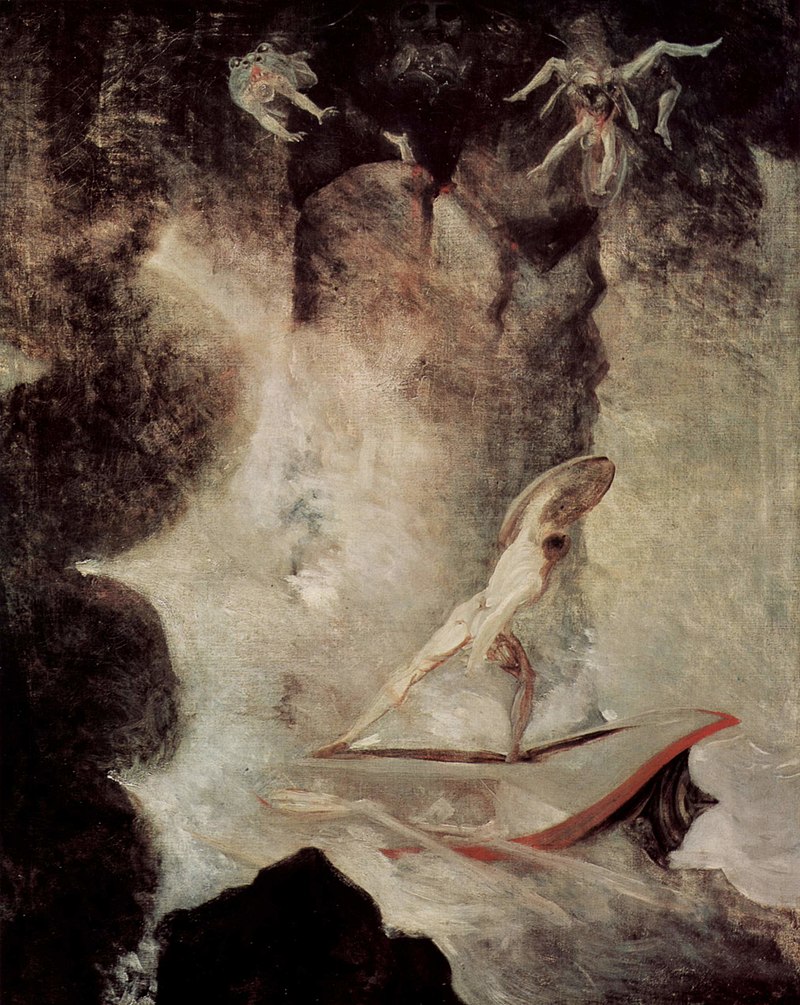
Scylla and Charybdis were mythical sea monsters noted by Homer; Greek mythology sited them on opposite sides of the Strait of Messina between Sicily and the Italian mainland. Scylla was rationalized as a rock shoal (described as a six-headed sea monster) on the Italian side of the strait and Charybdis was a whirlpool off the coast of Sicily. They were regarded as a sea hazard located close enough to each other that they posed an inescapable threat to passing sailors; avoiding Charybdis meant passing too close to Scylla and vice versa. According to Homer, Odysseus was forced to choose which monster to confront while passing through the strait; he opted to pass by Scylla and lose only a few sailors, rather than risk the loss of his entire ship in the whirlpool.
Because of such stories, having to navigate between the two hazards eventually entered idiomatic use. Another equivalent English seafaring phrase is, "Between a rock and a hard place".[1] The Latin line incidit in scyllam cupiens vitare charybdim (he runs into Scylla, wishing to avoid Charybdis) had earlier become proverbial, with a meaning much the same as jumping from the frying pan into the fire. Erasmus recorded it as an ancient proverb in his Adagia, although the earliest known instance is in the Alexandreis, a 12th-century Latin epic poem by Walter of Châtillon.[2]
At a time when a Classical education was common, the myth of Scylla and Charybdis was often used in political cartoons. In James Gillray's Britannia between Scylla and Charybdis (3 June 1793),[3] 'William Pitt helms the ship Constitution, containing an alarmed Britannia, between the rock of democracy (with the liberty cap on its summit) and the whirlpool of arbitrary power (in the shape of an inverted crown), to the distant haven of liberty'.[4] This was in the context of the effect of the French Revolution on politics in Britain. That the dilemma had still to be resolved in the aftermath of the revolution is suggested by Percy Bysshe Shelley's returning to the idiom in his 1820 essay A Defence of Poetry: "The rich have become richer, and the poor have become poorer; and the vessel of the state is driven between the Scylla and Charybdis of anarchy and despotism."[5]
A later Punch caricature by John Tenniel, dated 10 October 1863, pictures the Prime MinisterLord Palmerston carefully steering the British ship of state between the perils of Scylla, a craggy rock in the form of a grim-visaged Abraham Lincoln, and Charybdis, a whirlpool which foams and froths into a likeness of Jefferson Davis. A shield emblazoned "Neutrality" hangs on the ship's thwarts, referring to how Palmerston tried to maintain a strict impartiality towards both combatants in the American Civil War.[6] American satirical magazine Puck also used the myth in a caricature by F. Graetz, dated November 26, 1884, in which the unmarried President-elect Grover Cleveland rows desperately between snarling monsters captioned "Mother-in-law" and "Office Seekers."[7]
Victor Hugo uses the equivalent French idiom (tomber de Charybde en Scylla) in his novel Les Miserables (1862), again in a political context, as a metaphor for the staging of two rebel barricades during the climactic uprising in Paris, around which the final events of the book culminate. The first chapter of the final volume is entitled "The Charybdis of the Faubourg Saint Antoine and the Scylla of the Faubourg du Temple."
By the time of Nicholas Monsarrat's 1951 war novel, The Cruel Sea, however, we find the upper-class junior officer, Morell, being teased by his middle-class—and more progressive—peer, Lockheart, for using such an old-fashioned phrase.
Nevertheless, the idiom has since taken on new life in pop lyrics. In The Police's 1983 single "Wrapped Around Your Finger," the second line uses it as a metaphor for being in a dangerous relationship; this is reinforced by a later mention of the similar idiom of "the devil and the deep blue sea."[8][9] American heavy metal band Trivium also referenced the idiom in "Torn Between Scylla and Charybdis," a track from their 2008 album Shogun, in which the lyrics are about having to choose "between death and doom."[10]
"Maybe it meant something. Maybe not, in the long run, but no explanation, no mix of words or music memories can touch that sense of knowing that you were there and alive in that corner of time and the world. Whatever it meant." Hunter S. Thompson Fear and Loathing in Las Vegas. "I find myself here."
There is no question about it. "I find myself here."
It suddenly occurred to me the other day. That that hadn't been me.
It was a relief.
"I'm sorry, you don't follow?" Well, I am telling you... Now... I was...a relief.
I had been hidden, dissimulated, drowned out in drear. It was tiresome. Then I was there, bleary eyed, somewhere near. "I find myself here." It was an unfamiliar sound. Breath as plague. Breath as swarm. Breath as resistance.
"I find myself here." I scrolled. I scrolled. I scrolled. Nothing seemed to connect. Nothing seemed to connect. I fall prey to blear and loathing. "I lose myself there." I can't go on. I am lost. I am nothing. I am carrion. Rotting.
It wasn't me. No, I am telling you. That wasn't me.
I recognise myself in this distance. "I find myself here."
Footnotes. I find myself here on flitting through a post of Terry Elliot. "Self loathing is a subset of resistance: all honour to Laura Ritchie and Steven Pressfield." I find it difficult to delve deeply. He links to an article of Steven Pressfield. I find it difficult to delve deeply. I walk with Pressfield an instant. I get as far as "One." "So the next time you hear that self-loathing voice in your head, remember two things: One, that voice is not you." I nod my head in agreement.
Getting to "Two" is a step too far. "remember two things." I don't take too kindly to imperatives...
Fuck that Mr Pressfield. I find something about "original dreams" and "good signs."
Oh what bollocks.
I may be hasty in my judgement. I find myself here.
"People think that stories are shaped by people. In fact, it's the other way around..." Terry Pratchett.
He was at least ninety years old.
He had been suffering this way since he was nine.
"My father always said that I was less handsome than my brother."
He was eaten up from the inside by a parental parasite.
Our bodies are fictional. "Having a body is in itself the greatest threat to the mind....The body encloses the mind in a fortress; before long the mind is besieged on all sides, and in the end the mind has to give itself up."
Marcel Proust.
I looked at myself in the mirror and I said to myself - that can't be me, but it was.
It was a frightful recognition.
I was thinking that there were pages unwritten that I was reluctant to turn.
I don't want this story, I don't want this story.
In writing, I realise that indeed it is the story which is writing me and not the other way round.
I thought of my elders and they offered me a knowing look.
It wasn't much consolation.
I fell upon a passage from Toni Morrison's Beloved.
How can we ever imagine a body free from (his) stories?
"In this here place, we flesh; flesh that weeps, laughs; flesh that dances on bare feet in grass. Love it. Love it hard. Yonder they do not love your flesh. They despise it. They don't love your eyes; they'd just as soon pick em out. No more do they love the skin on your back. Yonder they flay it. And O my people they do not love your hands. Those they only use, tie, bind, chop off and leave empty. Love your hands! Love them. Raise them up and kiss them. Touch others with them, pat them together, stroke them on your face 'cause they don't love that either. You got to love, you! And no, they ain't in love with your mouth. Yonder, out there, they will see it broken and break it again. What you say out of it they will not heed. What you scream from it they do not hear. What you put into it to nourish your body they will snatch away and give you leavins instead. No, they don't love your mouth. You got to love it. This is flesh I'm talking about here. Flesh that needs to be loved. Feet that need to rest and to dance; backs that need support; shoulders that need arms, strong arms I'm telling you. And O my people, out yonder, hear me, they do not love your neck unnoosed and straight. So love your neck; put a hand on it, grace it, stroke it and hold it up. and all your inside parts that they'd just as soon slop for hogs, you got to love them. The dark, dark liver - love it, love it and the beat and the beating heart, love that too. More than eyes or feet. More than lungs that have yet to draw free air. More than your life-holding womb and your life giving private parts, hear me now, love your heart. This is the prize." "The me you know."
There was something ironic about the title of Maha's blog post.
I am continuously discovering me's that I didn't know.
Some of those me's...well meh...I would rather not have known.
I click on the link. "People close to me in person seeing me as something different from how I view myself as a whole person. Because they don’t read me. And that’s a big part of who I am and what I think and how I feel and how I process my life. Do they really know me if they only know my behavior and not my thoughts?"
People read us all the time, not just our words.
How can I even venture to know someone without living, those readings?
I am reminded of reading an article of Dave Snowden "Humans in effect are able to adopt multiple identities in parallel as well as in sequence. I can be father, brother, husband or son and my behaviour will alter according to the identity that I am assuming. I am increasingly convinced that in a human system it is the identities that are the agents not the individuals"
I suspect that the text is written from the perspective of a man who feels he is able to "assume identities."
We are constantly dressed, trussed up even, with the identities that others thrust upon us.
It strikes me that we are incapable of seeing ourselves as a "whole person".
How on earth can we expect that any other might view us as a "whole person"?
None of us are whole. "By day each soul must walk within its shadow. Only night can make us whole again..." Nicolas Gordon
I think of my parents.
At no time would I have been able to know them as "whole persons."
They were my parents.
They were at times wholly present for me.
Any attempt to consider them as "whole persons" is dependent on imagination.
Crisscrossing stories...
I think of the party for the anniversary of my uncle's passing.
My story was one in a crowd of volumes which crisscrossed.
To each person present the person absent was wholly alive.
To the person absent, each person present must have represented a vital part of his life story.
It is a theme that I realise I visited in a blog post entitled "Story Bound"
I find myself quoting myself. "Not noise bound, their stories were miscellaneously entangled. Their personal footnotes were hidden and unimportant."
It suddenly occurs to me that even here, in this MY blog I am lost.
I am incapable of keeping the stories in order, under control.
They have ganged up on me.
I can hear them skulking in a corner, complaining how once written they are left to their own devices.
I threaten them with erasure, then realise that will be no guarantee of closure.
They have escaped, gained their independence.
I return to Maha's blog post.
"The me you know" "It makes me think about how my embodied self could never live up to my (albeit still authentic) digital self."
I find comments that I wrote on Facebook:
"Fortunately your readers can live up and beyond what any embodied self could ever do. Cos we are distributed - always."
"Reckon we need to think about movements more than about bodies."
There was a question from Bonnie Stachowiak: "I'm curious about this and wonder if you could share more of what you mean (re: movements).."
Dem bodies
We are not the sum of our parts.
Once born we are never whole.
We are forever seeking our other halves, our lost youths, our salvation.
They become the (be)longings of others who pick them up in bits, to be reused or abused.
Dem bones
Ezekiel connected dem dry bones Ezekiel connected dem dry bones Ezekiel connected dem dry bones Now I hear the word of the Lord. Well, your toe bone connected ot your foot bone Your foot bone connected to your heel bone Your heel bone connected to your ankle bone Your ankle bone connected to your leg bone Your leg bone connected to your knee bone Your knee bone connected to your thigh bone Your thigh bone connected to your hip bone Your back bone connected to your shoulder bone Your shoulder bone connected to your neck bone Your neck bone connected to your head bone I hear the word of the Lord! A dem bones, dem bones, gonna walk around A dem bones, dem bones, gonna walk around A dem bones, dem bones, gonna walk around I hear the word of the Lord! Disconnect dem bones, dem dry bones Disconnect dem bones, dem dry bones Disconnect dem bones, dem dry bones An' I hear the word of the Lord! Well, your head bone connected from your neck bone Your neck bone connected from your shoulder bone Your back bone connected from your back bone Your hip bone connected from your thigh bone Your thigh bone connected from your knee bone Your knee bone connected from your ankle bone Your ankle bone connected from your heel bone Your heel bone connected from your foot bone Your foot bone connected from your toe bone An' I hear the word of the Lord! Oh well A dem bones, dem bones, dem dry bones A dem bones, dem bones, dem dry bones A dem bones, dem bones, dem dry bones An' I hear the word of the Lord! Mmmh
A dem bones, dem bones, dem dry bones A dem bones, dem bones, dem dry bones A dem bones, dem bones, dem dry bones An' I hear the word of the Lord! Mmmh Footnote
A final movement catches my attention.
I note it here for further reflection.
"What makes us drawn to music is that our whole being is music: our mind and body, the nature in which we live, the nature which has made us, all that is beneath and around us, it is all music." Hazrat Inayat Khan Image credits.