Showing posts with label equity. Show all posts

Thursday, August 6, 2020

Broadened horizons. Focused, cooperative analysis.


Broadened horizons.There is a story line, I am struggling to map.
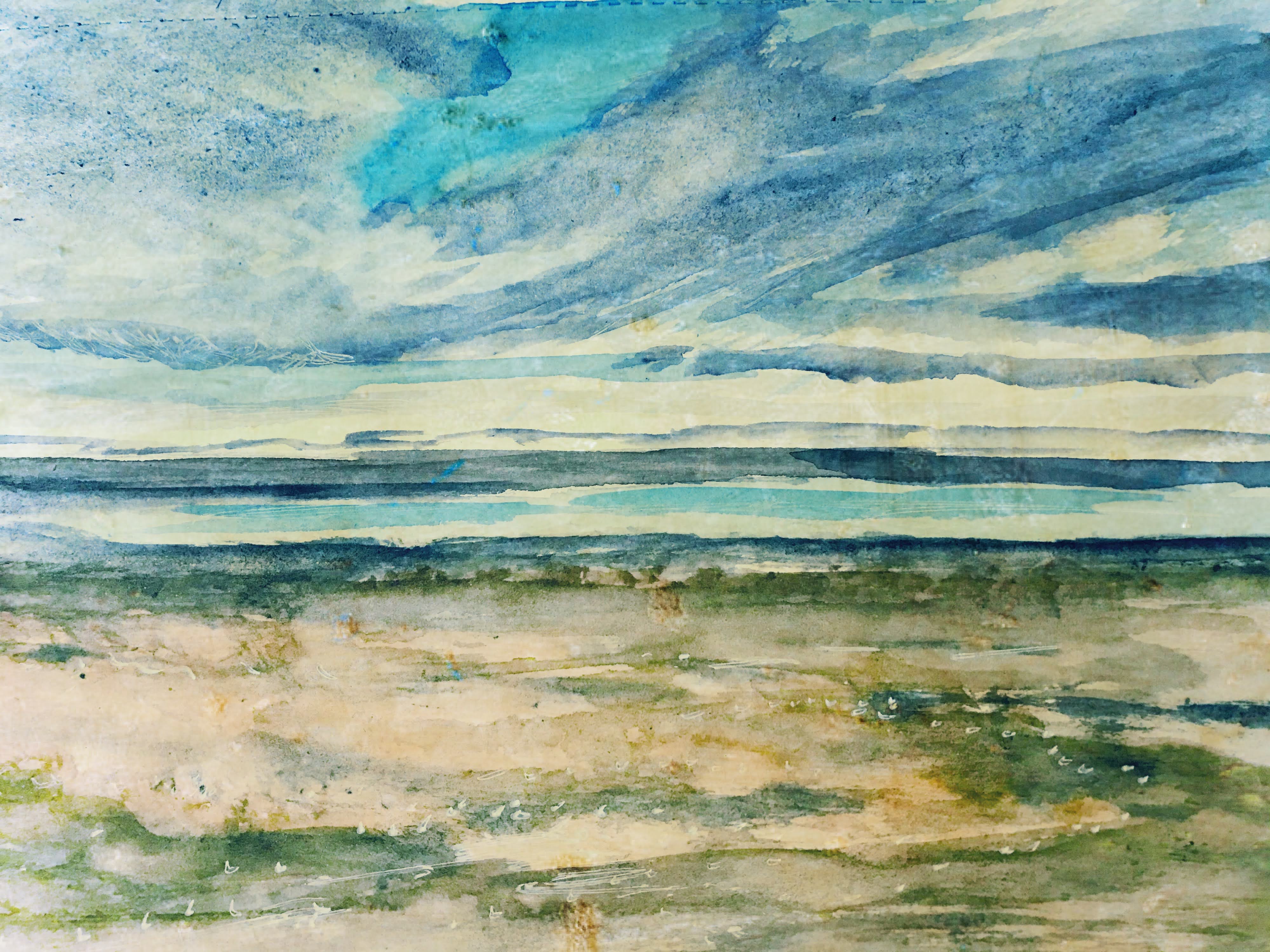
I am living at a different rhythm, walking along the sea-shore, broadening my horizons, breathing in the sea-air...through a mask. 

At least, I have got away.

I'm on holiday.

I take my time to paint wide swathes of land and sea then focus on details. 

Board-walks, fishing tackle, barbed wire in the grass.


I alternate between mindful artistic meditation and broadening my intellectual knowledge.

I am taking my time.

I have been taking the time to reimerse myself in methodology - Nexus Analysis (Scollon and Scollon)
I have been taking the time to review and adapt such methodology to my particular research context.
I know that I am writing this in order to guide my actions with my friends towards the creation of a simple but multi-voiced storyline.

Focussed analysis informed by broadened and diverse perspectives

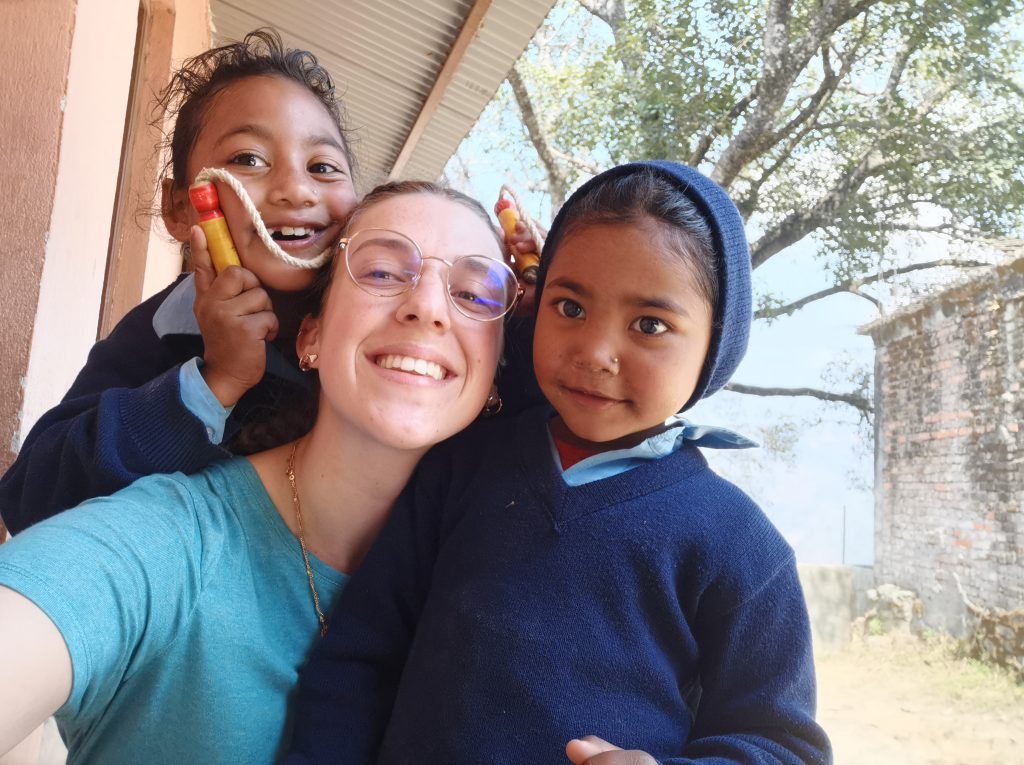
I alternate between focusing on moments of interactions captured in photos of educational contexts here and there, the stories and diverse perspectives of the photographers and the people who appear framed.  
.

I must, therefore take the time to work with different perspectives of the same stories, the same images. 

The work will be essentially limited by the time that we have but we must start with inclusivity as its guide. 

It will be a cumulative, iterative process. 

There will be... inevitably... be... ellipsis...

Masked, gagged, blindfolded.

The masks are a minor inconvenience, the political measures put in place by governments always hit the poor first... 

In no way is a global pandemic a "great leveler".


Intermittent connections

We are hanging onto our cooperation despite failing electrical supplies and internet signals, school closures, holidays and natural disasters.

Our storyline must reveal complexity through its simplicity.

It is only a start but we must work on preparing the ground.

The foundations must be solid and easily identified.

It must be clear, it must make one essential point.

This is research for action...activist research.

I, we, are not alone, we are not working for academic career impact.

Research for action, research as action.

Another life story connects, shared ironically by a Nepalese expat friend, Shyam Sharma and then reshared by Kabi Paudel in Katmandu.

A major research influence, Jan Blommaert, terminally ill, shares a testament to what matters.

"In a world in which knowledge is at once more widely available than ever before, and more exclusive and elitist than ever before, knowledge is a battlefield and those professionally involved in it must be aware of that. Speaking for myself: a neutral stance towards knowledge is impossible, for it would make knowledge anodyne, powerless, of little significance in the eyes of those exposed to it. Which is why we need an activist attitude, one in which the battle for power-through-knowledge is engaged, in which knowledge is activated as a key instrument for the liberation of people, and as a central tool underpinning any effort to arrive at a more just and equitable society. I have been a knowledge professional, indeed. But understanding what I have done as a professional is easier when one realizes the activism which, at least for me, made it worthwhile being a professional." Jan Blommaert


Global discourses local translations...
I am questioning the international, national, local economic, political, educational, socio-cultural discourses which are the more or less visible backgrounds, or frames to the photos and stories.  

I have immersed myself in Nepalese history, authoritarian regimes, bloody civil war, nascent democracy, Hindu religion, educational reform, central control and decentralization policies, current  economic and social realities of people in rural and urban areas, trying to capture some landmarks to guide my reflection.  

Ethnic and linguistic diversity, institutionalized caste and gender discrimination, chronic corruption, foreign interference and "aid", economic migration or expatriation according to the social status of the individual. 


The Anthropocene (/ænˈθrɒp.əˌsn, -ˈθrɒp.-/ ann-THROP-ə-seen, -⁠THROP-oh-)[1] is a proposed geological epoch dating from the commencement of significant human impact on Earth's geology and ecosystems, including, but not limited to, anthropogenic climate change.[2][3][4][5][6]

Common hopes and fears for a better more equitable, more environmentally sustainable future.

This is essential to the storyline: we are interconnected, we are one with the ecosystem.

Hinduism, amongst other religious traditions speaks of  this indisputable truth.

We are one with the planet, not in anyway apart or above it. 


What is the human cost of modernity, discourses of "progress", "sustainable development"?

I am aided in my reflection by my friend Paul Prinsloo who shares:


It contains a short poem.


Promises of progress, promises of equity, growing inequality and people who are expendable.


US & THEM

Vast financial investment enable photos from space, illustrating the vulnerability of all and the absurd hubris of the privileged few. 



Photos on earth show that a hard rain falls harder on those with less means.

We live in a world where some lives are valued less than others.  
We live a world where some voices are valued less than others.
We live a world where some languages are valued less than others.
We live a world where some passports have less value than others.
There is no hope of equitable change unless we face the facts.


Uncertain paths...beyond the horizon


Only six years ago I had no idea that my path would lead me to such discussions, these reflections, these actions. 

I have little idea of what really drives these actions apart from what I have always had: an insatiable curiosity to know what lies beyond the horizon and persistent indignation.

How many instants have I captured in these pages of myself looking at or beyond a wall, gazing at or beyond distant horizons?  

Promises, promises, promises.

I have been taking time to learn about the relationships between global educational resources, funding, and local educational policies, pronouncements and actions particularly as regards which data has currency, what gives leverage to those who have their hands on such levers and the disconnection between seductive declarations and cruel realities. 

We live in  world where it is often not what you know but who you know which counts.


It seems that all too often politicians are now not speaking for those who they represent but to those who represent sources of influence....prestige...money.

I am learning about the disconnect between political movements and leaders who take up the causes of the oppressed, of the voiceless and then use their despair as fuel for violent revolution which gives them the leverage to gain access to prestige....money.

I am constantly trying to avoid distracting my attention and attempting to focus on this our storyline.

[All that I see around the world, are the same beautiful declarations of those who are able to access stages and the same lies, the same violence, the same absence of solidarity for others who are left feeling forgotten, frustrated.] 

This storyline involves the young people who care, who believe and struggle for change.


They believe in solidarity, they believe in the importance of children to be seen and heard regardless of their social backgrounds, religions, genders. 

They work to become changemakers in their communities, on their terms, not just for them but for us all. 

This story has ONE simple message. 

I=0  [alone I am zero]


Thursday, January 30, 2020

Peace of mind....


“Sit down before fact as a little child, be prepared to give up every preconceived notion, follow humbly wherever and to whatever abysses nature leads, or you shall learn nothing. I have only begun to learn content and peace of mind since I have resolved at all risks to do this.”

What is education for if it is not for peace (of mind)? 


I had noted down the meeting "P4P (Peace for People - Nepal) Teacher Hub" for Friday 30th January 2020 at 9:00 French time in my diary (15:45 in Nepal).  

There were a number of people, among them, a couple of Nepalese teachers, who had joined a Facebook Messenger chat at the invitation of my friend Santosh Bidari, activist, for Peace for People Nepal.  

“The fact that educators can now reach out to thousands also means that they need to slow down, to invite participants from different contexts for genuine participation, to listen and learn from others, to enrich their own understanding.” (Bali, Sharma, 2014)


We had talked together over the months, over the years about how to go about bringing change to our respective educational contexts.

Both of us have been working  for over ten years with a guiding question:

"What can I, as an individual, do to work towards enabling a meaningful (life) education for myself and those around me?"

What is education for if it is not for peace (of mind)?

We have both been faced by obstacles, some insurmountable, set-backs more or less easy to laugh about.

I live in the Auvergne, a land of Volcanoes, which for the foreseeable future are at peace.

They indicate on building permits over here, perhaps laughably, that we live in a zone of seismic activity...

Santosh lives in Dhading Nepal, a zone of seismic activity, and  experienced a catastrophic earthquake in 2015 measuring 7.9 on the Richter Scale.

Learning about Santosh's work and speaking with him, his friends and colleagues, teachers and kids, I feel a mixture of emotions: awe, privilege, inspiration, happiness.

[When I read the experiences of others who have met him, I am not alone in feeling those emotions.
Here's Kristine Tauch speaking of Santosh: The Change can start with me - Hero of the educational system]

While we have had very different life experiences, while we may come from very different cultural backgrounds, while we many have very different levels of practical difficulties to overcome in our everyday lives, while we may have very different levels of freedom of movement around this OUR world, we have so much to learn from each other, and so many stories in common.

We have shared our stories of being brought up in religious family backgrounds, of the difficulties of  seeing the world differently and choosing different paths to those of our parents.  The dulling experience of many of the years we spent in school, the brutal, physical and verbal violence of teachers who left indelible marks on our bodies and our self-esteem. The inadaptation of an educational system which is reduced to the following of text books, copying from the board, bored to our cores, our core being stress-tested constantly for no other reason than that is what counts to those who count, to those who count.

We have been brought closer thanks to my ex-student, colleague, friend Terry Guirado who went to Nepal to work with Santosh and his association, living with his family, working, playing, laughing with the kids at the schools.

On his return, I remember having lunch with a Terry transformed,  but at the same time disorientated.

How could he now find peace of mind back in France?

He was in a state of culture shock.

Santosh, told me a story this morning of Terry's disorientation when faced with the reality of reliably unreliable electricity supply, lack of running water, the dawn rise rythms of the household, the time taken to get the water, to make the meal, to do the washing, to get to the next village, to reach the next town.

And I am suddenly thinking back to 1970's oil crisis, British power cuts, candles and our childlike excitement from being freed from the boredom of evening classes at boarding school.

God, I had forgotten how much power-cuts were a god-send.

THEN: NO ELECTRICITY! F***ING REJOICE!

NOW: NO ELECTRICITY! F***ING MORE EXPLETIVES!

And I am now thinking of how Terry is different now.

He was always different but now working on his thesis, his way of being, his peace of mind shines out like a beacon.

He appears relatively serene when faced with the pressures of his academic environment.

He has asked himself that question that we now share:

"What can I, as an individual, do to work towards enabling a meaningful (life) education for myself and those around me?"

One of his answers was to set up an association in France, a branch of Peace for People:

Peace for People France

Another of his answers was to come and share his experiences with perhaps 200 French students (modest estimate).

He has just messaged me with news of an event organised to collect funds for 8 students going to Nepal in March to walk and work with Peace for People and the kids that they help.

The event had attracted over 200 students who would run for kids in Nepal.

The excitement in his voice in the audio message left on Facebook Messenger speaks volumes.

Finding a common pupose, feeling togetherness, sharing effort, dreaming aloud, moves mountains.

No doubt he will share stories from the event on his website and we will find time to share this day's work.

Not that long ago, Terry was selling doughnuts and chocolates, to be able to go and help kids in Nepal.

Not that long ago, not one student that I spoke with of Peace for People had plucked up the courage to pack their bags and get to Nepal.

Now there's two hundred kids running around an athletics track for a small association in Dhading.

I feel mixed emotions: awe, privilege, inspiration, happiness.

The impact of  Terry's story, Santosh's story, the stories of these, our weirdly connected learning communities is such that we are working together on a research project and a joint conference submission.

How can people from the "Global North" and the "Global South" work together to enable meaningful lives and educations for themselves and those around them?

How can we work towards peace of mind, peace and protection for this fragile world which we call home?

How can we work together with the ethically and ecologically dirty technological means at hand, the data limits, the battery limits, the linguistic limits, to learn what really counts?

We are there together with Santosh, and Ram myself, and his family.

We manage communicating in English, not just a means of dominion but a means of communion.

I remember reading a Paul Prinsloo share:
Africa's colonisation of the English language continues apace.

And I realise that I am already learning a new version of English, a Nepalese version,  which includes "Namaste" "Sir" and "Miss" - yet another English to go with the Englishes that I am already more fluent in.

So here I am, sitting on a bench, choosing to write before I can eat to have some sort of peace of mind and I have 10 minutes before I meet with another close distant friend and colleague.

And we share that question:

"What can I, as an individual, do to work towards enabling a meaningful (life) education for myself and those around me?"

Because what else is there to do?

So there we are, Santosh and Simon and then Ram and his son and family meeting somewhere between life and death and IPs on a net, and others elsewhere asking ourselves the question:

"What can I do to work towards a meaningful education (life) for myself, my family and people around me?"

"Education is not preparation for life; education is life itself." 
John Dewey.

I suggested using Zoom so that we could record the meeting.  

We managed a session of 40 minutes before we had to retreat to Facebook Messenger.

And then the data plan ran out.

A few hours later, Aasha, another Nepalese teacher in this nascent "Teacher's hub", who couldn't make the meeting was able to witness our joy.

"You had such a good time with them@Simon sir. I enjoy watching this."

And I say to myself that that moment of dialogue was a moment of  life well spent.

And I say to myself that I can be of use to others when I feel useless, that I can learn with others when I feel ignorant, that I can be present for others when I am absent.

And I say to myself that now I feel, for an instant at least, some peace of mind...


Thursday, April 6, 2017

Non-adjoining rooms.

Where were they all?

I was beginning to feel distinctly alone.

I looked at the link in the mail.

I looked at the link in the hangout.

They were not the same.

The others were in another room altogether.


I sent a tweet to Martin Weller over in London with the new link.

I sent a mail to the others.

Martin arrived,

"The others are waiting in a different room;" he said.

"We don't have much time." he said.

I quickly went to find Mark in the other room and called him over from Oakland.

Dinah arrived from her library from somewhere in Ghana.

Graham Steele arrived from somewhere in Glasgow.

By the time everyone was together, we didn't have much time.

I fluffed through the introductions.

Darn.

Open in transit.

I got a tweet from Nadine.

Could she join too?

Nadine arrived in transit at a London airport.

Lucy Crompton-Reid, Lisa Taner, Maren Deepwell, Martin Weller gave us their generally positive impression from OER17.

All of them remarked on a growing internationalisation of the voices and the participants at the conference.

That was all very positive.

Then, Martin briefly mentioned a session from the first day:

Perspectives on Open Education in a World of Brexit & Trump [1559]
Type: Discussion
Authors: Maha BaliLorna CampbellJames Luke, and Martin Weller

I asked them their impressions about Brexit from their perspective.

As representative for Wikimedia, Lucy couldn't really get involved in the politics of it but she noted with Maren and Martin a generalised feeling of dismay.

Martin said something to the effect that it was too complex a question for the time they had.

Indeed, they didn't have much time, they had to leave to the afternoon sessions.


We continued an "after-conversation" with Nadine, Mark, and Dinah who was typing in the chat.

Nadine, travelling from Egypt was already having to travel/work around the laptop ban.

The battle of open.

I shared a story of how I fell upon a Twitter trolling of the Scottish first minister.

I looked at the tweet.

He was calling Nicole Sturgeon a traitor.

And what do we do to traitors he asked?

They hang.

I saw an avatar with an English flag.

I looked at the name.

With horror, I thought to myself: this is someone I know.

I checked.

It was a childhood friend.

I thought of how our lives had taken such different paths.

I, to safe middle-class higher education and ex-expatriation in France.

He, to work in a factory from the age of 16, and premature unemployment.

I, increasingly internationally connected, with a growing intercultural "awareness" of how little I am aware.

He, increasingly internationally connected, locally disconnected, with a growing frustration at intercultural exploitation and a clear awareness of what he has lost.

I fear for the future.

He has no future.

Shrinking privileges

I thought of how a few years earlier I had travelled to London for a conference.

This would now be impossible for me due to current economic constraints.

Privileges are shrinking.

Pressure on people is rising.

Mark spoke of similar experiences with old school friends who were now unemployed Trump supporters.

Platforms which carried such promise a few years earlier are being used to squeeze the life out of people around the world.

Californian dreams.

I remembered a Microsoft ad with images of Woodstock.

I remembered the free iPad I got at a London conference a few years back.

Those were the days...of being a roaming autodidact.

Now I roam mostly virtually.

Imagined communities.

I remembered the feeling of being European.

I had a British passport but I was European.

I think now of learning to sing the Marseillaise with my daughter.

I have to be French to be European now...for how much longer?

Shall we go back to singing old battle songs.

Aux armes, citoyens
Formez vos bataillons
Marchons, marchons!
Qu'un sang impur
Abreuve nos sillons!
Allons enfants de la Patrie
Le jour de gloire est arrivé!
Contre nous de la tyrannie
L'étendard sanglant est levé
Entendez-vous dans les campagnes
Mugir ces féroces soldats?
Ils viennent jusque dans vos bras
Égorger vos fils, vos compagnes!
Aux armes, citoyens
Formez vos bataillons
Marchons, marchons!
Qu'un sang impur
Abreuve nos sillons!

There are those who are winners in an increasingly polarised system.

There are those who are now losing and will look for others to blame.

There are those who were always losing and who say to us now:  "This is how it feels guys."

There are those who will continue to be winners.

They will share their smiling photos from conferences in far away places.

Shall we applaud their openness?

Making a moocery of us all?

I heard about exciting new ventures at OER17

I am sorry if I am not always able to find cheer.

There are those who are refugees and who are offered a MOOC.

MOONLITE


I know that I should be crediting the photographer.

Who will credit the refugees on the beach?

A MOOC financed with European funding while kids are drowning in the Mediterranean.

What will it be?

Swimming lessons?

I don't go and learn more about the project, I fear upsetting people, knowing one of the authors.

I simply write how my ignorance makes me feel.

I am sorry.

I heard about a Wikimedia scheme to help kids identify fake news.

Are we going to get European funding to help students see what is fake?

I think of my childhood friend and the promises made to him by successive governments.

I wonder what lies I am living?

Do we need bloody hours to work out a simple equation?

People are being screwed.

I heard John Casey talk about educational technology.


What was Alek Tarkowski talking about in an earlier virtually connecting session?

That he wanted to theme OER17 an open learning party or some such?

The party is over.

For many there never was a party...ever.

They paid for our party.

Non-adjoining rooms?

For a few moments sitting in that empty hangout room, I felt panic.

I felt fear that I wouldn't be re-invited to be a virtual buddy.

It was my anxiety to do well which was at the origin of my technical downfall.

I get anxious.

I remembe what it feels to be given your cards.

I remember the boss calling me over for a chat.

I remember how it feels to be excluded.

There are some of us who share hope and happiness.

There are some of us who have only anger and despair to share.

There are some of us who have only anger and despair but no means to share.

I find myself caught between feelings of  hope and despair, between belonging and longing.

Those feelings are in adjoining rooms, perhaps in the same room.

Virtually connecting


Wednesday, September 2, 2015

(Dis)connections.

This morning I came to the university for departmental meetings.

There was an atmosphere of pervading gloom due to budgetary restrictions.


I sat down opened up the PC and clicked on the wifi.

I sighed.

I muttered: "Bloody typical."

The wifi was down (again).

Connections

I logged into a 4G wifi hotspot on my iPhone 6.

I smiled smugly to myself.

That 3G USB key that I had bought two years ago was already redundant, forgotten in a drawer.

The wifi connection was going to be particularly important to me today.

I had arranged to interview an ex-student, Sebastien Van Egroo for the CLAVIER project.

Sebastien is working with groups of young Haitians to give them training to become sports coaches/coordinators.

A news report about this work:  http://lenouvelliste.com/lenouvelliste/article/148630/Quand-formation-rime-avec-esperance appeared in Le Nouvelliste (which I learnt today is a nationally circulated daily newspaper in Haiti).

Of course, I thought to myself: there are people in the world who do not get their news from The Guardian.

The wifi reappeared in France.

I contacted Sebastien via Facebook Messenger.

(Dis)connections

The chat was as follows:

En ligne et en train de preparer pour te/vous parler. C'est bon pour toi/vous?

Non c est pas du tt bon pour nous frown emoticon nous n avons pas d electrecite en ce moment

Je communiqué via mon smart phone et j ai plus que 38% de battrie
OK c'est un super story

Nos ordinateurs sont décharge ça risque d être compliqué
Est ce que ca vous arrive souvent?

Mais je peux me connecte via skype sur mon smart phone si vous voulez mais j ai peur que nous ne puissions pas finir l entretien

Oui il y a des coupures très régulièrement l electrecite est donné par intermittence dans les quartier

Mais on ne sait jamais quand ça vient et quand ça part...
OK je propose qu'on se parle brievement par skype et ensuite fait un entretien par chat and gdoc. Et on reprogramme pour hangout

Mais nous devons enregistrer des jeunes ce matin qui vont faire un spectacle et il nous faudra de la battrie
Je ferai un poste blog sur nos experiences d'elec

On veut mettre la vidéo sur YouTube pour faire parler d eux
OK je peux utiliser ca si vous etes d'accord.

J ai peut de devoir économiser ma battrie pr pouvoir les enregistrer

Je les file ce matin et on mettra ça sur internet je pourrai vous envoyer le lien

Film
OK est ce que je peux utiliser ce chat publiquement pour parler de ce moment?

Je suis vraiment dsl mr ensor mais ici c est le jour le jour et on s adapté vraiment en fonction des imprévus qui sont quotidien

Évidement aucun pb
OK donc je vous dis bon courage je vais ecrire un blog et le partager avec vous on vera une autre jour pour entretien

J ai de multitudes d anecdote à vous raconter sur la mise en place de notre projet ici.
Super. Un autre moment avec elec smile emoticon

Merci je vous tiens au courant à bientot

Je me déconnecté pr conserve la battrie
Ok a plus merci a tou
Toi

Translation into English:

Me: On line and preparing to speak with you. Is it OK for you?

Sebastien: No it's not good for us :-( we don't have any electricity. 
I am communicating on my smartphone and I only have 38% of the battery left.

Me: OK. Great that's a story.

Sebastien: Our computers have no battery left so it's going to be complicated. 
We can speak via Skype if you like but I fear that we won't be able to finish the interview.

Me: Do you have a lot of power cuts?

Sebastien: Yes the power cuts are regular in our district and we never know when it's going to happen or how long it will last.

Me: OK we can Skype briefly if you like, we could do a chat interview and reprogram the hangout.

Sebastien: But we will have to film the kids' show tomorrow morning and I'm afraid we won't have any battery left.

Me: I'll write a blog post about this experience of power cuts.

Sebastien: We want to put the video on Youtube and get people to see what the kids do.

Me: I can use that if you agree.

Sebastien: I have to save battery to be able to film them. 
We're going to film them tomorrow and I can send you the link if you like.

Sebastien: I'm sorry Mr Ensor but we just have to get by day to day. 
We have to adapt to daily uncertainties.  Sure (for sharing/using chat/video) no problem.

Me: OK. Take care. 
I'm going to write a blog and share it with you. 
We'll find another day to do the interview.

Sebastien: I've got masses of anecdotes to tell you about setting up this project here.

Me: Great! We'll do it when you have electricity.

Sebastien: I'll keep in touch. I'm logging off to save my battery.

Me: OK.  Thank you very much.

Connections

I remembered past conversations:

with Maha from Egypt
with Blaise from Cameroon
with Santosh from Nepal.


(Dis)connections

I remembered the ex-student from Haiti.

He suddenly didn't come to class.

His home town was destroyed.


He came back a while later, minus his joy to speak.


I remember the frustration and surprise of a group of French students that I introduced to Ayiti: The Cost of Life. https://ayiti.globalkids.org/game/

They didn't like the feeling of never being able to win a game.


I remembered the blog post that Susan shared about her students: "This is about you."


I remembered the student who used to sleep in English class.

(I discovered he slept because he was working nights.)


I was connected to the wifi via my iPhone 6 hotspot but I felt completely disconnected.


I felt overawed, helplessly privileged.


Connections

I go back to the Le Nouvelliste.


I feebly translate the headline into franglais.


This approximation appears appropriate to me:

"When education rhymes with hope."


I look forward to seeing the Haitian kids' show on Youtube.


Do we realise the importance of keeping that last 38% of our smartphone battery for those who matter?


I wrote to Santosh in Nepal.


I found it difficult.


I feel of no use whatsoever.


I feel like a helpless, perversely vicarious spectator.


How can we, 'connected educators', hope to usefully overcome such disconnections?

Postscript

Education Sport Haiti Hangout On Air
2/09/2015